If you’ve ever walked past a skyscraper under construction, a concrete bridge spanning a river, or even a residential basement taking shape in your neighborhood, you’ve unknowingly seen shuttering forms at work. These temporary molds hold wet concrete in place until it cures, shaping everything from structural beams to foundation walls, and their quality directly determines whether the final structure is safe, durable, and built to last. As a shuttering forms supplier with over a decade in the game, I’ve learned that cutting corners on quality control here isn’t just a misstep—it’s a risk to construction teams, building occupants, and the reputation of every project I partner on. Shuttering Forms
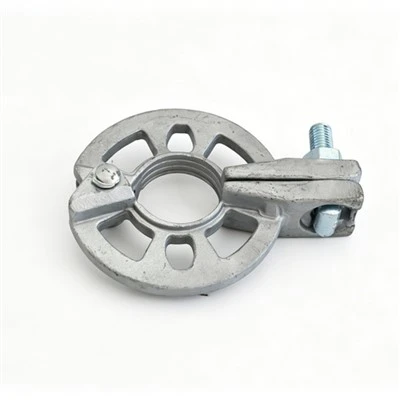
When someone asks me what our quality control (QC) measures look like, I don’t rattle off generic industry checklists. Every step is rooted in real-world lessons: the time a batch of substandard steel frames warped mid-pour and led to a $200,000 project delay, or the time we caught a hidden flaw in a custom form for a hospital’s ICU wing before it left our warehouse. Below, I’m breaking down the QC practices we rely on every single day, practices that have turned one-time clients into long-term partners who call us first for every shuttering need.
The first line of defense for any shuttering form starts at the raw material stage, before we even cut a single piece of steel or fabricate a wooden panel. Too many suppliers skip this step, taking materials at face value from their mills or vendors, but we test every incoming shipment with three non-negotiable checks. For the structural steel we use for heavy-duty formwork (the kind that holds 20+ tons of wet concrete for high-rises), we pull random 1-foot samples to test tensile strength and yield strength. Last year, we received a steel shipment that listed a yield strength of 350 MPa, but our tests showed it was only 310 MPa—enough to warp under pressure, so we sent the entire shipment back before it ever reached our production floor. For the plywood we use for residential and light-commercial formwork, we test moisture content first: wet plywood expands when it touches concrete, leading to uneven surfaces and gaps that leak slurry. We only accept plywood with moisture levels below 12% and also check for delamination in the core by tapping panels and listening for hollow spots. For specialty forms, like the rubberized ones used for curved architectural concrete, we test the rubber’s tensile and tear resistance to make sure it doesn’t stretch or tear during multiple reuses, which is critical for projects that need consistent, repeatable curves.
Once raw materials pass inspection, we move to in-process QC, where every fabrication step gets checked by a dedicated team member—not the same worker who built the part, to avoid bias. Our production floor is laid out so that each station has a clear QC checkpoint: when a steel frame is cut, a supervisor verifies the dimensions within 1 mm of the design specs, because even a 2 mm off cut can throw off how frames align on site, leading to wasted time and labor during installation. For welded joints, which are the most common failure point in steel shuttering, we use both visual inspections and magnetic particle testing (a non-destructive method that catches tiny, hidden cracks in welds) on 10% of every batch, plus 100% of joints for forms meant for heavy commercial construction. A few months back, we caught a micro-crack in a weld on a set of formwork for a school gym’s support beams before it moved to assembly—had that left our warehouse, the constant vibration of concrete being poured would have caused that crack to expand, leading to a structural flaw that could have been dangerous for the finished building. For custom forms, like those with intricate architectural details for a museum’s facade, we do a full dry-fit in our warehouse before shipping, so we can adjust any misalignments or gaps on our own turf, not on a busy construction site where time is money.
The most critical QC step for shuttering forms, in my opinion, is the pre-shipment load test. Because shuttering is temporary, but the stress it’s under during concrete pour is permanent—for the structure it creates, that is. We don’t just test light, standard forms; every batch is tested to meet or exceed the maximum load it’s rated for. For example, a standard wall form rated for 6 kN per square meter gets tested to 9 kN, 50% over its rated capacity, to simulate the uneven pressure that concrete can exert when it’s poured too quickly. We use hydraulic jacks to apply controlled pressure across the form, monitor it with load cells and pressure gauges, and check for deflection (how much the form bends) with laser levels. Our rule: no form can deflect more than 1/500th of its span during testing—any more, and it’s rejected, even if it meets the manufacturer’s specs for the material. That rule comes from a 2018 project where a supplier skipped load testing and their forms deflected 3 times the allowed amount, leading to a concrete wall that was uneven and required extensive grinding and patching, delaying the project by 6 weeks and costing the contractor thousands.
Once forms arrive at a site, our QC doesn’t end when they leave our warehouse. We offer on-site support to help our partners verify that the forms are being installed correctly, because even the best form will fail if it’s set up wrong. Our technicians train contractors to check for level alignment, tight joint seals (to prevent concrete slurry leaks), and proper bracing, which is essential for withstanding concrete pour pressure. We also provide clear, printable inspection checklists for every project, so contractors can log daily checks and flag any issues before they become problems. For example, we recently worked with a contractor on a residential high-rise where the team noticed a small gap between two wall forms mid-pour. The contractor caught it immediately, stopped the pour, tightened the form clamps, and avoided a leak that would have required cleaning up wet concrete and patching the wall. That’s the kind of partnership that comes from consistent QC, not just selling a product and moving on.
We also have a post-project feedback loop that’s part of our QC process. After every project, we follow up with the contractor to ask how our forms performed: did they hold up to multiple reuses? Were there any flaws we missed during inspection? Did they meet the project’s timeline? Last year, a contractor working on a sewage treatment plant told us that our plastic form ties (which hold the form panels together during pour) were breaking more often than expected. We tested a sample batch of ties and found that the manufacturing process had a slight flaw in the plastic composition, so we recalled all ties from that batch, replaced them at no cost to the contractor, and adjusted our QC to include 100% load testing of ties for all future orders. That feedback not only fixed a problem for that project but made our entire product better for everyone.
At the end of the day, shuttering forms are the unsung heroes of construction. They don’t end up in the final building, but their quality makes every part of the building possible. As a supplier, my job isn’t just to deliver forms on time—it’s to deliver forms that are safe, durable, and built to do the job they’re meant to do. If you’re a contractor, project manager, or construction professional looking for a shuttering forms partner that stands behind every product we ship, let’s connect. We can talk through your project needs, walk through our QC process in more detail, and make sure you have the forms you need to get the job done right.
Scaffoldings References
- Construction Specifications Institute. (2021). Quality Control for Formwork and Shuttering. CSI Manual of Practice.
- American Concrete Institute. (2019). ACI 347R-19: Guide to Formwork for Concrete. American Concrete Institute.
- European Committee for Standardization. (2020). EN 13670: Execution of Concrete Structures. CEN.
- International Code Council. (2022). International Building Code: Formwork Requirements for Concrete Construction. ICC.
Rizhao Wellfit Scafform Co., Ltd.
Address: No. 7, Huasheng Road, Taoluo Town Industrial Zoon, Donggang District, Rizhao City
E-mail: sales@wfscafform.com
WebSite: https://www.wfscafform.com/
