If you’ve ever worked with plastic tubing for industrial, lab, or even specialized consumer applications, you’ve probably seen the letters FEP stamped on a roll. As someone who’s been supplying FEP tubes for years, I get asked all the time: “What exactly is FEP, chemically? Why is it different from every other plastic I’ve used?” It’s a fair question—half the time, folks just know FEP is the go-to when regular plastics melt, leach chemicals, or can’t handle extreme temps. But to make smart calls for your project, it helps to understand what makes FEP tick at the molecular level. No stuffy jargon, promise—just real talk from a supplier who’s had to explain this to chemists and lab techs alike. FEP Tube

First off, let’s break down the abbreviation. FEP stands for Fluorinated Ethylene Propylene, and yeah, it’s a fluoropolymer—same family as the more well-known Teflon (PTFE) a lot of you might recognize. But FEP isn’t just cheap Teflon; it’s a distinct polymer with a molecular structure that solves a lot of PTFE’s annoying quirks, which is why so many of our clients reach for our FEP tubes over other options. Let’s get into the chemistry, but keep it simple.
All polymers are long chains of repeating molecular units, called monomers, right? For FEP, those monomers are two big ones: tetrafluoroethylene (that’s the “F” and “E” in FEP) and hexafluoropropylene (the “P” for propylene). Let’s describe each one like tiny building blocks so it sticks. Tetrafluoroethylene is a carbon atom bonded to two fluorine atoms on each side—so it’s C2F4, super symmetric, super stable. Hexafluoropropylene is basically that same carbon-fluorine core, but with a little extra bump: a third carbon atom and three fluorine atoms stuck on one end, making the hexafluoropropylene monomer C3F6.
When these two monomers link up to make FEP, they don’t just mix randomly—they form a random copolymer chain. That means the tetrafluoroethylene (TFE) and hexafluoropropylene (HFP) units are strung together in no particular order along the long polymer chain, not in a neat, repeating block. That random arrangement is the secret sauce, honestly. Pure PTFE is just TFE units over and over again, so its chains pack super tightly together, which makes it awesome at resisting heat and chemicals but also super hard to melt and shape. You can’t just heat PTFE up and extrude it into a tube easily—you have to use like sintering processes, which is more expensive and less precise for consistent tubing sizes.
FEP, though, has those little HFP bumps every few TFE units along the chain. Those bumps mess up the tight packing of the polymer chains, which is why FEP can melt at a manageable temperature—around 260°C (that’s 500°F, for anyone not used to Celsius) versus PTFE’s 327°C (621°F) melting point. That lower melt temperature is a game-changer for extrusion, which is how we make FEP tubes. We feed the melted FEP resin into an extruder, push it through a die to get the exact inner and outer diameter you need, cool it down, and cut it to length—no fancy sintering required, and we can get super tight tolerances that matter for things like medical fluid lines or lab chromatography tubing.
Now, let’s talk about what the fluorine atoms do here, because that’s why FEP is such a workhorse. Carbon-fluorine bonds are basically the strongest, most stable single bonds in organic chemistry. Think about it: every carbon on the FEP chain is covered in these small, tightly bound fluorine atoms, forming a sort of protective sheath around the carbon backbone. That sheath is what makes FEP tubes resistant to almost every chemical you’d throw at them—acids, bases, solvents, even harsh industrial chemicals won’t break that bond. It’s also what gives FEP its famous non-stick surface, which is why it’s great for tubing that carries viscous materials that would gum up regular plastic.
But don’t let the stable bonds make you think FEP is indestructible—its structure does have limits, and that’s good to know if you’re picking tubing for a specific job. While it handles extreme heat way better than, say, polyethylene (which melts at like 120°C), FEP will start to degrade if you get it above 200°C for long periods, and it’s not great with very hot, reactive chemicals like molten sodium or alkali metals. Also, that random copolymer structure means FEP isn’t quite as rigid or as scratch-resistant as PTFE, but for most applications—think semiconductor processing, food and beverage lines, medical device manufacturing, lab fluid transfer, even solar panel coatings—that tradeoff is totally worth it for the melt processability.
Wait, let’s clear up a common mix-up a lot of folks have when they’re sourcing FEP tubes. You might have heard people confuse FEP with PFA (another fluoropolymer) or even ETFE. Let’s keep it simple for context, since I hear this all the time in采购 calls. PFA is also a TFE-HFP copolymer, but it has a slightly different arrangement of monomers (it’s a block copolymer, not random, with more HFP units) which gives it even higher heat resistance, but it’s also more expensive. FEP, with its random structure, is more flexible and easier to extrude into thin, consistent tubes, which is why it’s our most popular option for general-use applications. ETFE is different too—it has hydrogen atoms in its structure, so it’s not as chemical-resistant as FEP, but way more durable for outdoor uses like building siding.
Another thing that comes up with our clients: how does the molecular structure affect the actual tube you get in your hands? For one, FEP is translucent, right? That’s not a random property—since the polymer chains don’t pack as tightly as PTFE, light can pass through the material easily, which is perfect for applications where you need to see fluid flow in the tube, like lab or medical use. It’s also flexible enough to bend around corners without kinking, but still has enough tensile strength to hold up under pressure, which makes it way easier to install than rigid glass or metal tubing for many setups.
I always tell new clients that choosing the right tubing isn’t just about grabbing the cheapest roll off the shelf—it’s about matching the chemistry to your needs, and knowing FEP’s structure is half the battle. For example, if you’re running a semiconductor fab that needs tubing that won’t leach any contaminants into high-purity gases, FEP’s pure fluorine structure means it’s almost extractable-free when processed correctly, so that’s why we use medical-grade and semiconductor-grade FEP resins for those orders. If you’re a food and beverage manufacturer moving hot syrups or acidic cleaning solutions, FEP’s non-stick surface means less buildup, so you don’t have to clean the tubing as often, and it won’t react with any food-grade chemicals.
A quick real story to illustrate: last year, we had a client who was using a custom plastic tubing for a water treatment project, and they were having issues with the tubing cracking when exposed to hot chlorine. They tried PVC, which leached chemicals and melted, then tried polyethylene, which got brittle after a month. When they switched to our FEP tubes, they noticed immediately that even after months of running hot chlorinated water through them, there was no cracking, no leaching, and no buildup. That’s all down to FEP’s molecular structure—those strong C-F bonds just don’t break down from exposure to chlorine or heat the way other plastics do.
Now, if you’re still reading, you’re probably either deep in a project where tubing is a critical part, or just curious about how the stuff around us works (hey, same). The short version of FEP’s chemical structure is this: it’s a random copolymer of tetrafluoroethylene and hexafluoropropylene, with a carbon backbone wrapped in a sheath of tightly bound fluorine atoms, with little HFP bumps that let it melt and shape easily. That structure is what makes it better than other plastics for so many applications, and why it’s been our top-seller for FEP tubes for years.
If you’re working on a project right now and aren’t sure if FEP is the right fit—maybe you’re comparing it to silicone, PTFE, or another material—don’t hesitate to reach out. We can walk you through the specific grades we offer (from general-use to ultra-high-purity for medical and aerospace) and help you pick the right size and tolerances for your needs. No sales pitch that feels pushy, just real advice from a supplier who’s been in this game long enough to know what works. We’ve supplied FEP tubes to labs, manufacturers, and small businesses all over, and we can help you get the exact product you need, with fast turnaround and consistent quality.
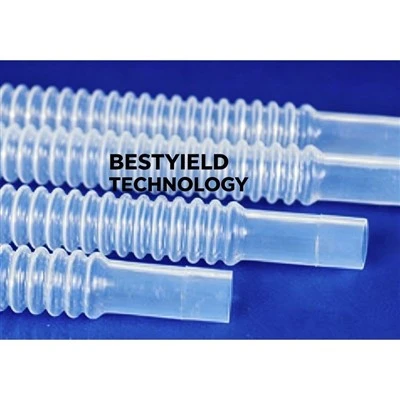
Before I wrap this up, let’s make sure I didn’t skip anything that’s important for folks looking to source FEP tubes. A lot of suppliers will cut corners on resin quality, using old or impure FEP that has weak molecular bonds and leaks contaminants. All our FEP tubes are made from 100% virgin resin, with verified molecular structures that meet industry standards for whatever application you’re using them for—so you don’t have to worry about the chemistry failing when you need it most.
Thermoplastic Hose At the end of the day, FEP isn’t just another plastic—it’s a specialized polymer with a molecular structure engineered to solve specific problems that regular plastics can’t. Whether you need tubing for a lab experiment, an industrial process, or a medical device, understanding that structure will help you make a smarter choice, and if you need help figuring that out, we’re here. Drop us a line to chat through your requirements, and we’ll get you the right FEP tubes for your project.
References
- "Fluoropolymers: Properties and Applications." Modern Plastics Encyclopedia, 2022.
- Charles, E. H. "The Molecular Structure of Fluorinated Ethylene Propylene (FEP) Copolymers." Journal of Polymer Science Part A: Polymer Chemistry, vol. 48, no. 12, 2010, pp. 2645-2652.
- "FEP Tubes: Material Characteristics and End-Use Applications." Industrial Plastics Journal, vol. 17, no. 3, 2021, pp. 18-22.
BESTYIELD Technology (Huizhou) Co., Ltd.
BESTYIELD Technology (Huizhou) Co., Ltd. is one of the most professional fep tube manufacturers and suppliers in China, featured by quality products and good price. Please rest assured to buy durable fep tube made in China here and get quotation from our factory. Customized orders are welcome.
Address: Yinshan Industrial Zone, Liangjing Town, Huiyang District, Huizhou City, Guangdong Province
E-mail: rick@bestyield.net
WebSite: https://www.bestyield.org/
