Can a control valve regulate the flow rate accurately? Control Valve

Hey there! As a control valve supplier, I get this question a lot. And let me tell you, it’s a great one. The ability of a control valve to regulate flow rate accurately is super important in a whole bunch of industries, from oil and gas to water treatment and beyond. So, let’s dive in and take a closer look.
First off, what is a control valve anyway? Well, it’s a device that controls the flow of a fluid (like gas, liquid, or steam) by varying the size of the flow passage. You can think of it like a faucet in your kitchen. When you turn the handle, you’re adjusting the size of the opening in the faucet, which in turn controls how much water comes out. A control valve works in a similar way, but it’s a lot more sophisticated and is used in industrial settings.
Now, back to the question: can it regulate the flow rate accurately? The short answer is yes, but there are a few things that can affect its accuracy.
One of the biggest factors is the valve’s design. There are different types of control valves, like globe valves, ball valves, and butterfly valves, and each has its own characteristics. For example, globe valves are known for their excellent throttling ability, which means they can control the flow rate very precisely. They have a plug that moves up and down to change the size of the flow opening, and they can be adjusted in small increments.
On the other hand, ball valves are more on – off type valves. They have a ball with a hole in it, and when the ball is rotated, the hole either aligns with the flow path (allowing full flow) or is perpendicular to it (shutting off the flow). While they can be used to control flow to some extent, they’re not as accurate as globe valves for fine – tuning the flow rate.
Another thing that affects accuracy is the actuator. The actuator is what makes the control valve move. There are different types of actuators, such as pneumatic, hydraulic, and electric. Pneumatic actuators are very common because they’re relatively simple and reliable. They use compressed air to move the valve. However, the pressure of the compressed air can fluctuate, which might cause some inaccuracies in the valve’s movement.
Hydraulic actuators, on the other hand, use a liquid (usually oil) under pressure to operate the valve. They can provide a lot of force, which is great for large valves. But they also require a more complex system, and any leaks in the hydraulic system can affect the valve’s performance.
Electric actuators are becoming more popular these days. They’re very precise because they can be controlled electronically. You can program them to move the valve to a specific position with high accuracy. But they can be more expensive and might require more maintenance compared to pneumatic actuators.
The fluid itself also plays a role. The properties of the fluid, like its viscosity, density, and temperature, can impact the valve’s ability to regulate the flow. For example, if you’re dealing with a very viscous fluid, it might be harder for the valve to open and close smoothly, which could lead to inaccuracies in flow control.
The system conditions are also crucial. The pressure and temperature in the pipeline can change over time. If the pressure upstream of the valve suddenly increases, the valve might need to adjust quickly to maintain the desired flow rate. If it can’t respond fast enough, the flow rate will deviate from the set point.
But here’s the good news. With proper selection, installation, and maintenance, a control valve can regulate the flow rate very accurately. When we, as suppliers, work with our customers, we take all these factors into account. We ask about the type of fluid, the system pressure and temperature, and the required flow range. Based on that information, we can recommend the right type of valve and actuator combination.
During the installation process, it’s important to make sure that the valve is installed correctly. The pipeline should be properly aligned, and the valve should be mounted in the right orientation. Any misalignment can cause the valve to wear out faster or not operate as accurately as it should.
Maintenance is also key. Regular inspections and servicing can help catch any problems early. For example, if the valve’s seals are starting to wear out, it can lead to leaks, which will affect the flow control. By replacing the seals in a timely manner, we can keep the valve working at its best.
In many industrial applications, accurate flow control is not just a nice – to – have; it’s essential. In a chemical plant, for instance, precise flow control of different chemicals is necessary to ensure the quality of the final product. If the flow rate of a reactant is off, it can lead to a sub – standard chemical reaction and a defective product.
In a water treatment plant, accurate flow control is crucial for dosing chemicals like chlorine. If too little chlorine is added, the water might not be properly disinfected, and if too much is added, it can be harmful.
So, to sum it up, a control valve can regulate the flow rate accurately, but it depends on many factors. As a control valve supplier, we’re here to help our customers navigate these factors and get the best – performing valves for their applications.
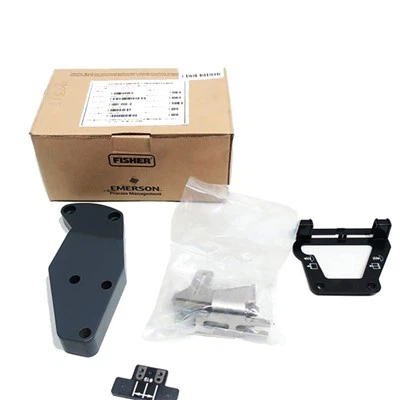
If you’re in the market for control valves and want accurate flow regulation for your industrial process, don’t hesitate to reach out. We’ve got the expertise and the products to meet your needs. Whether you’re dealing with a small – scale operation or a large industrial plant, we can find the right solution for you. Let’s have a chat about your requirements and see how we can work together.
Valve Actuator References:
- "Control Valve Handbook" by Milton Beychok
- Various industry – specific technical papers on fluid flow control and valve technology
Century Weiye (Dalian) Control Equipment Co., Ltd.
As one of the leading control valve manufacturers and suppliers in China, we warmly welcome you to buy discount control valve in stock here from our factory. If you have any enquiry about quotation, please feel free to email us. Quality products and reasonable price are available.
Address: 2205, Building 8, Red Star International, Ganjingzi District, Dalian City, Liaoning Province
E-mail: serena@valvesjwy.com
WebSite: https://www.valve-sjwy.com/
