Hey everyone, I’m Jake, part of the team that builds and supports transformer cooling control cabinets (TCCCs for short) — the unsung brains that keep power transformers from overheating, especially when things get busy with grid loads or industrial operations. A question I get all the time, whether from new clients or folks who’ve had their cabinets running for years, is: “How often do I actually need to maintain this thing?” Transformer Cooling Control Cabinet
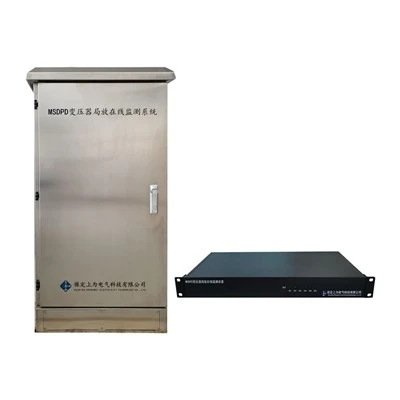
It’s not a trivial question, right? Skip too much maintenance, and you might end up with a cooling system that sputters, a transformer that overheats, and that’s a whole can of worms — costly outages, safety hazards, even shortened transformer life. Do too much, and you’re wasting time and money on stuff that doesn’t need checking every week. Let me break this down like I do for our clients, no fancy jargon, just what we’ve learned from thousands of cabinets we’ve deployed across factories, utilities, and renewable energy sites over the last decade.
First, let’s get one thing straight: there’s no one-size-fits-all number here. A TCCC in a smooth-running, low-vibration factory in a temperate climate is way different than one in a desert solar farm where temperatures hit 110°F (43°C) 10 months a year, or a cabinet right next to a port where salt air is eating away at every metal part. The frequency hinges on three big factors: where the cabinet lives, how hard it works, and how you’ve set it up (we call that your “operational profile”).
Let’s start with the basics: what does maintenance on a TCCC even involve? It’s not just wiping down dust off the outside. We split our maintenance tasks into three tiers, and each has its own timeline: daily, periodic (from monthly to yearly), and long-term (every 5 to 10 years). A lot of people mix these up — quick daily checks are for you, not us, while the deep dives are either something our techs do or trained in-house folks handle.
Daily Checks: Super Simple, No Tools Needed
I know, I know — “daily maintenance” sounds like a pain, but it takes two minutes, and it’s way easier than fixing a broken cooling fan at 2 a.m. What should you look for? First, the status lights on the cabinet. Most of our cabinets have three: green for normal, yellow for a minor alert (like a filter that’s slightly dirty), red for a fault. If those lights are stuck or flashing when they shouldn’t, that’s a red flag (pun intended). Then, listen for weird noises — a faint hum is normal, but grinding, rattling, or squealing? That’s a fan bearing going bad, and catching it early saves you from replacing the whole fan later. Also, if you’re at the site regularly, do a quick visual of the exterior: no standing water around the base, no obvious corrosion on the control panel, no loose wires peeking out. This is non-negotiable even for the easiest sites — we’ve had clients with brand-new cabinets miss a loose sensor wire because they skipped daily checks, leading to a 3-hour outage.
Periodic Maintenance: The Sweet Spot That Changes By Use Case
This is where most people get confused. Let’s split periodic maintenance into categories based on how “harsh” your environment is, because that’s the biggest driver here.
1. Light Duty: 2–5 Years Between Major Checks
Light duty is for cabinets in controlled, clean, low-vibration spaces — think a factory’s main electrical room with HVAC, or a utility substation in a neighborhood where dust and moisture are minimal. If you’re here, your periodic checks can happen every 2 years, max 5 if you’re extra careful. What do we do during these checks? First, clean the air filters. Dirty filters are the #1 cause of overheating in TCCCs — if air can’t flow through, the control components (like PLCs, relays, and power modules) get too hot, and that’s when they fail. We test the temperature sensors to make sure they’re reading correctly; a misread sensor might tell the transformer it’s too cool, so the cooling system doesn’t kick in when it needs to. We also check the cooling fans’ voltage and current — if a fan is drawing 20% more power than it should, that’s a sign the bearing is wearing out, and we can replace it before it stops. For light-duty sites, we also do a quick check of the electrical connections to make sure nothing’s loosened from vibration. We rarely have to replace parts here — maybe a set of filters or a couple of sensors every 5 years.
2. Medium Duty: Every 1–2 Years
Medium duty is what most of our clients fall into: a substation in a rural area, a manufacturing plant with some dust, or a wind farm where the cabinet’s outside (exposed to wind, dust, and occasional rain). Here, conditions are a bit harder, so you can’t go 5 years between checks. We recommend every 12–18 months. The tasks here are similar to light duty, just more thorough. We don’t just blow out the filters — we inspect each filter for tears, because even a tiny rip lets in more dust than you’d think. We also do a insulation resistance test on the control wiring; in areas with moisture, insulation breaks down faster, so this test catches hidden issues. We might also calibrate the temperature probes, because even a 5°F misread can throw off the cooling cycle. For medium duty sites, we might end up replacing a fan or a small relay every other check, just to keep things running smoothly.
3. Heavy Duty: Every 6–12 Months
Heavy duty is the tough stuff — desert solar farms, port-side substations, steel mills where there’s metal dust and high temperatures, or offshore wind farms. These environments are brutal: salt air corrodes metal parts, extreme heat shortens component life, and constant vibration from heavy machinery beats on the cabinet. If you’re here, you can’t go more than a year between checks, and we actually suggest every 6 months if possible. We do the basic stuff, but we add a lot more. For salt air, we clean every exposed metal part with a corrosion-resistant spray (we have our own formula that works way better than regular stuff). We test the cooling system’s flow rate — if it’s not moving coolant fast enough, the transformer will overheat. We also check the circuit breakers and contactors; in heavy load environments, these take a beating, and we’ll replace them before they trip unexpectedly. I’ve had a client at a steel mill skip 18 months of checks, and they ended up with two broken fans, a corroded sensor, and a $40k transformer repair bill — that’s why heavy duty sites need tighter timelines.
Wait, but what if you’re running a transformer that’s operating 24/7, with peak loads every hour? That’s a subcategory of heavy duty, right? We usually add a monthly quick check for those — just verifying that the cooling system is ramping up when load is high, no weird fault codes. It’s extra, but for critical infrastructure like a hospital’s backup power, it’s worth it.
Long-Term Maintenance: The Stuff That Lasts Decades
Then there’s the long-term stuff — the stuff you don’t think about until it’s too late. Every 5 to 10 years, depending on your environment, you should do a full diagnostic and, sometimes, a component upgrade. This isn’t a quick check; we’ll bring in our senior techs to test every component, replace worn parts (even if they’re not broken yet), and upgrade any outdated tech. For example, older TCCCs use analog sensors, which are less accurate and fail more often. If your cabinet is 8 years old in a heavy duty environment, replacing those analog sensors with digital ones (which we offer as an upgrade) can add 5 years to the cabinet’s life, and save you from constant alerts. We also check the cabinet’s structural integrity — is the frame still solid, no rust holes, no loose mounting brackets? This is the stuff that prevents catastrophic failures when you least expect it.
Common Mistakes We See All The Time
Let’s talk about what people get wrong. First, a lot of folks think “if it ain’t broken, don’t fix it.” That’s a bad approach for TCCCs. A component can be 90% broken, but still working — right up until the moment it fails, which is usually when you have a peak load or a heatwave. Second, they skip daily checks because they think the cabinet will alert them to problems. The problem is, if the green light is broken, you won’t know there’s an issue until the transformer overheats. Third, they use generic maintenance parts — like cheap air filters from a hardware store instead of the ones we design for our cabinets. Generic filters don’t fit right, let in too much dust, and actually cause more issues. We always tell clients to use our OEM parts, even if they’re a bit more expensive — it saves you money in the long run.
Another thing: if you’re moving your TCCC to a new location, adjust your maintenance schedule. A cabinet that was in a mild climate in Ohio, then moves to a hot, dry climate in Arizona, needs way more frequent checks — like going from light duty to medium duty, or even heavy duty, depending on the new site. We’ve had clients move a cabinet for an expansion project and forget to adjust their maintenance, leading to a fan failure 6 months later.
Wrapping This Up
At the end of the day, the frequency of maintenance for your TCCC isn’t a number you pull out of a book — it’s based on your specific site, your operational needs, and how hard your cabinet works. The sweet spot for most clients is every 12 to 24 months, with daily quick checks, but if you’re in a harsh environment, you’ll want to bump that up to every 6 months. If you’re not sure where your cabinet falls, our team can help you audit your site — we look at temperature data, humidity, dust levels, how often your transformer peaks, and tailor a maintenance plan that works for you, no one-size-fits-all garbage.
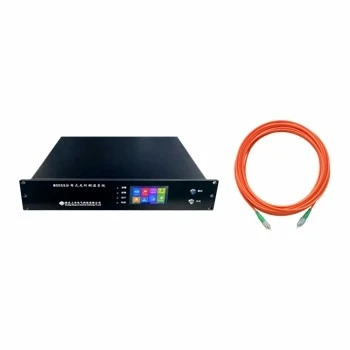
If you’re tired of playing catch-up with cooling system issues, or you’re looking to set up a maintenance plan for a new or existing transformer cooling control cabinet, hit us up to chat. We’ll walk through what your site needs, answer all your questions, and make sure your transformer stays cool, no matter what’s thrown at it.
Substation Transformer References
- Institute of Electrical and Electronics Engineers (IEEE). (2021). Guide for the Maintenance of Power Transformer Cooling Systems. IEEE Std C57.152-2021.
- International Electrotechnical Commission (IEC). (2019). Environmental Conditions for Electrical Equipment in Power Stations and Substations. IEC 60721-3-1.
- North American Electric Reliability Corporation (NERC). (2022). Transformer Maintenance Best Practices for Bulk Power System Assets. NERC Technical Report 22-03.
- European Committee for Electrotechnical Standardization (CENELEC). (2020). Maintenance Guidelines for Low-Voltage Control Cabinets in Industrial Applications. CENELEC EN 60439-1-2020.
Baoding Shangwei Electric Technology Co., Ltd.
We are one of the most professional transformer cooling control cabinet manufacturers and suppliers in China, also support customized service. We warmly welcome you to buy durable transformer cooling control cabinet at competitive price from our factory. If you have any enquiry about quotation, please feel free to email us.
Address: Building 6, Baoding Zhongguancun Digital Economy Industrial Park, No. 777 Lixing Street, Baoding City, Hebei Province, China
E-mail: wendylu@swspower.com
WebSite: https://www.swspower.com/
