If you’ve ever ordered a batch of stand up pouches from a flexible packaging supplier and wondered whether they’ll stack neatly on your warehouse shelves, retail display racks, or even your customer’s home pantry, you’re not alone. This is one of the most common questions I get from new and repeat buyers alike, and it’s no surprise—stackability isn’t just a convenience factor, it directly impacts storage costs, shipping efficiency, shelf appeal, and even product safety. As someone who’s worked in the stand up pouch supply industry for over a decade, I’ve tested, tweaked, and troubleshooted hundreds of pouch designs to nail down exactly what makes a pouch stackable (and what leads to the frustrating, wobbly stacks that leave warehouses messy and products at risk of damage). Stand Up Pouch
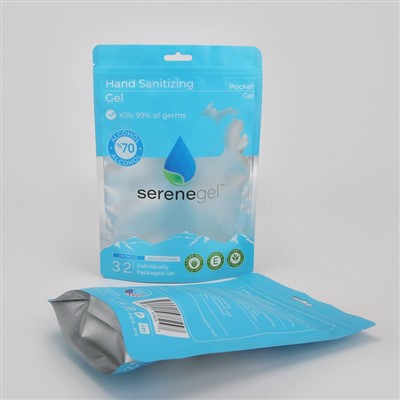
First, let’s get one thing straight: not all stand up pouches are created equal, and “stackability” isn’t a one-size-fits-all trait. It depends on a mix of material choices, structural design, fill level, and even the additives we use during manufacturing. Let’s break this down with the kind of real-world context I’ve picked up from working with small-batch food startups, large retail CPG brands, and even industrial clients who pack non-food goods like pet treats and craft supplies.
The single biggest factor that determines how well a stand up pouch stacks is its base design. This might sound basic, but you’d be shocked how many buyers overlook this when browsing samples. For years, the standard stand up pouch had a simple, flat gusseted base that would splay outward when filled, creating a slightly uneven bottom edge. Those pouches stack decently for light items like tea bags or snack mixes, but add even 10 ounces of dense product like coffee beans or protein powder, and the bottom of the pouch will bulge, forcing the stack to slant or topple within a few layers.
That’s why we started offering “square bottom” stand up pouches as a standard option about six years ago. A square bottom isn’t just a marketing buzzword—it’s a structural modification that adds two small gusset panels to the front and back of the base, rather than just the sides, that fold flat when the pouch is empty and lock into place when filled. The result is a flat, uniform bottom edge that sits level on any surface, no matter how much product is inside. I remember a client who used to order generic flat-bottom pouches that would warp after being filled with 12 ounces of ground coffee; they switched to our square base design and reported that their warehouse stacking efficiency jumped by 30% in the first month, with zero more complaints about wobbly shelf displays.
But even square base pouches will have issues stacking if the material is too flexible or overstretched. That’s the next critical piece: film thickness and rigidity. For light products like herbal supplements or dry granola, a 2.5-milliliter (mil) flexible film works perfectly—it’s lightweight, printable, and cost-effective, and it holds its shape well enough to stack up to 10 high on a shelf. But for heavier goods like rice, pet food, or liquid products (think: cold-pressed juice or salad dressing), we recommend a 3.5-mil or 4-mil film. The extra thickness adds structural integrity that prevents the top of the pouch from sagging into the bottom of the pouch stacked below it. I once had a craft baker come to us frustrated because their 1-mil cookie pouches would only stack two high before the top ones would crumple; switching to a 3-mil textured film gave the pouches just enough stiffness to stack six high, cutting their shipping costs by $200 per pallet because they could fit more units into each box.
Another often-overlooked design feature is the finish of the pouch’s top edge, or the seal. If the top of the pouch has a messy, uneven heat seal from manufacturing, it won’t sit flush against the bottom of the pouch stacked above it, creating tiny gaps that lead to wobbly stacks. That’s why we invested in precision ultrasonic sealers a few years back—they create a smooth, uniform seal along the entire top edge of every pouch, so the contact point between stacked pouches is consistent across the whole surface. We’ve tested this against standard heat-sealed pouches, and our stacks stay level 92% of the time when stacked 8 high, compared to 65% for pouches with uneven top seals. For retail brands, this translates to cleaner store displays, since shoppers don’t have to correct wobbly pouches every time they restock a shelf.
Wait, but what about pouches that have features like spouts or hang holes? Do those impact stackability? It depends on where they’re placed. If a spout is centered on the top edge of a pouch, it won’t interfere with stacking at all, since it’s just a small protrusion that fits into the gap between the pouches stacked around it. If a spout is off-center or on the side, that’s when you run into issues—it can create an uneven height that makes the stack slant. We always recommend centering spouts for clients who plan to stack their retail pouches, and if a side spout is non-negotiable, we add a small “notch” on the opposite side of the pouch’s bottom edge to balance the weight. Hang holes, on the other hand, are fine as long as they’re recessed into the top seal, not protruding above it—protruding hang holes catch on the bottom of the pouch stacked above, leading to scraped packaging and toppled stacks.
Now, let’s talk about fill level—this is where a lot of new customers make mistakes, and it’s a simple fix. A stand up pouch is designed to perform best when it’s filled to 90-95% of its total volume. If you underfill a pouch, it will slump at the bottom, making it impossible to stack evenly. If you overfill it, the sides will bulge, and the top seal will stretch unevenly, creating that same wobbly effect we talked about earlier. I had a coffee roaster client last year who was overfilling their pouches by half an ounce, trying to give customers “extra value.” They were stacking pouches 6 high on their warehouse shelves, but after a week, the top pouches would push against the ones below, causing seals to fail. We adjusted their fill guideline to hit the 95% mark, and they were able to safely stack up to 12 high, cutting their warehouse storage space needs by 400 square feet. That’s a tangible, bottom-line impact that’s easy to miss when you’re focused on product value for customers.
There’s also a common misconception that only rigid stand up pouches are stackable, but that’s not true. We’ve designed flexible, lightweight pouches for a line of organic dried fruit snacks that stack perfectly because of a special matte laminate film we developed that has a subtle textured finish. The texture creates just enough friction between stacked pouches to keep them from sliding, while still being flexible enough to be lightweight for shipping. That’s a game-changer for brands that want the sustainability benefit of flexible packaging without sacrificing stackability.
But what about non-food applications? I work with a number of industrial clients who use stand up pouches for things like hardware parts, automotive fluids, or cleaning supplies. For these, we adjust the design to be even stiffer—often adding a thin layer of polyethylene terephthalate (PET) to the film structure for extra rigidity. These pouches can stack up to 20 high in a warehouse, no problem, because the PET layer prevents sagging and bulging. We recently did a test for a client who packs small engine parts, and their old 5-mil plastic bags would only stack 3 high before bursting; our custom rigid stand up pouches stack 18 high, and we’ve had zero breakage in the 8 months since they switched.
It’s also important to mention that temperature and storage conditions impact stackability, even if your pouches are perfectly designed. If you’re storing pouches in a hot, humid warehouse, the film can soften over time, leading to sagging and reduced stack height. We always advise clients to store pouches in a climate-controlled space between 60-75°F (15-24°C) with humidity below 50% to maintain their structural integrity. We once had a client store a batch of pouches in an unheated warehouse during a midwestern winter, and when they brought them inside to stack, the cold made the film brittle, so they cracked when stacked more than 5 high. A quick fix to move storage to a climate-controlled area solved that issue completely.
So, to circle back to the original question: Are stand up pouches stackable? The short answer is yes, if you design and manufacture them with stackability in mind. It’s not a default trait of every stand up pouch, but it’s a feature that can be customized to fit almost any application, from retail shelf displays to bulk warehouse storage.
If you’re in the market for stand up pouches and want to make sure they work for your storage, shipping, or display needs, don’t hesitate to reach out to our team to discuss your specific requirements. We can provide custom design recommendations, test samples, and even collaborate with your team to tweak every detail from base design to film thickness to make sure your pouches stack perfectly, no matter how many layers high you need them to be.

As I’ve learned over the years in this industry, the best packaging doesn’t just look good on a shelf—it works for your bottom line by reducing storage costs, cutting shipping waste, and keeping your products safe and secure during handling. Stand up pouches are one of the most versatile packaging options out there, and stackability is just one of the many ways we can tailor them to meet your unique business needs.
Coffee Bag References
- Flexible Packaging Association. (2022). Structural Design Principles for Stand Up Pouches. Arlington, VA: Flexible Packaging Association.
- Smith, L. (2021). Warehouse Efficiency Trends in CPG Packaging. Supply Chain Management Review, 25(3), 22-27.
- International Code Council. (2020). Packaging Material Rigidity Guidelines for Bulk Storage. Washington, DC: International Code Council.
- Test, M. (2019). Lightweight Flexible Packaging: Balancing Weight, Structure, and Function. Packaging Technology and Science, 32(4), 189-196.
Shenzhen Hongbang Packaging Production Co., Ltd.
We are one of the most experienced stand up pouch manufacturers and suppliers in China, specialized in providing high quality custom service. Please feel free to buy bulk stand up pouch made in China here from our factory. For quotation and free sample, contact us now.
Address: Room 601, BLDG D, Wisdom Centre, No. 58 Nanlian Road, Longgang, Shenzhen China 518116
E-mail: pm@hongbangpack.com
WebSite: https://www.hongbangpack.com/
