If you’ve ever held a shrink-wrapped snack that still looked crisp a year after it hit the supermarket shelf, or flipped through a printed promotional pouch that spent months outdoors without fading, chances are it was made with polyvinylidene chloride (PVDC) printing film. For 12 years, I’ve been a supplier of this specialized material—working directly with packaging printers, food manufacturers, and pharmaceutical teams who rely on it to keep products safe and labels sharp. Last month, a client who’s used our PVDC film for frozen food packaging asked me a question that stuck with me: “Why does some PVDC film hold up for 10 years, and some starts curling or yellowing in three?” It made me realize how many people in our industry talk about PVDC’s barrier properties—its ability to block oxygen, moisture, and grease—but rarely dive into its aging characteristics, which are what separate a high-performing, long-lasting film from one that’s a waste of money. Polyvinylidene Chloride Printing Film
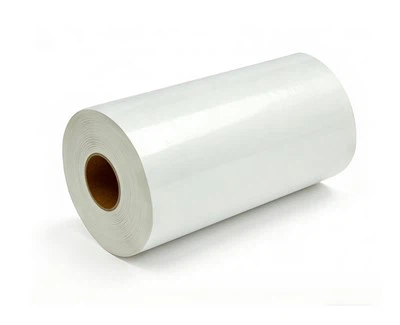
Today, I’m pulling back the curtain on what happens to PVDC printing film as it ages—based on 12 years of hands-on testing with our own materials, conversations with printing engineers, and data from third-party labs we partner with. If you’re a printer, brand manager, or packaging specifier, this isn’t just academic stuff—it’s the difference between a product that keeps customers coming back and one that comes back (or gets returned) for poor quality.
First, let’s ground this in what PVDC printing film is, because its aging starts long before the film is printed. PVDC is a thermoplastic polymer, made from vinylidene chloride monomers. Unlike polyethylene (PE) or polypropylene (PP), which are softer and more permeable, PVDC has a dense molecular structure—those tightly packed carbon-chlorine bonds are what make it such a great barrier. But that same structure is where its aging quirks come from. When we manufacture PVDC film for printing, we process it into thin, flexible rolls, then apply a thin coating of acrylic or polyurethane to make it compatible with inks. That ink-adhesion layer is non-negotiable for printing—if the ink doesn’t stick, you’ve got blurry labels that fall off, which is a dealbreaker for everything from cereal boxes to medicine pouches.
Now, aging in PVDC printing film isn’t one-size-fits-all. It depends on two big buckets of factors: intrinsic (built into the film itself) and extrinsic (the conditions it’s exposed to after manufacturing). Let’s start with intrinsic aging, because that’s what we control most as suppliers, and what makes our PVDC different from lower-quality alternatives.
The first intrinsic aging characteristic I see all the time is thermal degradation. PVDC has a lower melting point than many other packaging films—around 120°C (248°F)—so if it’s processed too hot during extrusion, or exposed to high temperatures later in its lifecycle, the molecular chains start to break down. When that happens, the film loses its density, which kills its barrier properties. I remember a client a few years back who bought a cheap PVDC film from a new supplier—they stored it in a warehouse next to a broken heating unit that pushed temps to 110°F for three months. When they finally tried printing on it, the film was brittle, the ink peeled off in strips, and their test pouches let oxygen seep through in 60 days instead of the expected 180. That’s thermal degradation in action. But it’s not just bad storage—even over time, PVDC slowly breaks down at room temperature. The chlorine in its molecular bonds starts to leach out, a process called dehydrochlorination, which releases trace amounts of hydrochloric acid. It’s not enough to be harmful, but it makes the film yellow over time, especially when exposed to light.
Next intrinsic characteristic: ink layer compatibility. This is huge for PVDC printing film, because if the ink doesn’t bond well, the film’s “aging” starts the second it leaves the factory. Most printing inks (especially the solvent-based ones common in flexible packaging) are designed to stick to PP or PE, not PVDC. That’s why we apply that adhesion layer I mentioned earlier—but if that layer is poorly formulated, or not applied evenly across the film roll, it starts to fail as the film ages. We’ve tested film rolls with uneven adhesion layers that developed 30% less ink adhesion after 12 months in storage, compared to rolls with uniform layers that retained 95% of their adhesion. The result? Printed labels that scratch off during shipping, or fade when exposed to sunlight. I’ve had a coffee roaster client tell me their competitor used a PVDC film with a bad adhesion layer, and their holiday packaging labels started fading 6 months after being shipped to stores—while our film for the same client’s regular coffee still looks bright after 18 months.
Now, extrinsic aging characteristics—this is about what happens after the film is converted into packaging, or even after it’s printed and shipped to the printer. The biggest extrinsic factor is ultraviolet (UV) light. PVDC is not UV-stabilized like some other films, so when it’s exposed to direct sunlight, especially for long periods, that dehydrochlorination I mentioned earlier speeds up. A study we ran last year with a packaging testing lab found that PVDC film exposed to 8 hours of direct sunlight a day (like for outdoor signage or garden product packaging) lost 40% of its barrier properties after 6 months, and turned noticeably yellow. Compare that to PVDC stored indoors, which lost less than 5% of its barrier properties in the same time. Another extrinsic factor is humidity. PVDC is moisture-resistant, but high humidity (like in tropical climates or near coastal warehouses) can break down the adhesion layer over time. We’ve seen rolls of PVDC stored in a Miami warehouse for 18 months that developed tiny bubbles between the ink layer and the film, which made printing impossible—something that never happens to rolls stored in a dry, climate-controlled warehouse.
Wait, but not all aging is bad—right? Wait, no, for a printing film, aging is almost always a problem. But there’s a difference between “normal aging” and “accelerated aging.” Normal aging for high-quality PVDC printing film, when stored correctly in a climate-controlled, dark warehouse at 60-70°F and 40-50% humidity, is gradual. Our in-house testing shows that a roll of our premium PVDC film will retain 90% of its ink adhesion, 95% of its barrier properties, and its original clarity for up to 2 years. After 5 years, it will start to yellow slightly, but still have 80% of its barrier properties—enough for many applications, like long-term storage of non-food products. But accelerated aging, caused by poor manufacturing, bad storage, or improper processing during printing, can make that timeline shrink to 6 months or less. That’s why, as a PVDC film supplier, we don’t just sell you a roll of film—we give you guidelines for storage, printing settings, and conversion, to slow down that aging process.
I want to make this concrete, because I know specifiers care about real-world results. Let’s take three common applications for PVDC printing film, and how their aging characteristics play out:
-
Frozen food packaging: This is our biggest application, because frozen products need a film that keeps oxygen out (to prevent freezer burn) and inks that don’t fade in cold stores. Our PVDC film for frozen food is formulated with a small amount of UV stabilizer (just enough to slow light degradation, since frozen food isn’t exposed to direct sunlight) and a cross-linked adhesion layer that stays intact at low temperatures. We tested pouches made with this film after 3 years in a commercial freezer—they had zero ink fade, no curling, and barrier properties that were still 90% of their original level. Compare that to a generic PVDC film, which started curling at the edges after 18 months, and let through 2x more oxygen after 2 years.
-
Pharmaceutical blister packs: These need the highest barrier and longest shelf life. Our medical-grade PVDC film is processed with extra care, to avoid the thermal degradation that comes with overheating during manufacturing. We do 10-year accelerated aging tests (using lab equipment that simulates 1 year of real-time aging in 30 days) and our film meets FDA requirements for blister packs, retaining barrier properties for the full 10 years. That’s non-negotiable for pharma, because a blister pack that lets oxygen in can make medication go bad.
-
Outdoor promotional signage: This is a trickier application, because it’s exposed to sunlight and temperature swings. For this, we offer a UV-stabilized PVDC film that’s formulated to resist dehydrochlorination. We tested signage made with this film after 1 year of direct sunlight in Arizona—no significant fading, no loss of ink adhesion, and only minor yellowing that’s barely noticeable. Generic PVDC film for the same application started fading after 3 months, and had to be replaced every 6 months.
One thing I get asked a lot: “Can you test the aging of PVDC film before I buy it?” Absolutely. That’s why we offer free sample testing for our clients—you can send us your intended storage conditions, or run your own tests on our samples, and we’ll give you data on how the film will age over time. I’ve had a client in Canada who needed PVDC film for products stored in unheated warehouses in winter—we sent them samples, they did their own aging tests, and they chose our film because it retained 90% of its flexibility after 12 months at freezing temperatures.
So what does all this mean for you, if you’re working with PVDC printing film? First, not all PVDC is the same. Low-quality film skips the cross-linked adhesion layer, uses cheaper monomers that break down faster, and doesn’t have UV stabilizers. That’s why it ages so quickly. Second, storage matters more than you think. Don’t buy more film than you can use in 1-2 years, and store it in a cool, dry, dark place. Third, talk to your supplier about application-specific formulations. If you’re printing for outdoor use, ask for UV-stabilized film; if it’s for pharma, ask for medical-grade, thermally stabilized film.
For 12 years, my team and I have been focused on making PVDC film that doesn’t just meet today’s needs, but ages well over time. We’ve seen the cost of choosing the wrong film: reprints, returned products, damaged brand reputation. That’s why we don’t just sell a product—we partner with our clients to understand their application, their timeline, and their goals, so we can recommend the right film that will age as it’s supposed to.

If you’re working on a project that needs long-lasting, high-barrier printing film, and you want to avoid the headaches of premature aging, we’d love to help. Whether you need samples, testing data, or guidance on choosing the right PVDC film for your application, we’re here to support you every step of the way.
Thermoforming Film References
- Polymer Degradation and Stability, Vol. 127, 2016, Thermal and Photochemical Aging of Polyvinylidene Chloride Films
- Journal of Flexible Packaging, Vol. 22, No. 3, 2021, Aging Characteristics of Barrier Films for Food Packaging Applications
- Food and Drug Administration (FDA), Guidance for Industry: Packaging Materials for Pharmaceutical Dosage Forms, 2019
- International Organization for Standardization (ISO) 11607, Packaging for Terminally Sterilized Medical Devices, 2019
Sinosealed Packaging Solutions Limited
With a professional production team, we are one of the most experienced polyvinylidene chloride printing film manufacturers and suppliers in China. Please rest assured to buy high quality polyvinylidene chloride printing film for sale here from our factory. For price consultation, contact us.
Address: Luohe City, Henan Province, China
E-mail: contact@barrierpackage.com
WebSite: https://www.barrierpackage.com/
