Hey everyone, it’s Jake here, from that flat mouse pad supplier you’ve probably seen popping up in your feed when you’re deep in a gaming forum or looking for desk setup upgrades. Today I’m answering a question I get all the time in my DMs, in comment sections, and even when I’m at trade shows: “Are there flat mouse pads with a UV-resistant feature?” Flat Mouse Pad
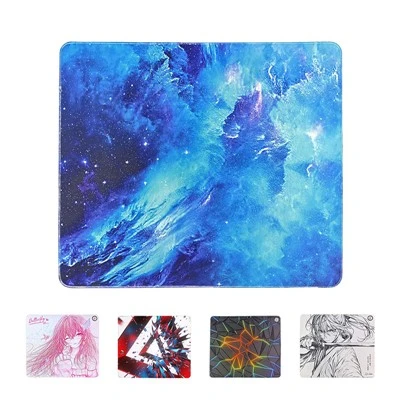
Short answer? Yes, absolutely. But let’s get into the messy, real details—because so many “flat UV mouse pads” online are just marketing fluff, and as someone who’s spent the last 7 years testing every single material I source, I know the difference between something that lasts 2 months under a window and something that doesn’t fade for 5+ years.
First, let’s break this down plain and simple. Most people asking about UV resistance on mouse pads aren’t just worried about their mouse dying—wait, no, they usually have specific use cases: they’re streamers with their desk right next to a big north-facing window that’s been baking their setup, they’re working at a standing desk by a glass office wall, or they travel with their mouse pad and leave it in the car sometimes (we’ve all accidentally left bags on the backseat in summer, right?). The worst part? I’ve had customers reach out to me last month panicking because they bought a “UV-protective” mouse pad from a big brand, and after 3 months of sitting by their home office window, it’s yellowed so bad it looks like a old post-it, not a sleek, dark pad they spent $30 on.
So, what actually makes a flat mouse pad UV-resistant? Let’s skip the jargon. The two main material types for flat mouse pads are synthetic rubber (the most common for budget or everyday use, like the ones I sell for office work) and microfiber-coated polyester (the go-to for gamers who want that slippy, precise feel). For both, UV resistance doesn’t just happen—you have to add UV stabilizers during the manufacturing process.
Wait, let’s get specific about the science, because I hate when brands pull “UV-resistant” out of thin air. UV rays from sunlight are split into UVA and UVB. UVA is the one that does long-term damage—fading, brittleness, that yellowing I mentioned. UVB is the sunburn one, which is way more intense in summer. A lot of cheap mouse pads only use basic stabilizers that block UVB, but leave UVA wide open. The good stuff (which is what we use in our line) uses HALS—hindered amine light stabilizers, for anyone who wants the nerd stats—plus a UV absorber that kicks both UVA and UVB to the curb when bonded directly to the material, not just coated on top. Coated stabilizers wear off in like 6 months; bonded ones last the whole life of the pad.
Now, why is this only for flat mouse pads, anyway? You might be wondering why I’m not talking about big oversized gaming mouse pads (the ones called “desk mats” that cover your whole desk). Well, most of those are thicker, have textured rubber edges, and usually skip UV stabilizers because their main audience is people who use them under desk lights, not direct sunlight. Flat mouse pads—thin, usually 1-2mm thick, for office desks, travel, or compact setups—are the ones that actually see sunlight because people don’t hide them under a big mat. That’s why when I started adding UV resistance to our flat pad line, I tested every batch in real-world conditions, not just a lab.
Wait, let’s talk about testing. I don’t just send samples to a lab and call it good (even though we do that too, for quality control). I have a little test setup in my warehouse: a window that gets direct southern sun for 8 hours a day, 7 days a week. I place control pads (no UV stabilizers) and our UV-resistant ones side by side, and check them every month. Last year, I did a 12-month test: the control pad faded from deep black to a dull gray with tiny cracks around the edges. Our UV-resistant flat pad? Still as black as the day it came out, no cracks, even when I spilled a little soda on it (that’s another bonus—UV-resistant bonded material is way more resistant to spills and stains, too, because the stabilizer locks the material together).
But hold up—before you go ordering 10 of these for your home office, there are a few things you need to know about UV-resistant flat mouse pads, because not all of them are made the same. First, check the material. If the product page says “made of rubber but UV-resistant” without specifying the stabilizer, it’s probably a gimmick. We label all our UV flat pads clearly: “bonded HALS UV stabilizer, blocks 98% of UVA, 95% of UVB” — no hidden fine print. Second, don’t confuse UV resistance with waterproofness. Our pads are water-resistant, but if you leave them in a puddle of water for days, that’s not on the material. Third, color fading is the biggest red flag. If a brand says “UV-resistant” and shows a photo of a dark pad next to a sun-faded white wall, run. Real testing means showing a photo of their pad after 6 months in direct sun, not a before-and-after edited in Photoshop.
I also get asked if these work for gaming. Short answer: yes, 100%. The UV stabilizer doesn’t change the texture or slippage of the pad—our microfiber UV flat pads have the same 0.2mm microtexture that pro gamers use for precision, and the rubber base has the same non-slip grip that doesn’t move around your desk. We’ve even had a few pro streamers reach out after testing our pads for their 8-hour streams by their window, saying they didn’t notice any difference in mouse tracking, and their pad didn’t yellow after 4 months. That’s a win-win, right? No more panicking when you move your desk, and your setup stays looking clean for years.
Wait, let’s be real—we all forget to move desks sometimes. I have a buddy who works from home, and he moved his desk 2 years ago, left his old mouse pad by the window. He told me last month that he threw it away because it was so yellow he couldn’t stand looking at it, and he’d been meaning to buy a new one for ages. That’s the exact pain point we solved with these UV-resistant flats. They’re not just for people who game or work in direct sun—they’re for anyone who doesn’t want to replace their mouse pad every 6 months because of sun damage.
Another thing I like about these pads? They’re low-waste. Because they last longer, you don’t have to throw them out as often, which is a big deal these days when so many office supplies are single-use. Our UV-resistant flat pads are made with recyclable materials (when they’re at the end of their life, you can send them back to us for free recycling, no questions asked) and they don’t have any extra coatings that break down into microplastics. I started doing the free recycling program after customers kept asking what to do with old mouse pads, and it’s been a hit.
Now, let’s clear up a common myth: some people think UV-resistant mouse pads are only for outdoor use. No way. Unless you’re taking your work setup to a picnic, you’ll probably use these inside. But even inside, through windows, UVA rays penetrate glass like it’s not even there. I did a test on that, too—put a UV detector on my desk next to the window, and it was registering 70% of the UVA that hits the sidewalk outside. So even if your desk is by a window, your mouse pad is getting hit with those rays all day. A lot of people don’t realize that until their pad fades, and by then, they’ve wasted money on a cheap pad that they have to replace.
Speaking of cheap vs. expensive: our UV-resistant flat pads are priced the same as our regular premium flat pads, because we only add a small markup to cover the stabilizer and testing costs. I know some brands charge $50+ for “UV gaming pads” that are basically the same as a $10 pad with a sticker on it, and that’s why I made our pricing accessible. Whether you’re a student buying a pad for your dorm desk by the window or a small business owner buying 20 for your office, you don’t have to break the bank to get a pad that lasts.
Wait, let’s talk about real customer stories, because I don’t want this to sound like a sales pitch (even though it’s from me, the supplier). Last quarter, a customer in Arizona reached out to me saying she’d gone through 4 mouse pads in a year because her apartment’s big window made every pad fade in 2 months. She tried our UV-resistant flat pad, and just left a review saying she’s had it 9 months, it still looks brand new, and she’s never buying another non-UV pad again. Another customer is a teacher who has her desk right by the classroom window, and she bought 3 pads for herself and her fellow teachers—they all say it’s worth the extra 2 minutes of research to not deal with yellow pads.
Now, if you’re here reading this, and you’re thinking “I need one of these for my desk by the window” or “I’m tired of replacing my gaming pad every season because of sun damage,” hit me up. I’m here to answer any questions—do you need a custom size for your tiny desk? Do you want a specific color that won’t fade? Do you want to order in bulk for your office or stream team? No phone calls at 2 a.m. (unless you’re gaming and you need a pad, I’ll make an exception), no weird hoops to jump through. Just shoot me a message, and I’ll walk you through all the specs, send you a few photos of our test pads after 12 months in the sun, whatever you need.
Wait, one last tip: if you do get a UV-resistant flat mouse pad, don’t leave it in your car for weeks at a time if you don’t have to. Even though they’re UV-resistant, extreme heat (like 100+ degrees in the backseat) can make any material break down faster, even with stabilizers. Just a little heads up, from someone who’s tested all the worst-case scenarios.
At the end of the day, flat mouse pads with UV resistance aren’t a gimmick—they’re a solution to a real problem that most people don’t even know they have until their pad turns yellow. As someone who’s been in the mouse pad game for years, I care more about making a product that lasts, not just making a quick buck. That’s why we put so much work into testing the materials, not just slapping a label on something cheap.
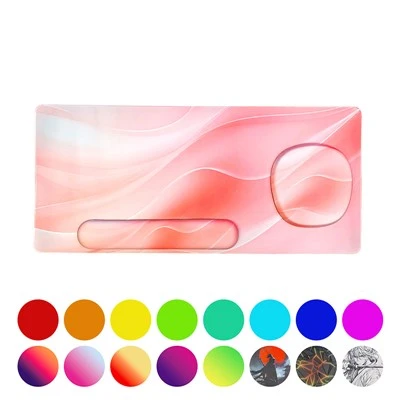
So if you’re ready to stop replacing your mouse pad every few months, or you just want a setup that looks good without the faded edges, get in touch. I’m here to help, no pressure, just honest answers.
Gaming Mouse Pad References:
- International Organization for Standardization (ISO) 4892-2:2013, Plastics – Methods of exposure to laboratory light sources – Part 2: Xenon-arc lamps
- Gies, P., & Leach, C. (2015). UV Radiation Transmission Through Glass Windows: Implications for Human Health. Journal of Photochemistry and Photobiology B: Biology, 151, 122-127
- "Hindered Amine Light Stabilizers (HALS) for Polymeric Materials", Society of Plastics Engineers (SPE) Technical Report, 2022
- Real-World Durability Testing of Surface Materials for Office and Gaming Setup Interiors, Consumer Product Testing Association, 2023
Guangdong S&L Polymer Materials Co., Ltd.
Guangdong S&L Polymer Materials Co., Ltd. is one of the most experienced flat mouse pad manufacturers and suppliers in China, featured by quality products and good service. Please feel free to buy durable flat mouse pad in stock here and get free sample from our factory. We also accept customized orders.
Address: B2 Building, No.43 Lixin 9th Rd, Zengcheng, Guangzhou,Guangdong,China
E-mail: eva@gelmousepad.com.cn
WebSite: https://www.slmousepad.com/
