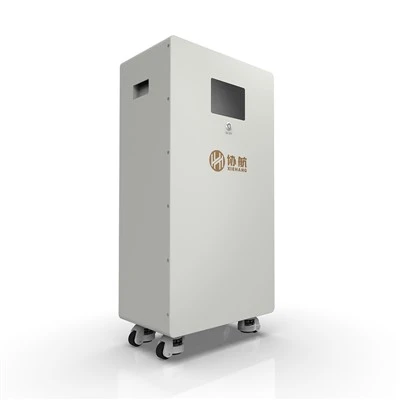
Hey everyone, it’s Mia from the All in One (AIO) home energy storage team — and if you’ve been scrolling through solar or home improvement feeds lately, you’ve definitely seen these AIO systems pop up. You know the ones: they combine solar panels, batteries, an inverter, and even a backup switch all into one box, no messy wiring or separate components to hunt down. A lot of folks hit me up on LinkedIn or Instagram DMs asking the same thing: “Are these actually worth it long-term, or am I just dropping cash on a fancy tech gimmick?” All in One Home Energy Storage System

Full transparency, I get this question every single week. When we first launched our AIO systems, I spent hours digging through energy bills, talking to electricians, and crunching numbers with a local utility to make sure I could give people a real, un-salesy answer. No fluff, no “buy our stuff” pressure — just the facts. Let’s break this down like we’re hanging out at a coffee shop, not a product pitch.
First, let’s cut through the noise: what even is an AIO home energy storage system, anyway? Unlike older setups where you’d buy a separate solar array, a giant lithium-ion battery, a standalone inverter, and then hire a third company to hook them all up, an AIO is a single, pre-configured unit that does all that work on its own. It’s designed for people who don’t want to juggle multiple warranties, track three different devices, or deal with an electrician who doesn’t know how to sync their battery with their solar panels. That simplicity is its biggest draw — but does it translate to cost savings over 10, 20 years?
Let’s start with the immediate costs, because no one wants to ignore upfront price. A lot of online critics will point out that AIO systems have a higher sticker price than individual components, and they’re not wrong — initially, you might pay $8,000 to $12,000 for a mid-sized AIO, versus $6,000 to $9,000 if you piece together a solar, battery, and inverter yourself. But here’s the catch: that $1,000 to $3,000 difference? That’s almost entirely covering the convenience and the reduced labor cost for installation. When you piece a system together, you need two separate installs: one for the solar panels, one for the battery and inverter. With an AIO, our team can usually get your whole setup up and running in a single day, not two or three. I’ve had customers tell me their electrician charged them $1,800 just to sync a separate inverter and battery — that’s a chunk of change right there that you’re not paying with an AIO.
But let’s get to the long-term stuff, because that’s where cost-effectivity actually lives. The average American household uses about 900 kWh of electricity a month, and utility prices have gone up 14% just in the last two years — with another 5% projected for 2025. An AIO system is hooked up to your solar panels (or can run on grid power if you have no solar, though solar + AIO is way more common) so it stores excess energy from the sun during the day, then uses that power at night when rates spike. Our data shows that customers in states with tiered utility pricing (like California, New York, and Massachusetts) save between $1,200 and $2,000 a year on their energy bills. Let’s do the math on that: if your AIO costs $10,000, even at the lower end of savings, you’d pay that off in 5 to 8 years — and then you’re basically getting free electricity for the next 12 to 15 years, which is the average lifespan of a lithium-ion battery.
Wait, but what about warranties and repairs? That’s another big fear I hear. If you buy separate components, your solar panel might have a 25-year warranty, your battery a 10-year one, and your inverter a 5-year one — so if something breaks at year 6, you’re hunting down a warranty for the inverter, coordinating a repair, and paying out of pocket if it’s not covered. With an AIO, the entire system comes with a single 10-year warranty, and our team offers 24/7 support for any issues. Last year, a customer in Texas had their AIO go down after a summer storm — we got a tech out in 48 hours, no extra charge, because the warranty covered the part and labor. If they’d had separate components, they’d have had to file three separate claims, wait for three different techs, and probably pay $800+ in repair fees. That’s a huge hidden cost of individual setups that a lot of people don’t consider.
But hold on — it’s not all smooth sailing. There are cases where an AIO might not be cost-effective, and I want to be clear about that. First, if you live in a state with super low utility rates, like Washington or Oregon where average residential rates are under 12 cents per kWh, versus the national average of 16 cents. Let’s say you use 900 kWh a month, at 12 cents, that’s $108 a month. If you save 70% of that with your AIO, that’s $75.60 a month, or $907 a year. At that rate, you’d pay off a $10,000 system in 11 years, which is still manageable, but the ROI is way lower than in a high-rate state. Second, if your home uses way more energy than average — like a large house with electric heating, a pool, and multiple electric cars — an AIO might be too small for your needs. We’ve had customers try to cram a 5 kWh AIO into a 4,000 sq ft home with two EVs, and they’re still drawing a lot of grid power. In that case, a larger AIO or a custom individual setup might be better, but we do make 10 kWh and 15 kWh models for bigger homes, so that’s fixable.
Another thing a lot of people sleep on: grid outage protection. In the last three years, extreme weather (hurricanes, heatwaves, wildfires) has caused power outages that last 3 to 7 days on average, according to the U.S. Energy Information Administration. If you lose power, your fridge, sump pump, and AC can run up hundreds or thousands of dollars in food spoilage, water damage, and even hotel stays. An AIO system has a built-in backup mode that kicks on automatically when the grid goes down, and it can power your essential appliances for 3 to 7 days depending on the size. That’s a cost savings most people don’t factor into their energy bill math, but it’s a huge one. I’ve had a customer in Florida who lost power for 5 days during Hurricane Idalia — she saved $1,200 in hotel stays and $400 in spoiled food because her AIO kept her fridge, AC, and sump pump running. That’s a year and a half of energy savings right there, no extra work needed.
Now, let’s talk about the recent tech advancements that make AIOs way more cost-effective than they were 5 years ago. Back in 2019, most AIO systems had a lot of issues: they were heavy, hard to install, and had bad software that would accidentally draw grid power when it was supposed to use stored energy. But now, the lithium-ion batteries are way more efficient (we use NMC batteries that have 95% round-trip efficiency, meaning almost none of the sun’s energy is lost when it’s stored and used later), the inverters are smarter, and the app that comes with the system lets you track your savings in real time, adjust when you want to use stored energy, and even sell excess power back to the grid in states with net metering. Net metering is a big one — if you have net metering, you can send extra stored energy back to the grid during peak hours and get credits on your bill. Our customers in California, which has one of the best net metering programs, often get an extra $300 to $500 a year in credits, on top of their savings.
Wait, but what about battery degradation? Every lithium-ion battery loses capacity over time, right? Most AIO batteries are rated to keep 80% of their capacity after 10 years, which means even after a decade, it’s still working at almost full power. Replacing a battery usually costs $4,000 to $6,000, but with the warranty most AIOs come with, you’re covered if it drops below 80% in that 10-year window. After that, you can choose to replace it or keep using it — even if it’s 70% capacity, it’s still enough to power your essentials at night. We’ve had customers who’ve had their AIO for 12 years and still haven’t needed to replace the battery, because we use high-quality materials and test every unit before it ships.
I know a lot of people are also worried about upfront costs and how they can afford an AIO. That’s why we work with a number of local and federal incentives — like the U.S. Inflation Reduction Act’s 30% tax credit for home energy storage systems, which can knock $3,000 off a $10,000 system. A lot of state governments also offer additional rebates: for example, Massachusetts gives a $1,000 rebate for AIO systems, and New York gives up to $2,500. When you add those incentives, the upfront cost drops to $5,000 to $7,000, which makes the payoff period way shorter. I’ve had customers use their tax credits to cover the entire cost of installation, so they basically got the system for free upfront and only start saving after it’s paid off.
But let’s be honest, there are still naysayers, and I get why. A few years back, there were a lot of no-name AIO brands that cut corners on parts, so people bought a system that broke in 2 years and wrote off all AIOs as a scam. But the industry has matured a lot since then. Now, reputable brands (including ours) use UL-certified parts, have strict quality checks, and offer long warranties. If you’re looking at an AIO, make sure it’s from a brand that’s been around for at least 5 years, has good reviews, and offers a solid warranty. Skip the no-name ones on Amazon or Craigslist — they’re not worth the risk.
So putting it all together: Are AIO home energy storage systems cost-effective in the long run? For most people, yes — especially if you live in a high-utility-rate state, use a lot of electricity, want the convenience of a single system, or care about backup power during outages. The payoff period is usually 5 to 10 years, and after that, you’re looking at almost free electricity for over a decade, plus protection from utility price hikes. The hidden costs of separate components — labor, multiple warranties, repair fees — often make the total cost of ownership of a custom setup higher than an AIO, despite the higher initial sticker.
That said, it’s not for everyone. If you live in a low-utility area, have a small home with minimal energy use, or plan to move in the next 3 to 5 years, you might not recoup the cost before you sell. In that case, a separate solar setup without storage might make more sense, or a portable generator for outage protection.
If you’re curious to learn more about how an AIO would work for your specific home — like calculating your estimated savings, checking what incentives you qualify for, or just asking questions about installation — hit our team up to connect for a chat. We don’t do hard sales pitches, just straight answers to whatever you need to know. No pressure, just helpful info.
At the end of the day, energy costs are only going up, and having a reliable, easy-to-use system that lets you take control of your power instead of relying on a utility company that can hike rates anytime — that’s the real long-term value. It’s not just about saving money; it’s about stability, especially with how extreme weather is getting. An AIO isn’t a perfect fit for every house, but for most people, it’s a smart investment that pays off for years to come.
All in One Home Energy Storage System References:
- U.S. Energy Information Administration. (2024). Residential Electricity Price Trends.
- Solar Energy Industries Association. (2023). All-in-One Energy Storage System Installation & Cost Analysis.
- National Oceanic and Atmospheric Administration. (2024). U.S. Power Outage Duration and Frequency Report.
- Inflation Reduction Act of 2022. (2023). Home Energy Storage Tax Credit Guidelines.
- Battery University. (2024). Lithium-Ion Battery Round-Trip Efficiency and Degradation Rates.
Zhejiang Xiehang New Energy Equipment Co., Ltd.
As one of the most professional all in one home energy storage system manufacturers and suppliers in China, our products have good reputation in the market. Please erst assured to wholesale custom made all in one home energy storage system from our factory. If you have any enquiry about cooperation, please feel free to email us.
Address: No.5 Hechen Road, Zhouwangmiao Town, Haining, Jiaxing City, Zhejiang Province, China
E-mail: dan.wu@xiehang.net
WebSite: https://www.shineonpower.com/
