If you’ve ever walked into a cozy café on a hot summer afternoon and sipped an iced latte that’s perfectly cold, or kept your groceries fresh for a week in a refrigerator, you’ve encountered refrigeration systems that rely on heat exchangers. For years, shell-and-tube heat exchangers were the go-to component for cooling and refrigeration, but as a plate heat exchanger supplier who’s spent the last decade working with HVACR (Heating, Ventilation, Air Conditioning, and Refrigeration) clients around the world, I can tell you that plate heat exchangers (PHEs) are no longer just for hot water heating or industrial liquid processing. The question I get most often from new clients is: “Can plate heat exchangers actually be used for refrigeration?” Plate Heat Exchangers
The short answer is yes—they not only can, but they’re often a better choice than traditional alternatives for many refrigeration applications. But let’s get into the details, because it’s not a one-size-fits-all solution, and understanding why they work is key to seeing how they fit into modern refrigeration systems.
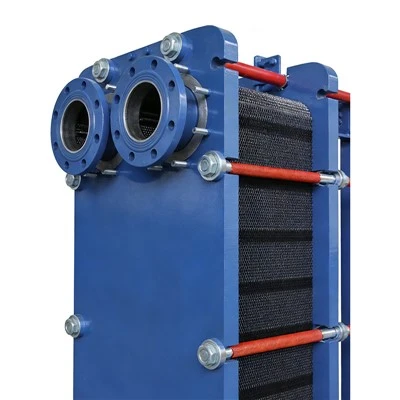
First, let’s recap what a plate heat exchanger is, just to set the stage. Unlike shell-and-tube units that use large pipes and a cylindrical shell to transfer heat between two fluids, PHEs are made of stacked, thin corrugated metal plates (usually stainless steel, sometimes titanium or other alloys for corrosion resistance) clamped together in a frame. Each plate has ports that let two separate fluids flow through alternating channels, and the corrugations on the plates create turbulence as the fluids move. That turbulence is one of the biggest reasons PHEs perform so well—instead of the slow, laminar flow you get in shell-and-tube exchangers, the turbulence breaks up the boundary layer of fluid that insulates the plate’s surface, making heat transfer much more efficient.
Now, refrigeration works on a basic cycle: a refrigerant absorbs heat from a space (like the inside of a fridge) at low pressure and low temperature, then releases that heat to the outside environment (like the air in your kitchen) at high pressure and high temperature. The two key heat transfer components in this cycle are the evaporator (where the refrigerant absorbs heat) and the condenser (where it releases heat). That’s where PHEs step in.
When I started out in this industry 12 years ago, most small to mid-sized refrigeration systems used shell-and-tube evaporators and condensers. Back then, PHEs were still seen as too risky for refrigeration—there were concerns about leakage from the plate gaskets, difficulty cleaning, and compatibility with different refrigerants. But material science has come a long way, and modern PHE gaskets are made from EPDM, NBR, or other specialty elastomers that are compatible with nearly all common refrigerants, from R134a to the newer low-GWP (global warming potential) refrigerants like R32 and R454C.
Let’s talk about efficiency first, because that’s what drives most clients to switch. The heat transfer coefficient of a PHE is 2 to 5 times higher than a comparably sized shell-and-tube exchanger. What does that mean in real terms? A PHE condenser that’s half the size of a shell-and-tube unit can transfer the same amount of heat. For a grocery store with multiple refrigerated display cases, that’s a huge win—less space taken up by equipment, lower installation costs, and reduced energy use because the compressor doesn’t have to work as hard. Energy efficiency is also critical for meeting global sustainability standards, like the EU’s F-Gas Regulation or the U.S. EPA’s SNAP program. A client of mine in Austin, Texas, recently upgraded their walk-in freezer system from shell-and-tube evaporators to PHEs, and they reported a 18% drop in their monthly energy bills within the first three months. That’s not a small number for a business that relies on refrigeration 24/7.
Another big advantage is flexibility. PHEs can be easily modified by adding or removing plates to adjust the heat transfer area, which is perfect for refrigeration systems that need to handle varying loads. For example, a small restaurant’s refrigeration system might need to cool only a few display cases during slow hours, but during weekend rush, it has to cool twice as much. With a PHE, you can adjust the number of plates to match the load, without having to replace the entire unit. Shell-and-tube units are much more rigid—you have to order a whole new unit if your needs change, which adds cost and downtime.
But wait, there are challenges, and I don’t want to sugarcoat that. PHEs aren’t the right fit for every refrigeration application. The biggest concern is fouling—buildup of dirt, ice, or mineral deposits on the plates, which can reduce heat transfer over time. In refrigeration systems, especially ones that process food or beverage, fouling can be a real issue. If a PHE’s channels get clogged, it’s harder to clean than a shell-and-tube unit, because the plates are tightly stacked. That’s why it’s important to choose the right plate design and materials for the application. For example, our company offers PHEs with wider channels for applications with higher fouling risk, like food refrigeration, which makes it easier to flush out debris. We also work with clients to design systems with strainers and regular maintenance schedules to prevent fouling from becoming a problem.
Another challenge is pressure limits. PHEs can handle high pressures, but some large industrial refrigeration systems (like those used in chemical plants or large cold storage facilities) operate at pressures that are too high for standard gasketed PHEs. For those applications, we offer welded PHEs, which don’t have gaskets and can handle much higher pressures, though they’re less flexible if you need to adjust the number of plates later. It’s all about matching the right type of PHE to the specific application.
Let’s get into a real-world example to make this concrete. A client I’ve worked with in Chicago owns a 50,000-square-foot cold storage facility that keeps frozen food for distributors. They were using shell-and-tube condensers that were 15 years old, and they were constantly dealing with leaks, high energy costs, and frequent maintenance. Last year, we installed gasketed PHE condensers with wide channels and EPDM gaskets rated for their refrigerant, R404A. The installation took just two days, and we worked with their maintenance team to train them on how to clean the plates and inspect the gaskets. Six months later, they reported that their compressor run time had dropped by 22%, and they haven’t had a single leak from the condensers. They also saved $12,000 in the first year on energy and maintenance costs—money they’re now using to expand their storage capacity.
Now, with the shift to low-GWP refrigerants, PHEs are becoming even more relevant for refrigeration. Many of these new refrigerants have different thermodynamic properties that make them work better with the higher heat transfer rates of PHEs. For example, R32 has a higher heat transfer coefficient than R134a, so pairing it with a PHE condenser maximizes efficiency. As countries phase out high-GWP refrigerants, more and more businesses are looking for equipment that works well with these alternatives, and PHEs are leading the way.
There’s also the issue of environmental impact. PHEs use less material than shell-and-tube exchangers because they’re smaller and more efficient. That means less raw material is mined and processed to make the equipment, and less waste when the units are replaced. Plus, the energy savings from using PHEs reduce the carbon footprint of the refrigeration system, which is a big part of many businesses’ sustainability goals. Our Chicago cold storage client, for example, was able to cut their annual carbon emissions by 140 tons by switching to PHEs—equivalent to taking 30 cars off the road for a year.
I want to address a common misconception that new engineers or facility managers have: that PHEs are only for small, residential applications. While it’s true that PHEs are widely used in residential air conditioners and small refrigerators, they’re now being used in large-scale industrial refrigeration too. Welded PHEs, in particular, can handle the high pressures and temperatures of industrial systems, and they offer even higher efficiency than shell-and-tube units. We’ve worked with a pharmaceutical company that uses welded PHEs in their cold storage for vaccines, and they’ve seen a 15% improvement in temperature consistency, which is critical for maintaining vaccine efficacy.
So, when is a plate heat exchanger the right choice for refrigeration? It’s ideal for medium to large systems, from walk-in freezers and restaurant display cases to grocery store refrigeration and cold storage facilities. It’s also perfect for any business that wants to reduce energy costs, save space, and meet sustainability targets. If you have an application with medium fouling risk, choosing a PHE with wide channels and regular maintenance will keep it running efficiently for years.
When is it not the right choice? If you have a very large industrial refrigeration system operating at extremely high pressures (above 30 bar, for standard gasketed units), or a system with very high fouling risk that can’t be mitigated with proper design and maintenance, a shell-and-tube unit might still be better. But even in those cases, we can often work with clients to customize a PHE solution that meets their needs.
As a supplier who’s spent years testing and refining PHEs for refrigeration applications, I can confidently say that the technology has come a long way from its early days. The concerns about leakage, compatibility, and maintenance have been largely resolved with modern materials and design. The efficiency gains, space savings, and environmental benefits make PHEs a smart choice for any refrigeration system that’s looking to upgrade.

If you’re currently using shell-and-tube heat exchangers for your refrigeration system, or if you’re designing a new system and want to explore more efficient options, I’d encourage you to reach out to our team. We’ve worked with hundreds of businesses across different industries to design custom PHE solutions for refrigeration, and we can help you figure out if a PHE is right for your specific needs. Whether you’re a small restaurant owner looking to cut energy bills or a large cold storage manager needing to upgrade your equipment, we have the expertise and products to help you succeed.
Heat Exchanger References
- American Society of Heating, Refrigerating and Air-Conditioning Engineers (ASHRAE). 2021 ASHRAE Handbook: Heating, Ventilating, and Air-Conditioning Systems and Equipment. ASHRAE, Inc.
- Dittus, R. L., and Boelter, L. M. K. 1930. “Heat Transfer in Automobile Radiators of the Tubular Type.” Publications in Engineering, University of California, Berkeley.
- International Institute of Refrigeration (IIR). 2022. “Advances in Heat Exchanger Technology for Sustainable Refrigeration.” IIR Scientific and Technical Documents.
- European Committee for Standardization (CEN). 2019. EN 13445: Unfired Pressure Vessels. CEN.
- Gupta, A., and Bansal, P. K. 2020. “Plate Heat Exchangers in Refrigeration and Air Conditioning: A Review.” International Journal of Refrigeration, vol. 118, pp. 1-18.
Shandong Meiling International Trading Co., Ltd.
We are one of the most professional plate heat exchangers manufacturers and suppliers in China, featured by quality products and good service. Please feel free to wholesale advanced plate heat exchangers made in China here from our factory. Customized orders are welcome.
Address: No. 998 Niushan Road, Linzi District, Zibo City, Shandong Province
E-mail: dingxiaoli@sdmeiling.com.cn
WebSite: https://www.ml-heatexchanger.com/
