Residual Current Circuit Breakers (RCCBs) are well – known safety devices extensively used in alternating current (AC) circuits to protect against electric shock and electrical fires caused by earth leakage currents. However, with the increasing application of direct current (DC) power systems in various fields such as renewable energy, electric vehicles, and data centers, the role of RCCBs in DC circuits has drawn more and more attention. As a dedicated RCCB supplier, I am here to delve into the action mechanism of RCCBs in DC circuits and provide you with in – depth knowledge. RCCB

Basic Principles of RCCB in DC Circuits
In a DC circuit, just like in an AC circuit, the fundamental purpose of an RCCB is to detect abnormal leakage currents and quickly cut off the circuit to prevent potential hazards. But unlike AC, where the current alternates in direction, DC has a unidirectional current flow. This characteristic significantly affects the design and operation of RCCBs.
The traditional RCCBs used in AC circuits are mainly based on the principle of magnetic flux imbalance in a current transformer. In a normal situation, the sum of currents flowing through the live and neutral conductors is zero, and the magnetic fields generated by these currents in the current transformer core cancel each other out. When there is an earth leakage current, this balance is disrupted, and an induced electromotive force is generated in the secondary winding of the current transformer, which triggers the tripping mechanism of the RCCB.
However, in DC circuits, this principle needs to be adjusted. Most DC – capable RCCBs use Hall – effect sensors. The Hall – effect is a phenomenon where a voltage difference (Hall voltage) is generated across a conductor or semiconductor perpendicular to both the current flowing through it and an applied magnetic field. In a DC RCCB, the Hall – effect sensor is placed in the magnetic field generated by the current – carrying conductors. When the DC current in the circuit is normal and there is no leakage, the magnetic field and the resulting Hall voltage are within a certain range.
Detection of Leakage Currents in DC Circuits
When a leakage current occurs in a DC circuit, the magnetic field around the conductors changes. The Hall – effect sensor can accurately detect this change in the magnetic field, which is directly related to the leakage current. The sensor converts the magnetic field change into an electrical signal (the Hall voltage). This electrical signal is then sent to the electronic control unit of the RCCB.
The electronic control unit is a crucial part of the DC RCCB. It processes the signal received from the Hall – effect sensor and compares it with a pre – set threshold value. The threshold value is carefully determined based on safety standards and the requirements of the specific application. If the detected leakage current exceeds the threshold, the control unit decides that there is an abnormal situation in the circuit.
Tripping Mechanism of DC RCCBs
Once the electronic control unit decides that the leakage current is beyond the acceptable limit, it activates the tripping mechanism of the RCCB. There are several types of tripping mechanisms used in DC RCCBs. One common type is the electromagnetic tripping mechanism.
In an electromagnetic tripping mechanism, an electromagnet is energized by the output signal from the electronic control unit. When the electromagnet is energized, it generates a magnetic force that pulls a movable armature. This armature is mechanically connected to the contacts of the RCCB. As the armature moves, it causes the contacts to separate, thus interrupting the DC circuit. This rapid interruption of the circuit can prevent further leakage of current and protect the electrical system and the users from potential harm.
Another type of tripping mechanism is the thermal – magnetic tripping mechanism. In addition to the electromagnetic part, it also has a thermal element. The thermal element responds to the long – term over – current situation. In the case of a small but continuous leakage current, the thermal element will heat up gradually. When the temperature of the thermal element reaches a certain value, it will cause a bimetallic strip to bend. This bending action can also contribute to the separation of the contacts, tripping the RCCB.
Considerations for the Design of RCCBs in DC Circuits
Compared with AC RCCBs, the design of DC RCCBs requires more considerations. DC circuits tend to have larger and more stable leakage currents, and the arc extinguishing in DC circuits is more difficult than in AC circuits. When the contacts of a DC RCCB separate, an arc will be generated due to the ionization of the air between the contacts. This arc can maintain the flow of current even after the contacts start to open, which may damage the contacts and reduce the effectiveness of the circuit interruption.
To solve the arc – extinguishing problem, DC RCCBs are often equipped with special arc – extinguishing chambers. These arc – extinguishing chambers are designed to quickly cool and elongate the arc, reducing its energy and ultimately extinguishing it. For example, some arc – extinguishing chambers use arc – splitting plates. These plates break the arc into multiple smaller arcs, increasing the arc resistance and reducing the arc current.
Applications of RCCBs in DC Circuits
The application of RCCBs in DC circuits is widespread. In solar photovoltaic (PV) power systems, DC RCCBs play a vital role in protecting the system from leakage currents. PV panels generate DC power, and any leakage in the DC part of the system can pose a serious safety risk, including the risk of electric shock and fire. By installing DC RCCBs at appropriate locations in the PV system, such as at the output of the PV arrays and at the input of the inverters, the safety of the entire PV power system can be significantly improved.
In electric vehicle charging stations, DC RCCBs are also essential. Electric vehicle chargers often use DC power to charge the vehicle batteries quickly. A leakage current in the DC charging circuit can not only damage the charging equipment but also endanger the safety of the vehicle and the user. DC RCCBs can detect any abnormal leakage in the charging circuit and cut off the power supply in time, ensuring the safe charging process.
Advantages of Our RCCBs for DC Circuits
As a professional RCCB supplier, we take pride in our high – quality DC RCCBs. Our products are designed with advanced technology and strict quality control. The Hall – effect sensors we use in our DC RCCBs have high sensitivity and accuracy, which can detect even the smallest leakage currents in DC circuits.
Our RCCBs are also equipped with highly effective arc – extinguishing chambers. These arc – extinguishing chambers are carefully designed to quickly extinguish the arcs generated during the tripping process, ensuring reliable circuit interruption and long – term stability of the product.
In addition, our DC RCCBs are compliant with international safety standards, which means you can trust our products to provide the best protection for your DC electrical systems. Whether it’s a small – scale DC power system or a large – scale industrial DC application, our RCCBs can meet your needs.
Contact Us for Purchase and Consultation
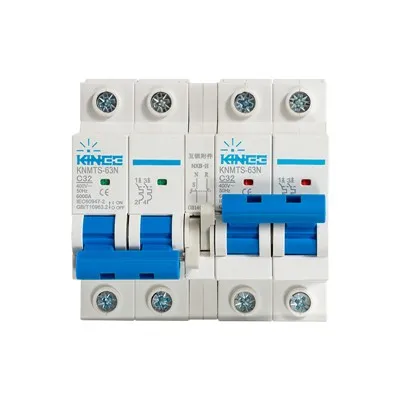
If you are looking for reliable RCCBs for your DC circuits, we are here to help. Our team of experts is always ready to provide you with professional advice on the selection and installation of RCCBs. We understand that every electrical system is unique, and we can offer customized solutions to meet your specific requirements.
RCCB Don’t hesitate to contact us for a detailed discussion about your needs. We can provide you with product catalogs, technical specifications, and price quotes. Let’s work together to ensure the safety and reliability of your DC electrical systems.
References
- “Electrical Safety in DC Power Systems: A Comprehensive Guide”.
- International Electrotechnical Commission (IEC) Standards related to DC RCCBs.
- Research papers on the application of Hall – effect sensors in electrical protection devices.
- Industry reports on the development of DC power systems and the demand for RCCBs.
Wenzhou Kinee Electrical Co., Ltd.
We are one of the most professional rccb manufacturers and suppliers in China, featured by quality products and good price. Please rest assured to buy advanced rccb made in China here from our factory. We also accept customized orders.
Address: Unit 1, Building 31, Wenzhou Wenbo Science and Technology Industrial Park, No. 706 Yanyun Road, Lingkun Street, Oujiangkou Industrial Cluster Area, Wenzhou, Zhejiang Province
E-mail: sandyma@kinee.net
WebSite: https://www.kinee.net/
