As someone who’s spent the last 12 years running a stainless steel handmade sink supplier, I hear this question almost daily from kitchen designers, general contractors, and even home cooks planning their dream renos. It’s a fair one—between pre-fabricated sinks that cost half as much and fancy ceramic or stone options that feel trendy, handmade stainless steel models often get overlooked as a “nice-to-have” instead of a “must-have.” But after seeing how our sinks hold up in everything from a 3-Michelin-starred restaurant’s prep kitchen to a suburban homeowner’s busy family kitchen, I can tell you: the answer is yes, they absolutely are worth the investment—if you know what to look for and how to weigh the long-term value against upfront costs. Stainless Steel Handmade Sink
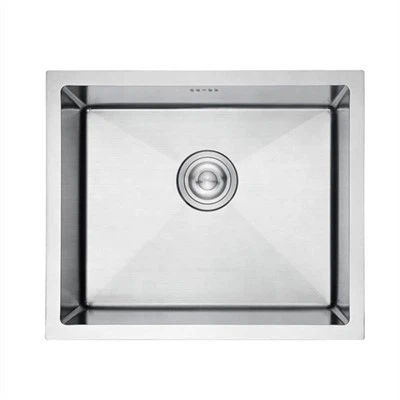
Let’s start with the basics, because most people don’t realize that not all stainless steel sinks are created equal. Pre-fabricated sinks, the ones you find in big-box home stores, are stamped from thin, 16-gauge steel or thinner, and molded in a factory in a matter of minutes. They’re mass-produced, so the seams are welded with automated machines that leave tiny gaps, and the finish is applied before the sink is even shaped. Handmade sinks, by contrast, are crafted by skilled craftspeople, usually from 18-gauge or thicker steel—we use 16-gauge for our commercial models and 18-gauge for residential, because that’s the sweet spot for durability without feeling clunky. The process takes 8 to 12 hours per sink: first, a flat sheet of steel is measured and cut to custom dimensions, then it’s shaped by hand over a form, with every bend smoothed to avoid weak spots. The seams are TIG-welded by hand, which creates a bond that’s stronger than the steel itself, and then they’re polished either to a satin finish (which hides water spots and scratches) or a brushed finish for a sleek, modern look.
Now, let’s talk about the practical stuff, because “worth it” doesn’t just mean feeling high-end—it means standing up to daily use. Last year, a restaurant client came to us after their pre-fabricated sink had rusted through the bottom in 18 months. They ran a ton of pots and pans, dumped boiling pasta water, and used abrasive metal scrubbers to clean it. Their handmade sink? Three years in, it still looks the same as the day we installed it. Why? Thicker steel resists denting, first off. A 16-gauge pre-fab sink will dent if you drop a 10-pound cast iron skillet on it from counter height; our 18-gauge handmade sink will take that hit with just a small bounce, no permanent mark. Rust is another big one. Low-quality stainless steel is usually 201-series, which is cheaper but prone to rust and corrosion when exposed to salt, vinegar, or other acidic foods. All our sinks are made from 304-series stainless steel—the same grade used in hospital equipment and food processing plants—so it’s resistant to corrosion even in high-moisture, high-acid environments. That’s a non-negotiable for anyone who cooks regularly, or runs a commercial kitchen.
But durability is just half the equation. Handmade sinks also offer customization that pre-fab models can’t touch, and that’s where a lot of the value really shines. When a client comes to us, they don’t have to choose from 5 standard sizes. We can make a sink that fits exactly into a 33-inch countertop, even if it has an odd-shaped corner, or add a 10-inch deep bowl for large stock pots, or incorporate a second side bowl for rinsing produce without cluttering the main work space. We also can add features that are impossible to mass-produce: a rear apron that extends 6 inches above the counter for a farmhouse-style look, integrated ledges that let you set cutting boards or colanders right into the sink (we call these “workstation sinks,” and they’re a game-changer for home cooks who hate moving heavy dishes back and forth), or even custom embossing, like a family name or a small logo for a small business. A pre-fab workstation sink might have a flimsy ledge that bends under a cutting board, but a handmade ledge is crafted from the same steel, so it’s strong enough to hold 20 pounds without flexing. That level of custom fit also cuts down on installation headaches, which saves time and money on labor—something many homeowners forget to factor into their initial cost comparison.
I get it, though. The upfront cost is the biggest barrier. A pre-fabricated stainless steel sink might run $150 to $300, while a comparable handmade model is $800 to $1,500. That’s a big difference, so let’s break down the long-term costs to show why that gap is worth it. First, replacement costs. A cheap pre-fab sink will last 5 to 10 years, at most. That means every decade, you’re spending another $200 to $300 on a new sink, plus labor to tear out the old one and install the new one—usually $300 to $500 a pop. Over 30 years, that’s $1,500 to $3,000 in replacement and labor costs, just for the sink. Our handmade sinks, by contrast, have a lifespan of 50 years or more. I’ve seen 70-year-old handmade stainless steel sinks in old farmhouses that still work perfectly, because they were built with solid steel and good welding. That means you never have to spend that replacement money, and you also avoid the hassle of ripping out a sink mid-renovation or dealing with a leak that ruins your cabinetry. A friend of mine had a pre-fab sink that sprung a leak at 2 a.m. when she had guests; she ended up replacing a $500 cabinet base on top of the $300 sink. That’s a cost you won’t have with a well-made handmade model.
Another point: resale value. Kitchens are the biggest factor in a home’s resale value, according to the National Association of Realtors. A high-end, durable kitchen sink is a feature that buyers notice, especially if they’re looking for a home that’s move-in ready and won’t need immediate updates. We’ve had clients who sold their homes 5 years after installing our sinks, and they told us the sink was one of the first things the inspector commented on, and it added about $1,000 to their sale price—enough to cover a big chunk of the difference between the upfront costs. Pre-fab sinks are seen as disposable, so they don’t add that kind of value; in fact, they might even turn buyers off, because they’ll have to budget for a replacement soon after moving in.
I also want to address a common myth: that all handmade stainless steel sinks are the same, or that you can get the same quality for less. That’s not true. Some small shops cut corners, using thinner steel or lower-grade stainless to undercut prices. That’s why it’s important to ask questions when you’re shopping: what gauge is the steel? What series of stainless steel is it? Is the seam TIG-welded by hand, or just a glued bond? Does the finish have a protective coating to prevent scratches? At our shop, we test every sink before it leaves our warehouse—we fill it with water, let it sit for 48 hours, and check for leaks, because even a small seam leak can ruin a cabinet in months. We also offer a 25-year warranty on all our sinks, which is unheard of for pre-fab models (most come with a 1-year warranty, at best). That warranty covers any manufacturing defects, denting, or rust, so you don’t have to worry about unexpected costs down the line.
Let’s also talk about the small, daily conveniences that add up. A lot of home cooks I talk to say they hate their sinks because they’re too shallow, or they have a lip that makes washing dishes awkward, or they scratch easily. Our sinks are made to be used—we craft the bowls deep enough to wash a 5-gallon bucket in, but not so deep that you have to stretch to reach the bottom. The satin finish we use is resistant to light scratches, so you don’t have to panic when you set a knife down or drag a pot across the surface. The integrated ledges on our workstation sinks mean you can prep food right over the sink, catching scraps without making a mess on the counter. For people who cook for large families or host dinner parties, that convenience is priceless—no more rearranging dishes to make space, no more wiping crumbs off the counter before they go into the sink.
Now, I’m not saying handmade stainless steel sinks are the right choice for everyone. If you’re renting a home and plan to move in 2 years, a cheap pre-fab sink makes sense. If you’re on a tight budget and can’t stretch to the upfront cost, there are great mid-range options, though they won’t last as long as a handmade model. But if you’re planning a permanent home, a commercial kitchen, or a space you’ll use daily for 10+ years, the investment pays off.

At the end of the day, a sink is more than just a place to wash dishes. It’s the center of the kitchen—where you prep meals, load groceries, help kids wash hands, and even fill a bucket for gardening. A cheap sink that rusts, dents, or leaks might be a short-term fix, but a handmade stainless steel sink is a long-term upgrade that works as hard as you do. If you’re ready to explore custom options, ask about specs, or get a quote for your space, feel free to reach out and connect with our team to discuss your needs. No generic sales pitch, no pressure—just honest advice about what will work best for your kitchen and your budget.
Stainless Steel Farmhouse Sinks References:
- National Association of Realtors. (2023). Cost vs. Value Report: Kitchen Remodeling.
- American Society of Mechanical Engineers. (2021). Material Properties of Stainless Steel for Food Service Equipment.
- Journal of Construction Engineering and Management. (2020). Longevity of Residential Kitchen Fixtures: A Case Study of Sink Durability.
- Stainless Steel Industry Association. (2022). Guide to Stainless Steel Grades for Food and Commercial Applications.
Dingyi Shichuang Co., Ltd.
As one of the most professional stainless steel handmade sink manufacturers and suppliers in China, we offer a wide range of products with superior quality. Please rest assured to wholesale customized stainless steel handmade sink made in China here from our factory. Contact us for free sample.
Address: Rm908, Building 4, United Fortune Plaza, Jinan Area,China (ShanDong) Pilot Free Trade Zone
E-mail: info@dingyishichuang.com
WebSite: https://www.dysckitchensink.com/
