If you’re in the market for making nuts, bolts, or other fasteners, you’ve probably stumbled on two common tools: nut bolt formers and threading machines. As someone who’s spent over a decade supplying these formers to small and mid-sized fastener shops, I get that it’s easy to mix them up at first glance—both make fasteners, right? But trust me, there’s a huge difference in how they work, what they do best, and why picking the wrong one can kill your production speed, waste money, and even turn out parts that no one will buy. Let me break this down like I would for a guy who’s just starting out and doesn’t want to blow his first big equipment budget. Nut Bolt Former

First off, let’s talk about the order of operations here. Most people don’t realize that making a bolt or nut isn’t just one step—it’s two (or more) main phases. The first is shaping the actual head and shank of the fastener, and the second is adding the external or internal threads. That’s where these two machines split off completely.
Let’s start with nut bolt formers, which is what I sell, so I’m gonna be straight about how they work (no hype, I promise). A former is basically a cold forging machine, but it’s way more precise than the old-fashioned blacksmith hammers your grandpa used. Instead of heating metal until it’s soft, it uses room temperature (cold) metal—usually steel, aluminum, brass, even stainless steel rod—to squish it into shape. Here’s how that goes: you feed a long, straight wire or rod into the machine, and it cuts off a tiny piece (called a blank) at a time. Then, with a series of dies (those are the custom-shaped metal molds that do the work), it presses that blank over and over, gradually forming the bolt’s head (hex, round, square—whatever you need) and the straight shank. Some of the fancier ones can even add features like washers, slots, or drive recesses all in one go, no extra steps.
The big thing here is cold forming. Why does that matter? When you squish metal at room temp, its grain structure gets all aligned and tight, which makes the finished part way stronger than something you’d cut or mill from a solid block. Think about it: if you carve a bolt from a chunk of metal, you’re removing material, which breaks those strong grain lines. With cold forming, you’re compressing the metal so the grain flows exactly along the shape of the bolt or nut, so it’s less likely to snap under pressure. That’s why industrial fasteners—like the ones holding bridge girders together or truck axles—use cold formed parts. No one wants a bolt failing mid-drive, right?
Another plus for formers: speed. A mid-sized former can crank out a bolt every 2 to 5 seconds. Let’s do the math— that’s like 1,200 to 3,600 bolts an hour, nonstop. For small shops, even a basic model will do 500+ an hour. And since so much is done in one machine, you don’t have to pay for extra labor to move parts between different stations. Less handling means fewer defects, too—no dents or scratches from tossing parts around. Most formers can run 24/7 if you’ve got the staff, which is a huge win if you’ve got a big order to fill.
Now let’s flip to threading machines. These are what come in after the former, usually, but some people try to use them for everything, and that’s where things go wrong. A threading machine’s whole job is to cut or roll threads onto a pre-shaped part—so it takes a already made bolt shank (or a nut blank with a hole) and adds the spiral grooves that make it grip a nut (or a bolt, wait no—threads on bolts are external, nuts are internal, you get the idea).
There are two main types of threading machines: cut thread and roll thread. Cut threading uses a sharp tool (like a die or a tap) to carve away material from the shank or hole to make the thread. Roll threading, on the other hand, uses two rotating dies that press into the shank, deforming the metal to form the thread without cutting anything. Wait, that sounds similar to cold forming, right? But here’s the key difference: threading is only for making threads, not for the main shape of the fastener. A threading machine will not make a bolt head. If you tried to run a plain shank (no head) through a threading machine, you’d get a threaded rod, not a bolt. You still need a separate machine (like a former) to make the head first.
So what are threading machines good for? Mostly small runs, or when you need really precise threads for custom parts. But here’s the catch: they’re way slower than formers. A threading machine might take 10 to 30 seconds per part, sometimes even longer if you’re doing a custom thread. And since you’re cutting or deforming only a small section of the part, you lose that strength boost you get from cold forming the entire bolt. Cut threads especially are weaker because you’re removing material, which breaks the grain structure. Roll threads are better, but again, you’re only working on the thread section, not the whole part.
Let me give you a real example to make this concrete. Last year, I had a customer come to me panicking. He had a small shop making custom bolts for farm equipment, and he’d bought a used threading machine thinking he could skip the former step to save money. He was only making bolts with hex heads, so he thought he could just thread the shank and call it a day. First off, he couldn’t get the head right—his threading machine couldn’t form that shape, so he ended up with a bunch of parts that didn’t look like bolts at all. Second, his production was so slow he couldn’t keep up with a single local farmer’s order for 10,000 bolts. He spent more time reworking bad parts than making good ones, and ended up losing the order to a shop that had a former.
Another friend of mine runs a big fastener plant that makes a million bolts a month for automotive companies. He runs 12 of our formers on two shifts, and they all feed into a single set of threading stations. The formers make the bolts in less than 3 seconds each, then the threading machines add the threads in another 2 seconds. Total per part: 5 seconds, which is way faster than if he tried to use threading machines for the whole process. And his parts meet all the automotive strength specs because of the cold forming. That’s the sweet spot: formers for shaping the whole part, threading machines for adding the final detail.
Wait, I should also clear up a common myth: some people call bolt formers “thread formers,” but that’s not accurate. Thread formers (the roll threading type I mentioned earlier) are a subset of threading machines, not the same as a full nut bolt former. A nut bolt former does cold forging of the entire fastener—head, shank, any features—all in one, not just threads. That’s a big mix-up I see all the time on industry forums, so I wanted to get that out there.
Let’s talk about use cases to make this even clearer. If you’re a startup making small quantities of custom fasteners (like 1,000 or less), maybe a threading machine paired with a manual header (a smaller, simpler machine that makes heads) could work, but it’s not ideal. Your costs per part will be way higher, your lead times will be longer, and your parts won’t be as strong. If you’re making over 10,000 parts, or if you need parts that hold up under heavy load (construction, automotive, aerospace), a nut bolt former is non-negotiable. You’ll save money in the long run on labor and materials, and you can run bigger orders without breaking a sweat.
What about the downsides of formers? Let’s be real—they’re a bigger upfront investment than a used threading machine or small header. But if you crunch the numbers, the ROI is insane. Take a basic former that costs around $15,000-$25,000. A threading machine is maybe $5,000-$10,000, but you need two or three to keep up with a former’s output. Plus, a former can run 24/7, while threading machines might need more downtime for setup on custom jobs. Over a year, that former will pay for itself ten times over if you’re doing consistent production.
I also get asked a lot about material compatibility. Both machines work with most metals, but formers handle thicker, stronger materials way better. If you’re making bolts from high-tensile steel or stainless steel, cold forming is the only way to go—threading machines often struggle with hard metals because cutting or rolling threads takes more force, and you end up with more broken tools and defects. Threading machines are fine for softer stuff like aluminum or brass for small runs, but for heavy-duty parts? No contest.
Let me wrap this up with a few key takeaways so you don’t have to sit through my long story. First: nut bolt formers make the entire fastener (head, shank, features) via cold forging, are fast, make stronger parts, and are for high-volume, heavy-duty production. Second: threading machines only add threads to pre-shaped parts, are slower, have lower strength, and are better for small runs or custom thread jobs. Third: you almost never use one alone—most production lines pair a former for shaping with threading machines for final threads, not the other way around.
If you’re still not sure which one fits your shop, hit me up. I don’t do pushy sales stuff— I’ll ask you about your order volume, the materials you use, what kind of parts you’re making, and be honest about whether a former is the right call, or if you might need to pair it with other machines. I’ve been in this game long enough to know that buying the wrong equipment is a huge waste, and I’d rather help you get it right than make a quick sale. Drop a message whenever you’re ready to talk numbers or specs.
Oh, and one last thing—always check the grain structure of the parts you’re making. If you take a bolt and snap it in half, the lines inside should run along the length of the shank, like fibers in wood. That’s cold forming. If the lines are all messed up and broken, that’s probably a threading machine part, and it’s way more likely to fail. Trust me, that’s a difference you can see with the naked eye if you know what to look for.
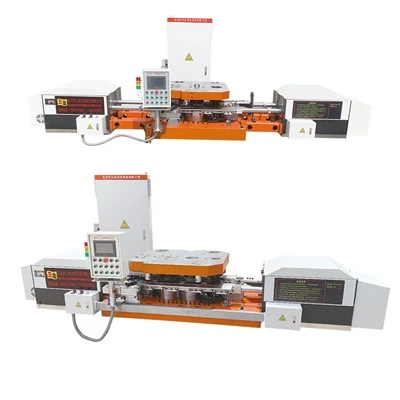
Now go ahead and build something great. I’m here if you need help picking the right gear.
Nut Bolt Manufacturing Machine References:
- Fastener Technology International. "Cold Forming vs. Threading: Key Differences for Fastener Production," 2022.
- Society of Manufacturing Engineers. "High-Volume Fastener Manufacturing: Nut Bolt Formers and Process Optimization," 2021.
- Industrial Machinery Digest. "Buyer’s Guide to Cold Forming Equipment for Fastener Shops," 2023.
Quanzhou Sanye Intelligent Technology Co., Ltd.
As one of the most professional nut bolt former manufacturers and suppliers in China, we have world-leading production equipment and strong manufacturing capabilities. Please rest assured to buy customized nut bolt former made in China here from our factory. Welcome to contact us for quotation.
Address: Anhai Town, Jinjiang City, Fujian Province, China
E-mail: jack_tmm@163.com
WebSite: https://www.qzsymanipulator.com/
