If you’ve ever stood in a showroom at dusk, watching track lights shift from bright daylight to a warm, gentle glow, or adjusted the mood in a home theater without fumbling for a dozen different switches, you’ve likely interacted with a dimmable LED driver—even if you didn’t know it. As someone who’s spent the last decade supplying LED drivers to electricians, lighting designers, and building owners, I can tell you this component is the unsung hero behind every smooth, flicker-free dimming system that doesn’t sacrifice energy efficiency or LED lifespan. Let’s break down what a dimmable LED driver actually is, how it works, and why it matters more than you might think for your next project. LED Drivers

First, let’s start with the basics: a standard LED driver isn’t the same as a dimmer switch. If you’ve ever tried to plug a regular LED bulb into an old dimmer meant for incandescent lights and watched it flicker, pulse, or refuse to dim, you’ve felt that disconnect. Incandescents run on a simple system: voltage fluctuates, and the bulb’s filament heats up or cools down to change brightness. LEDs, by contrast, are diodes—semiconductors that only produce light when a precise, steady current runs through them. Too little current, and the bulb is dim or doesn’t turn on at all; too much, and you’ll shorten its lifespan, sometimes killing it in a matter of months. That’s where the driver comes in. A standard (non-dimmable) LED driver acts like a translator: it takes the high-voltage alternating current (AC) from your wall outlet and converts it to the low-voltage direct current (DC) that LEDs require, while regulating that current to stay within a safe, narrow range.
A dimmable LED driver does all that, plus it lets you adjust that current smoothly to change brightness levels, from 100% down to as low as 1% in some models. The key difference is that it’s designed to work with a dimmer switch, translating the dimmer’s control signal (whether that’s a phase-cut signal from a standard wall dimmer, a 0-10V signal for commercial lighting systems, or even Bluetooth for smart home setups) into adjustments to the LED’s power. Think of it like a volume knob for your favorite speaker: the dimmer is the knob you turn, and the driver is the amplifier that turns that knob’s movement into a change in how loud (or bright) your light gets.
Now, if you’ve dealt with bad dimmable LEDs before, you might be wondering why some systems flicker, hum, or stop working after a few months. That’s almost never the bulb’s fault—it’s the driver’s. Early dimmable LED drivers were built to be backwards-compatible with old incandescent dimmers, which use a phase-cut design that chops off part of the AC wave to reduce power. Those early drivers often didn’t account for the small, low-power load of LEDs, so they’d misread the dimmer’s signal, leading to that annoying flicker or a dim range that only goes down to 30% before it cuts out entirely. Today’s drivers fix that: modern designs use microprocessors to fine-tune how they respond to dimmer signals, and they often include “compensation features” that work with a wide range of popular dimmer models, so you don’t have to worry about buying a new switch just for your LEDs.
Let’s talk about the different types of dimmable drivers, because not all are made for the same use case. If you’re working on a residential project—say, a kitchen remodel or a bedroom with smart lighting—you’ll most often choose a phase-cut driver (either leading-edge or trailing-edge, depending on your dimmer). Leading-edge drivers work with the most common incandescent dimmers, the ones you’ve had in your walls for decades, so they’re easy to swap in for a basic upgrade. Trailing-edge drivers, by contrast, are designed for newer dimmers, especially those for low-voltage LED or CFL bulbs; they offer smoother dimming at low levels, less flicker, and are the go-to for smart home systems that use Wi-Fi or Bluetooth control.
For commercial projects—like office buildings, retail stores, or multi-family housing—you’ll likely need one of the analog control types. The most common is 0-10V dimming, which uses a separate low-voltage wire to send a signal between the dimmer and the driver, ranging from 0V (off) to 10V (full brightness). This is super reliable for large systems, because it means you can adjust a whole bank of lights at once from a building’s control panel, no wiring issues or signal interference. There’s also DALI (Digital Addressable Lighting Interface), which is even more precise: it lets you control individual fixtures, set schedules, and even integrate with HVAC or security systems for energy savings. For example, a retail store can set its display lights to 50% brightness during off-hours, and a DALI driver will adjust each fixture smoothly, no visible change for customers.
One question I get all the time is: “Can I use a dimmable driver with non-dimmable LED bulbs?” The short answer is yes, but it’s usually not necessary. A dimmable driver will work fine with non-dimmable bulbs, but you won’t get any dimming functionality out of it—you’ll just have a regular driver. The reverse, though, is a bad idea: a non-dimmable driver with a dimmable bulb will almost always cause flicker, reduce the bulb’s lifespan, or even damage the bulb over time. That’s why getting the right match between driver, bulb, and dimmer is non-negotiable.
Another big advantage of dimmable LED drivers is energy efficiency. Dimming a light by 50% doesn’t just make it dimmer—it cuts power use by roughly the same amount, which adds up over time. For a small retail space with 20 track lights, dimming those lights to 70% during slow hours can save hundreds of dollars a year on electricity. Plus, running LEDs at lower power (when you don’t need full brightness) actually extends their lifespan. I’ve seen projects where using dimmable drivers instead of non-dimmable ones reduced bulb replacements by 40% over three years, because the lights weren’t running at full capacity 24/7. That’s not just good for your bottom line—it’s better for reducing waste, too.
Of course, there are a few common pitfalls to watch out for when choosing a dimmable LED driver. First, wattage matching is critical. A driver has a maximum wattage it can handle, and you need to make sure that adds up to the total wattage of all the LEDs you’re powering. If you install a 60W driver for 10 5W bulbs, that works fine, but a 60W driver for 15 5W bulbs will overheat and fail quickly. Second, compatibility: as I mentioned earlier, not all drivers work with all dimmers. If you’re using a smart dimmer with Apple HomeKit, for example, you’ll need a driver that’s certified to work with HomeKit, not a generic phase-cut driver that won’t connect to Wi-Fi. Finally, dimming range: some budget drivers only dim down to 10% brightness, while high-end ones go down to 1%, which is perfect for accent lighting in a gallery or warm lighting in a bedroom. Spending a little more on a driver with a wide dimming range makes a huge difference in the quality of light, and avoids the frustration of a dimmer that won’t go low enough.
I’ve seen too many projects where people cut corners on drivers, only to end up with flickering lights, callbacks, and extra costs to replace both bulbs and drivers. That’s why I always tell clients: the driver is the most important part of your LED system, not the bulb. A $10 bulb paired with a $20 high-quality dimmable driver will outlast a $15 bulb paired with a cheap $5 driver by years.
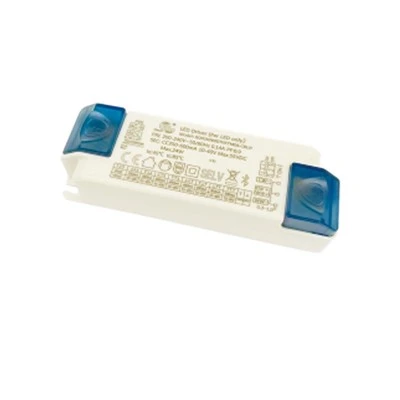
If you’re planning a project—whether it’s a residential remodel, a commercial build, or a retrofit—and you’re not sure which dimmable LED driver is right for you, don’t hesitate to reach out. Our team has worked with hundreds of electricians, designers, and property managers to match the right driver to their specific needs, whether that’s a simple residential phase-cut driver, a 0-10V model for an office, or a smart Bluetooth driver for a hotel lobby. We’ll help you avoid common mistakes, make sure everything is compatible, and even offer support for larger projects to ensure smooth installation. Don’t settle for flickering lights or short LED lifespans—get the right driver, and your system will work better, last longer, and save you money for years to come.
TRIAC Dimmable LED Driver References
- Illuminating Engineering Society (IES). (2020). LED Drivers for Lighting Applications: Design, Testing, and Selection. IES Press.
- National Electrical Manufacturers Association (NEMA). (2019). Standard for Dimmable LED Drivers. NEMA Publications.
- U.S. Department of Energy. (2021). Energy Efficiency Advantages of Dimmable LED Lighting Systems. Office of Energy Efficiency and Renewable Energy.
Foshan Gedi Electrnoic Co., Ltd.
As one of the most professional LED drivers manufacturers in China, we’re featured by quality products and good price. Please rest assured to buy advanced LED drivers for sale here from our factory. If you have any enquiry about cooperation, please feel free to email us.
Address: 4th Floor, Building 8, South District, Huayi Decoration City, No.10, Laixiang Road, Shiwan Sub-district, Chancheng District, Foshan City, Guangdong Province, China.
E-mail: market@gedi-lighting.com
WebSite: https://www.gedi-lighting.com/
