If you’ve ever spent a day on quad skates—rolling through a park, grinding at your local rink, or cruising a trail—you know the biggest, most frustrating mistake a new skater makes is getting boot tightness wrong. Too loose, and your foot slides around inside the boot mid-crossover; too tight, and by the third song at the rink, your toes go numb, and you’re hobbling to the exit. As a quad skate supplier who’s been working with skaters of all levels for over a decade, I’ve seen this mistake derail so many great sessions. Today, I’m breaking down how to adjust quad skate boot tightness the right way, based on real skater feedback, biomechanics, and the decades of design that go into making each pair of these boots work for you. Quad Roller Skates
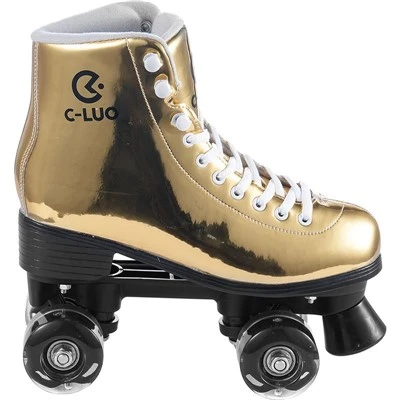
First, let’s start with the basics: quad skate boots aren’t like regular shoes, and they aren’t like inline skate boots either. Quad skates have a sturdier, often taller boot to support your ankles—way more than inline skates, which are built for speed on pavement. That support means tightness isn’t just “snapping the laces all the way” or cranking the velcro straps until they’re impossible to yank. It’s a structured process, broken down by section, that lets your foot move how it needs to while staying locked in place. I see new skaters skip this all the time, grabbing for the top lace first or pulling one strap so tight their ankle restricts, and it’s no wonder they end up with blisters or instability.
Let’s split the boot into three key zones, because adjusting each one does a different job: the forefoot (toes and the ball of your foot), the midfoot (arch and instep), and the ankle/calf area. Start with the laces or straps at the toe box, not the top. Why? The toe box has just enough room for your toes to wiggle a little when you’re standing, but not so much that they slide forward when you stop. If you lace the toe box too tight, you’ll cut off circulation in your toes before you even leave the house. How do you test this? When the boot is on, your toes should have about the space of a fingertip between the end of your big toe and the front of the toe box. That’s the sweet spot. No wiggling around like you’re in a slipper, no feeling like your toes are pressed against the plastic. I always tell customers who are fitting their first pair: if you can see your toe nails turning white when you pull the toe laces, loosen them a touch.
Next, move up to the midfoot and instep. This is where most skaters make their second mistake—cranking the midfoot laces or velcro straps too tight, which pinches your instep and creates pressure points that turn a fun skate into a day of sore feet. The midfoot’s job is to hold your arch in place so your foot doesn’t roll side to side, which is key for balance, but it shouldn’t be so tight that you can’t feel the arch of your foot sitting naturally in the boot. A good rule here: once the boot is laced up at the midfoot, you should be able to slide one finger under the lace or strap at your instep, no problem. If you have to force your finger, it’s too tight. If your finger slides too easily, that’s too loose, and you’ll start to feel that “foot floating” feeling mid-crossover, which leads to ankle wobble. For people with higher arches or wider insteps, this is extra important—we get lots of requests for boots with adjustable midfoot straps specifically because skaters with that foot type struggle to get this zone right without pinching.
Now the most important zone for quad skates: the ankle and lower calf. This is where the boot’s support lives, and getting it wrong is the #1 cause of ankle sprains, especially for new skaters or people getting back into quad skating after years off. The ankle zone should support your ankle without locking it so tight you can’t flex or twist it gently. That’s right—you don’t want it so stiff you can’t shift your weight forward when you need to stop or lean into a turn. So how tight is too tight here? Again, the finger test works, but adjust it a little: slide two fingers under the lace or strap at the top of the ankle, right where your boot meets your skin. If you can barely get two fingers in, it’s too tight. If you can fit three or more, it’s too loose, and your ankle will shift inside the boot. I’ve seen experienced speed skaters crank the ankle so tight it looks like they’re wrapped in a cast, but that’s for their specific discipline—for casual skaters, artistic skaters, or park skaters, that level of tightness is overkill and will leave your calf sore by the end of the day.
Now, what about different types of skaters and different styles? Because not every quad skate boot is the same, and your tightness will adjust based on what you’re doing. Let’s break that down, since we supply boots for all kinds of skaters—from casual rink goers to competitive artistic skaters.
For casual skaters, especially people who are just learning: err on the side of slightly looser than you think. Learning to balance on quad skates takes time, and a boot that’s too tight will make you overcompensate with your ankles, leading to more fatigue and more falls. I always tell new skaters to put on their boots, lace them up to the point where the zones feel right, then stand up, walk around the room, and do a few small side steps. If your foot feels like it’s “glued” to the boot, loosen the top lace a little. If it feels like it’s shifting, tighten the midfoot or ankle just a touch. Also, break them in! New leather boots especially will stretch about half a size in the first 10-15 uses, so if they feel a little snug at first, that’s normal—don’t crank the laces so tight they’re painful long-term. We get so many emails from new skaters who say their new boots feel too tight after the first use, and 9 times out of 10, they over-laced them on day one.
For artistic skaters or speed skaters: this is where tightness gets specific. Artistic skaters need a tighter ankle lock to do spins and jumps, so they’ll often lace the ankle zone a little tighter, sometimes with “lock laces” at the top that cinch the boot for stability. Speed skaters, meanwhile, prioritize a snug midfoot and ankle but still give the forefoot a little room to flex when they’re pushing off. That’s why we design our performance lines with extra lace hooks at the mid and ankle, so skaters can adjust each zone independently, instead of lacing straight across. If you’re competing, you’ll probably want a pro fitter to adjust your tightness, but for casual artistic skaters, follow the zone rules but tighten the ankle zone to two fingers instead of three, as long as you can still flex your ankle.
For people with wider feet or foot issues, like bunions or high arches: adjust your lacing technique to compensate, not just tightness. Many skaters with wide feet skip the step of skipping a lace at the forefoot, so they don’t pinch their bunion. If you have a bunion on your big toe, leave the top two lace hooks at the toe box undone, and lace the boot starting at the midfoot. That takes pressure off the bunion while still keeping the rest of the boot snug. For high arches, we recommend our boots with padded insoles that give a little, so you don’t have to crank the midfoot straps to hold your arch. If you do need to adjust tightness, keep the midfoot snug but not pinching, so the insole does the work of supporting your arch instead of the strap.
Now, common mistakes I see all the time, even from experienced skaters. First, skipping the break-in period. I mentioned this earlier, but it’s worth repeating: synthetic boots stretch less than leather ones, but even synthetic will give a little. If your boots are brand new and feel tight, don’t crank the laces to compensate—wear them around the house with thick socks for a few days, and they’ll loosen up to your foot shape. Second, only adjusting velcro straps, not laces. Velcro is great for quick adjustments, but it doesn’t give as consistent tension as laces. If you have leather boots, use laces first, then adjust the velcro straps on top to lock in the fit. That way, you get even tension across all zones, not just where the velcro is. Third, checking tightness when sitting down, not standing. Your foot is longer when you stand up, right? So if you lace your boots while sitting, by the time you stand up, your toes are pressed against the front of the boot. Always do the final tightness check standing, with your weight on the skates.
At the end of the day, the goal of adjusting quad skate boot tightness is simple: keep your foot locked to the boot so you have control, but not so tight that you’re uncomfortable or injured. There’s no one-size-fits-all, because every foot is different, every skate style is different, and every boot is designed a little differently. That’s why we work with skaters to match them to the right boot, then provide this guide so they can adjust it to their exact needs. If you’ve tried adjusting your tightness and still end up with blisters, numb toes, or instability, it might be that your boot is the wrong size, or you’re using the wrong lacing technique. We help skaters troubleshoot that all the time, whether they’re casual riders or competitive athletes.

If you’re looking for new quad skates, or need help finding the right fit for your style, we’re here to help. We supply quad skaters around the world with high-quality, durable boots designed for every level, from beginner casual skaters to pro competitors. Whether you’re shopping for your first pair or upgrading your performance gear, we can help you find the right pair, plus tips to adjust tightness perfectly for every session. Reach out to our team today to discuss your needs, get fit advice, or learn more about our product lines.
Riveted Inline Skates References:
- Roller Skating Industry Association. (2022). "Quad Skate Boot Biomechanics and Fit Standards." RSI Technical Report Series.
- American Podiatric Medical Association. (2021). "Proper Footwear Fit for Recreational Skating: Reducing Overuse Injuries." APMA Consumer Health Guide.
- International Artistic Skating Federation. (2023). "Competitive Quad Skate Boot Adjustment Guidelines for Artistic and Freestyle Disciplines." ISF Rulebook Addendum.
- Sports Biomechanics Lab, University of Oregon. (2020). "Tension Distribution in Quad Skate Boots: Correlation to Performance and Injury Risk." Journal of Sports Sciences and Biomechanics.
Yongkang Jinsibo Industry & Trade Co., Ltd.
We are one of the most professional quad roller skates manufacturers and suppliers in China, also support customized service. With abundant experience, we warmly welcome you to wholesale bulk high quality quad roller skates in stock here from our factory. Contact us for pricelist.
Address: No.36, Lin’keng Chenlu Mountain Road, Gushan Town, Yongkang City
E-mail: jinsibo2026@126.com
WebSite: https://www.cnjinsibo.com/
