As a supplier specializing in auxiliary machine series for manufacturing plants, I get this question at least a dozen times a week—usually from shop floor managers who’ve just wrapped up a meeting about smart factory upgrades, or from maintenance teams who’ve spent too many late nights troubleshooting equipment that only sends alerts when it’s already broken. For years, auxiliary machines (think blowers, pumps, compressors, and the conveyor units that keep production lines moving) were seen as the “unsung workhorses” of manufacturing: reliable, yes, but too clunky, too legacy, to connect to anything as sleek as an IoT system. Today, I’m here to tell you that’s not true. Not only can auxiliary machine series connect to IoT—doing it is one of the fastest ways to cut costs, reduce downtime, and future-proof your operations. Auxiliary Machine Series
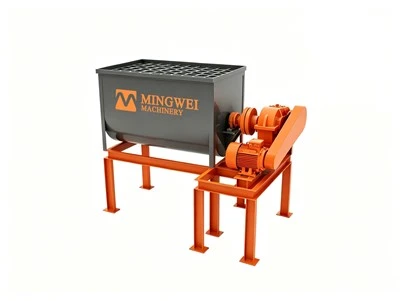
Let’s start with the basics, because I know some of my customers still think IoT is just a buzzword for tech bros. An auxiliary machine series is a group of standalone support equipment that feeds into a main production line. A textile factory might have a series of auxiliary machines that spin raw cotton, filter air for drying, and move finished fabric to packaging. A food processing plant relies on auxiliary pumps to move ingredients, blowers to cool products, and compressors to power pneumatic tools. For decades, these machines ran on basic controls—mechanical switches, simple timers, and a handful of analog gauges that a technician had to walk over to read. If a pump failed at 2 a.m., you didn’t know until the next shift, by which time a half-batch of product was ruined and production was idled for 8 hours. That’s where IoT comes in. IoT systems connect physical devices to the internet, letting you collect real-time data, monitor performance remotely, and automate actions without a human needing to be on site.
At my company, we started testing IoT integration for our auxiliary machine series about four years ago. Back then, we were worried about compatibility—our machines were built in 2018, 2020, all with different control boards, some even with analog-only systems. We thought we’d have to rewire every single unit, which would cost our customers thousands of dollars and take weeks of downtime. Turns out, the biggest barrier wasn’t the machines themselves—it was the fear of complexity. Today, we offer two levels of IoT connectivity for our auxiliary series, and both work with almost any existing manufacturing setup. For machines built after 2019, we install small, low-cost edge gateways that plug directly into the machine’s control port. These gateways don’t require a full IT overhaul; they sync with your existing plant network, collect data on energy use, vibration, temperature, and runtime, and send that data to a cloud dashboard. For older machines, we add compact sensors that stick to the exterior of the pump or blower—no wiring needed, just a battery-powered device that reads performance metrics and sends updates via Bluetooth to a local gateway.
The results from our first pilot customers still blow me away. A paper mill in Ohio tried our IoT-connected auxiliary blower series last year. Before, they’d schedule blower maintenance every six months, even if some blowers were running perfectly and others were starting to show signs of wear. They were spending $120,000 a year on unnecessary parts and labor, and had an average of 18 hours of downtime per month from unplanned blower failures. After installing our IoT system, they cut maintenance costs by 40%—they now only service blowers when the dashboard flags a vibration spike or temperature rise that indicates a problem. Their unplanned downtime dropped to 3 hours a month. That’s not a small win; that’s tens of thousands of dollars back in their pocket, every single month.
But it’s not just about reducing maintenance. IoT integration for auxiliary machines unlocks opportunities you might not have considered. For example, energy costs are one of the biggest expenses for manufacturing plants, and auxiliary machines account for up to 30% of a plant’s total energy use, according to the U.S. Department of Energy. Our IoT dashboards track energy consumption per machine, so a customer can see that their secondary air compressor runs 24/7 even when the main production line is shut down for the night. That’s a huge waste of energy, and money. With IoT, you can set automated rules: if the main line is idle for more than 15 minutes, the compressor automatically shuts off, and sends an alert if it needs to restart for maintenance. One of our food processing clients in Wisconsin did that last quarter, and cut their auxiliary machine energy bills by 22% in just two months.
Another big myth I hear is that connecting auxiliary machines to IoT makes them more vulnerable to cyberattacks. I get it—when you add a device to your network, you have a new point of entry for hackers. But the good news is that modern IoT security for industrial systems is way more robust than people think. Our edge gateways use end-to-end encryption, and we never store sensitive plant data on our own servers—all data stays on the customer’s cloud account, so they control it. We also work with every customer to make sure their network is set up correctly, with firewalls and segmented access so that even if a gateway has an issue, it can’t compromise the main production line. We’ve had zero security incidents in four years of IoT integration, and that’s not luck—it’s because we build every system with security as a core feature, not an afterthought.
If you’re still on the fence, let’s talk about the future. More and more customers are asking for IoT connectivity as a standard, not an add-on. Last year, 65% of the auxiliary machine series we sold included IoT capabilities, up from just 28% in 2020. Why? Because the next generation of manufacturing workers—kids coming out of trade schools and engineering programs—expect smart tools. They don’t want to walk around the shop with a clipboard and manually record machine readings; they want a dashboard on their phone that alerts them to a problem before it becomes a breakdown. Turnover in manufacturing is high, and training new technicians on legacy machines that require specialized knowledge is expensive. IoT-connected auxiliary machines are easier to operate, easier to troubleshoot, and reduce the burden on your team.
I want to be clear: it’s not a one-size-fits-all solution. If you have a small workshop with just one auxiliary pump, IoT might not be worth the upfront cost. But if you have a series of auxiliary machines powering a production line, even a medium-sized one, the return on investment is usually within 12 to 18 months. The key is to start small—maybe test a single machine with IoT first, see the data, see the cost savings, then scale from there. That’s what we recommend to all our new customers, and it’s how most of our long-term partnerships started.

At the end of the day, auxiliary machines are the backbone of almost every manufacturing operation, and they deserve the same smart technology as your main production equipment. If you’re ready to explore how connecting your auxiliary machine series to an IoT system can improve efficiency, cut costs, and reduce downtime, I’d love to discuss your specific needs. We work with all types of manufacturing facilities, from small local shops to large industrial plants, and we can customize an IoT solution that fits your budget and your equipment. Don’t wait until your next unplanned downtime incident to consider upgrading—reach out today to learn more about how we can help you connect your auxiliary machines to a smarter, more efficient future.
Crushing and Grinding Machines References
- U.S. Department of Energy. (2022). Energy Efficiency and Renewable Energy: Industrial Auxiliary Systems Assessment.
- International Society of Automation. (2021). Industrial IoT Security Best Practices for Auxiliary Equipment.
- Manufacturing Enterprise Solutions Association International. (2023). Smart Auxiliary Machinery: Operational Impact and ROI Analysis.
- National Institute of Standards and Technology. (2022). Edge Computing for Industrial IoT Applications in Manufacturing.
Henan Mingwei Machinery Equipment Co., Ltd.
As one of the most experienced auxiliary machine manufacturers in China, we have world-leading production equipment and strong manufacturing capabilities. Please rest assured to buy durable auxiliary machine for sale here from our factory. For price consultation, contact us.
Address: No.461 Qudong Jinsui Avenue, Hongqi District, Xinxiang City, Henan Province, China
E-mail: info@hnmwm.com
WebSite: https://www.hnmwmequip.com/
