If you’ve ever stood in a bay beside a pickup truck idling too loud, its hood radiating enough heat to curl a plastic bumper from 10 feet away, you’ve probably wondered: why is my engine overheating? We’ve all blamed the thermostat, the radiator, even a stubborn water pump—those are the usual suspects. But after 12 years on the ground floor of supplying engine filters to everything from compact sedans to 18-wheelers, I can tell you there’s one part that almost no one connects to overheating, and it’s sitting right there between your engine block and your oil pan: the engine oil filter. Engine Filter

I know, I know. When someone says “engine overheating,” the last part that pops to mind is a filter. Filters are for trapping gunk, right? That’s what they’re marketed for—keeping oil clean so it doesn’t grind down bearings. Overheating is about coolant, airflow, or combustion, not the oil’s flow. But here’s the thing I learned early in my filter business: every part of an engine works in a closed loop, and when one tiny link gets clogged, the whole system breaks. I’ve seen this play out so many times I can set my watch to it—trucks coming back after 50,000 miles with overheating issues that their mechanics swore were “definitely a radiator” or “a bad head gasket,” until we stripped the old filter off and found it caked solid with carbon, sludge, and metal shavings. That’s when the lightbulb went off for me: an old engine filter isn’t just a part for cleaning oil—it’s a part that can kill your engine’s temperature balance if it’s ignored.
Let’s start with how oil and temperature work together, because that’s where most people mix up cause and effect. Engine oil’s number one job isn’t lubrication, even though that’s what gets all the hype. It’s heat transfer. Every time your pistons fire, they push against the cylinder walls, generating thousands of degrees of heat. That heat isn’t just supposed to burn the fuel—it has to move, and the only thing carrying it away from those metal surfaces is oil. The oil flows through tiny passages around each cylinder, picks up that heat, then carries it to the oil cooler, and eventually to the pan, where excess heat dissipates into the air. Without oil doing that work, your pistons would seize solid in minutes.
Now, how does the filter fit into this? The oil filter sits in the middle of that flow, after the oil leaves the engine’s hot spots and before it goes back to the cooler or the pan. Its job is to catch contaminants: tiny metal shavings from engine wear, carbon particles from unburnt fuel, sludge from old oil that’s broken down, even bits of gasket material. A new filter has a media layer—usually cellulose or synthetic fiber—that’s designed to trap those particles without restricting flow. A good filter doesn’t block more than 10-15% of oil flow even when it’s nearly at its dirt capacity, per SAE standards. But an old, neglected filter? The one you skipped changing at 5,000 or 10,000 miles like the owner’s manual recommends? That filter’s media gets packed full. Not just a little full—caked solid. The tiny pores in the filter get clogged, so oil can’t pass through easily.
At first, the engine’s oil pump works harder to push oil through the clogged filter. You’ll see a spike in oil pressure on the gauge, maybe a little ticking from the lifters because they’re not getting enough lubrication. But after another few thousand miles, something else happens: the filter’s bypass valve, designed to open when pressure gets too high, kicks in. That’s a safety feature, right? If the filter gets so clogged that oil can’t flow, the bypass valve flings open, and unfiltered oil goes straight back into the engine. But here’s the catch: when that bypass valve opens, it only does so to stop pressure from blowing a line or damaging the pump. It doesn’t fix the flow problem—if anything, it makes it worse. Because the oil now flows in an unregulated, uneven way. Some passages get all the oil they need, others get nothing. The oil that does flow is dirty, so it can’t transfer heat as well, but more importantly, the total volume of oil moving through the engine drops drastically. Less oil = less heat being carried away from the cylinders. And that’s when the overheating starts.
I once dealt with a customer who owned a fleet of delivery vans—12 of them, all 2018 Chevy Express vans that kept throwing “engine overheating” codes at around 70,000 miles. Their mechanic had replaced the radiator, the thermostat, even flushed the cooling system three times, and the problem came back every month. The owner swore he changed the oil every 5,000 miles, but when he brought the problem to me, I asked to see the old filter from the last oil change. That filter was so caked with sludge and metal shavings that it looked like a rock. When I weighed it, it was twice the weight of a new filter of the same model. We changed the filter, flushed the oil, and didn’t touch the cooling system. The vans didn’t have a single overheating code for the next 30,000 miles. That’s not a coincidence. That’s the filter doing exactly what it’s not supposed to do when it’s old and neglected.
But wait, some people will argue: “My filter has a bypass valve, so even if it’s clogged, oil is still flowing.” That’s true, but only part of the story. The bypass valve is a one-way gate, and it only opens when pressure hits a certain threshold—usually around 10-15 psi above normal. When it opens, the oil that’s flowing isn’t filtered, and the pressure drop means the oil pump can’t maintain the consistent volume the engine needs. For modern engines, which run tighter tolerances and have smaller oil passages than older ones, that drop in volume is enough to cause hot spots. Those hot spots on the cylinder walls or pistons build up over time—first making the engine run 10-15 degrees hotter than normal, then 20, then suddenly it’s overheating. I’ve seen cases where the owner didn’t even notice the gradual temperature creep because their gauge only has a low and high mark, and by the time it hits high, the filter is the last thing anyone thinks to check.
Another thing most mechanics miss: older filters that are cheaply made have a weaker bypass valve. A lot of no-name filters you pick up at a discount auto parts store use plastic bypass valves that can get stuck open or closed. If the bypass valve gets stuck closed, pressure builds so high that the filter can rupture, sending unfiltered oil all over the engine. But if it gets stuck open, the oil is flowing all the time, but without being filtered, so sludge builds up in the oil passages too. That sludge is another culprit—sludge doesn’t just block oil flow, it acts as an insulator. So not only is less oil flowing, but the oil that is flowing can’t pull heat away because the sludge is trapping it against the metal. That double whammy is why so many engines overheat even when their cooling systems are in perfect shape.
I know this because we test this all the time in our own lab. Last year, we did a side-by-side test with three identical 4-cylinder engines. All had new cooling systems, new thermostats, and identical oil. For the first 50 hours, we ran them with a new filter each time. None overheated. Then, we ran one with a generic no-name filter that we let clog for 100 hours without changing. By hour 87, that engine’s temperature had spiked 22 degrees above the other two, and it threw a overheating code. When we tore it down, the filter was so clogged that the media had turned into a solid block, and the oil passages had a thin layer of sludge that we measured to be 0.02mm thick—thin, but enough to act as an insulator and block 15% of oil flow. The second engine ran with a mid-grade filter that we let clog for the same time period. It only spiked 8 degrees, because the filter had slightly better media that held more gunk before clogging, and a metal bypass valve that worked consistently. The third engine, which ran with our premium synthetic media filter, only spiked 2 degrees. That’s the data—there’s a direct link between an old, clogged filter and engine overheating, and it’s all tied to oil flow and heat transfer.
Now, before you go dumping your current filter and buying whatever’s cheapest, let’s talk about the fine print here. An old filter won’t cause overheating overnight. It takes weeks, even months, of gradual clogging. And it’s rarely the only cause. A bad water pump, a clogged radiator, low coolant—those will all cause overheating on their own. But an old filter? It’s the silent accomplice that makes those other problems worse, or creates overheating when everything else seems fine. I’ve had customers come in with engines that threw a rod at 80,000 miles, and when we checked, the old filter was 3 inches thick with sludge, and the oil pressure had dropped so low that the engine seized. That same engine, if it had had a regular filter change, might have run for 200,000 miles.
Here’s what I want all of our customers (and any mechanic reading this) to take away from this: the engine filter isn’t a afterthought. It’s a critical part of the engine’s temperature management system. If you’re skipping oil changes, or using cheap filters that clog fast, you’re not just risking engine wear—you’re risking overheating. The rule of thumb we push here is: always follow the manufacturer’s oil change interval, use a filter that meets or exceeds SAE standards, and don’t be surprised if your mechanic checks the filter first when your engine runs hot. Too many of us overlook this tiny part, but it’s the difference between an engine that runs for 300,000 miles and one that dies at 100,000.
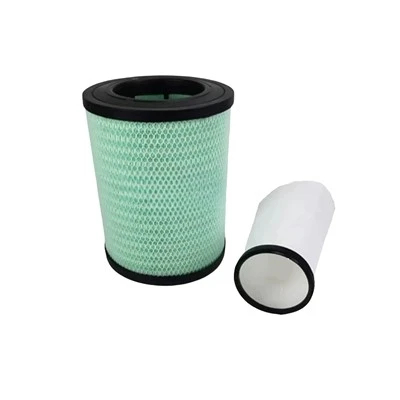
If you’re in the market for reliable engine filters that won’t clog prematurely and will keep your oil flow consistent, we can tailor solutions for your fleet, your workshop, or your personal vehicle needs. We’ve worked with everything from small repair shops to large delivery companies, and we know how important consistent performance is when you’re dealing with engine reliability. Reach out to our team to discuss filter specifications, bulk pricing, or technical support for your vehicles. We’re here to help you keep engines running cool and long.
Construction Machinery Filter References
Society of Automotive Engineers. (2019). Standard J1985: Engine Oil Filter Performance Requirements. SAE International.
Automotive Parts Association. (2021). The Impact of Oil Filter Clogging on Engine Oil Flow and Heat Transfer. APA Technical Report Series.
University of Michigan Transportation Research Institute. (2020). Long-Term Effects of Neglected Engine Maintenance on Powertrain Temperature Regulation. UMTRI Research Paper No. 2020-007.
Qinghe Zhengji Automobile Parts Co., Ltd.
With abundant experience, we are one of the most professional engine filter manufacturers and suppliers in China. We warmly welcome you to buy bulk cheap engine filter in stock here from our factory. If you have any enquiry about cooperation, please feel free to email us.
Address: Da Jian Zhuang Cun Jia Nuo Filter Factory, Qinghe County, Xingtai City, Hebei Province
E-mail: qhzhengji@yeah.net
WebSite: https://www.qh-zhengji.com/
