Hey there, if you’ve ever worked with flat load cells—whether you’re a seasoned engineer, a procurement specialist checking spec sheets, or someone just dipping your toes into industrial weighing for the first time—you’ve definitely asked this question at least once: “What’s the maximum voltage I can run my flat load cell at without frying it?” Flat Load Cells
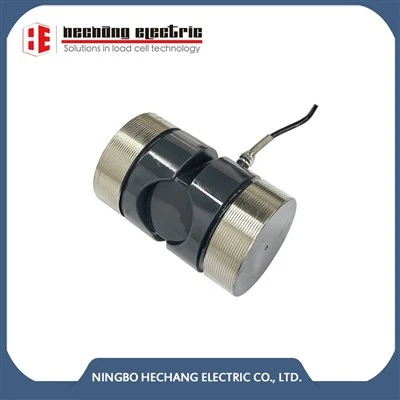
I get it, because I’m right there with you—half the calls we get here at Flat Load Cells (yeah, the team behind these things) start with that exact question. People have this idea that cranking up the voltage will make their load cell more accurate or faster, but it’s way more like pushing a bike too hard up a hill: you might get a little farther, but eventually, something’s gonna snap. Let’s break this down the way we actually talk about it on the shop floor, no stuffy textbooks or jargon that makes your eyes cross.
First, let’s get the basics out of the way so we’re all on the same page. Flat load cells are those thin, pancake-shaped devices you see under conveyor belts, in warehouse scales, or even inside checkouts at the grocery store. They measure force (like how heavy a box is) by using strain gauges—tiny metal grids that stretch ever so slightly when weight presses down. That stretch changes their electrical resistance, and the load cell turns that change into a voltage signal we can read.
The voltage running through those strain gauges is what powers the whole thing, right? That’s why the max voltage matters so much. Crank it too high, and those strain gauges overheat—their metal wears out faster, their resistance goes wonky, and suddenly your scale is giving you wrong readings. Crank it too low, and the signal is so small you can’t tell it apart from background noise (like electrical interference from nearby motors). So it’s a balance, not just a number pulled out of thin air.
Now, here’s the thing that trips most people up: there’s no one-size-fits-all max voltage for flat load cells. Wait, I know that sounds annoying, but hear me out. The max voltage depends on two big factors: the strain gauges themselves, and the overall design of your specific flat load cell.
Let’s start with the strain gauges. Every strain gauge has a rated input voltage, which is basically the sweet spot it’s tested to handle. Most standard strain gauges we use in our flat load cells have a rated input between 5V and 10V. That number comes from testing how much voltage the gauge can take before its output linearity (how accurately it turns force into voltage) starts to go out the window, and before overheating becomes an issue.
But why not just run 10V on every gauge? Because bigger flat load cells—like the ones that hold thousands of pounds on a warehouse floor—use larger strain gauges, right? Those bigger gauges have thicker metal grids, so they can handle more voltage (sometimes up to 15V) because they dissipate heat better. Tiny, miniature flat load cells for things like lab scales or medical devices? Their strain gauges are smaller, so they can only handle 2V to 5V max—push that to 6V, and they’re toast within a few weeks.
Then there’s the flat load cell’s overall design. We don’t just slap a strain gauge onto a metal plate and call it a day. The packaging, the adhesive we use to stick the gauge to the plate, the wiring—all that stuff plays a part. For example, our low-profile flat load cells (the super thin ones you can fit in tight spaces like assembly lines) have to be compact, so their components are closer together. That means they can’t dissipate heat as well as our bulkier, heavier-duty flat load cells. So even if their strain gauges are rated for 10V, we might cap their max operating voltage at 8V to keep them from overheating in tight spots.
Wait, let’s talk about the difference between “rated voltage” and “max operating voltage” too, because that’s another point of confusion. Rated voltage is the number the strain gauge manufacturer puts on their spec sheet—that’s what it’s designed for in ideal conditions. But max operating voltage is what we (and other reputable load cell suppliers) set for the entire flat load cell, after testing it in real-world scenarios. We might take a strain gauge rated for 10V, test our specific flat load cell, and find that at 9V, it’s way too prone to drift (that’s when the reading slowly changes even when there’s no weight on it), so we lower the max operating voltage to 8V to keep our customers happy. No one wants a scale that says a 50lb box is 52lb an hour later, right?
Now, I know you’re probably thinking, “But wait, what if I need more signal strength? If I run higher voltage, won’t my output signal be bigger, so I don’t need fancy amplifiers?” Yeah, that makes sense on paper, but here’s the catch: output voltage is strain gauge factor times input voltage times force. So if you double the input voltage, you double the output. But the problem is, the noise (that random electrical interference) also increases, and overheat becomes a real risk. The gain in signal strength is tiny compared to the risk of damaging the load cell. We’ve had customers call us panicking because they ran a 15V supply on a 5V-rated flat load cell, and now it’s giving readings that are off by 10%—and we have to send a replacement, which delays their whole project. It’s not worth it, even if it seems like a shortcut.
Let’s throw in some real examples from our shop, because that’s what matters. Last month, a customer came to us with a low-profile flat load cell they’d bought from another supplier. They were running it at 12V, and it was overheating so bad that the adhesive holding the strain gauge was melting. We tested a unit like theirs here, and found that our specific design’s max operating voltage is 7V. We gave them our corrected settings, and their readings stabilized, and they haven’t had a single overheating issue since. Another example: we built a set of flat load cells for a freight scale that needs to handle 50,000 lbs. Those big boys use strain gauges rated for 15V, so we set their max operating voltage at 12V. That gives them a strong signal, and the load cells have been running 24/7 for over a year with zero issues.
Now, what about power supply types? Do AC vs DC power supplies matter here? Short answer: yes, but not in the way you think. DC is way more common for flat load cells because it’s steady—no fluctuations like AC can have. If you use an AC supply, you have to make sure it’s properly filtered, because even a tiny spike can push the voltage over your max limit and damage the strain gauge. A lot of our customers use DC power supplies specifically because they’re simpler and more consistent, which means less risk of overvoltage.
Wait, what if someone is using a signal amplifier? Can they get away with higher voltage because amplifiers boost the signal? Nope— the amplifier is for amplifying the small output signal from the load cell, not the input voltage to the strain gauges. The input voltage to the strain gauge is still what determines how much power goes through those tiny grids. Cranking that up to feed the amplifier is still a bad idea.
So, how do you find the max voltage for your specific flat load cell? It’s not something you can guess—you have to check the spec sheet for your exact model. That’s why we always emphasize to our customers that the spec sheet isn’t just a piece of paper— it’s the bible for your load cell. If you lost your spec sheet, shoot us an email, give us your model number, and we’ll send you a copy no questions asked. Don’t Google a generic “flat load cell max voltage” and assume it applies to your model—we’ve seen that go wrong so many times.
Also, let’s talk about factors that can lower the max voltage even if your spec sheet says X. If your flat load cell is in a really hot environment—like a foundry, or a warehouse where the temperature hits 100°F+—heat makes the strain gauges more prone to overheating, so you might want to drop the max voltage by 10-15% to be safe. If you’re running multiple load cells in parallel (like on a multi-scale setup), that can also draw more power, so you might need to adjust the voltage to avoid overloading.
Another common mistake people make: they think because a load cell says it’s “compatible with” a certain controller, that means they can run it at the controller’s max voltage. No way—controllers might have a max output of 12V, but if your specific flat load cell’s max is 8V, you need to adjust the controller settings to match. We’ve had customers plug a 12V controller into an 8V flat load cell, and the strain gauge was fried before they even finished installing the scale. It’s a quick fix, but it’s preventable.
Now, let’s get back to why this matters for you, the person asking the question. If you’re a plant manager, running your load cell at the wrong voltage means downtime—no one can afford that, especially when you’re shipping out products on a tight schedule. If you’re an engineer, it means accurate data, so you don’t have to guess about your production weights. If you’re a procurement specialist, it means not wasting money on replacement load cells every few months because someone decided to “tweak” the voltage to get a better signal.
Here’s the thing we always tell new customers: we test every single flat load cell we leave our shop to make sure it can handle up to its max rated voltage, under real operating conditions. We don’t just pick a number out of thin air. So when you buy a flat load cell from us, follow the max voltage we list on the spec sheet, and you’ll have a reliable tool that lasts for years.
But hey, if you’re still not sure? If you have a custom setup, or you’re working in a harsh environment, or you lost your spec sheet? Don’t guess. Reach out to us. We’re not just a supplier—we’re the guys who build these things, who work with them every day, so we can help you figure out exactly what voltage you need, no hassle, no sales pitch, just straight answers. Whether you need a single flat load cell for a small lab scale, or 50 for a new assembly line, we’re here to walk you through it.
At the end of the day, the max voltage for a flat load cell isn’t a random number—it’s a balance between the strain gauge’s capabilities, the load cell’s design, and how you’re planning to use it. Skip the generic advice, check your spec sheet, and when in doubt, ask someone who actually knows flat load cells inside and out. That’s the best way to avoid the headache of a fried load cell, inaccurate readings, and unnecessary downtime.
Sheep Scales If you have questions about your current flat load cell setup, or you need help finding the right model for your project, get in touch with our team today. We’re ready to help you sort out voltage, specs, or anything else related to flat load cells.
References
- Load Cell Strain Gauge Technology and Application, Measurement Science and Technology, 2018
- Flat Load Cell Design and Performance Specifications, Industrial Weighing Systems Journal, 2021
- Electrical Ratings for Strain Gauge-Based Load Cells, Instrumentation and Control Engineering, 2020
Ningbo Hechang Electric Co., Ltd.
As one of the most professional flat load cells manufacturers and suppliers in China, we also support customized service. We warmly welcome you to buy advanced flat load cells for sale here from our factory. If you have any enquiry about cooperation, please feel free to email us.
Address: No.66 Yongmao West Road, Ningbo, China
E-mail: info@hcesensor.com
WebSite: https://www.hechangsensor.com/
