If you’ve ever stood on a refinery site, the first thing you’ll notice is that not all refining operations look the same. Some facilities hum with rows of massive distillation towers, their stacks releasing controlled plumes of vapor, while others sit further down a complex’s edge, clad in smaller, more specialized equipment that looks like it’s built for fine-tuning rather than rough processing. For anyone new to the energy sector—especially companies looking to partner with a refining plant supplier—this divide boils down to two core types of facilities: primary and secondary refining plants. Over the past 12 years, I’ve worked with both, helping clients source equipment that matches each plant’s exact needs, and I’ve seen firsthand how mixing up these two operations can lead to costly delays, inefficiency, and even safety risks. Let’s break down the difference, not just in terms of hardware, but in purpose, process, and the role they play in turning crude oil into the products we rely on every day. Refining Plant
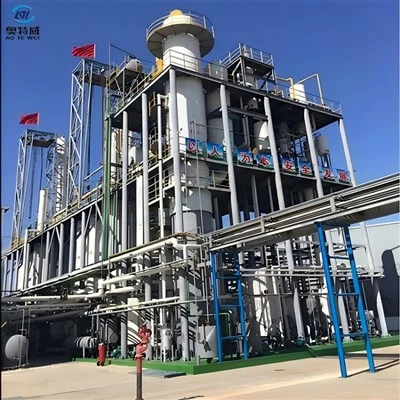
First, let’s start with the foundation: what primary refining is. Put simply, primary refining is the first step in the journey of crude oil from a raw, unprocessed resource to a marketable product. Its core function is separation—taking the messy mix of hydrocarbons that make up crude oil and splitting it into fractions based on their boiling points. This is where you’ll find the iconic distillation columns, also called atmospheric and vacuum distillation units, that stretch hundreds of feet high in refineries. Crude oil is heated to around 370 degrees Celsius, turned into a vapor, and fed into the bottom of an atmospheric distillation tower. As the vapor rises, it cools, and different hydrocarbons condense at different heights: the lightest fractions, like gasoline and kerosene, rise to the top; heavier fractions, like diesel and heavy gas oil, condense in the middle; and the very heaviest, like asphalt and residual fuel oil, collect at the bottom.
Secondary refining, by contrast, is all about conversion. Primary refining only separates what’s already there, and for decades, refiners have faced a problem: the fractions that come out of primary distillation don’t match global demand. In the 1950s, for example, primary refining yielded far more heavy residual fuel oil than refiners could sell, and far less gasoline, which was growing in demand as cars became more common. Secondary refining solves this mismatch by taking those unwanted heavy fractions and breaking them down, or converting them, into lighter, higher-value products that the market wants. That’s why secondary plants are built around processes like catalytic cracking, hydrocracking, and coking—equipment designed to rearrange hydrocarbon molecules, not just separate them. For a refining plant supplier, understanding this core goal is non-negotiable: if you’re building equipment for a primary plant, your job is to design for separation efficiency; for secondary, it’s designing for molecular conversion without wasting energy or risking product quality.
Let’s dive deeper into the hardware, because that’s where the two plants look most different. A primary refining plant’s main pieces are distillation units—atmospheric, vacuum (which handles the residual heavy fractions from atmospheric distillation, heating them to lower pressure to separate more useful products), and sometimes simple desalination units, which remove salt and water from crude before it enters the distillation tower to prevent corrosion. The layout is straightforward: crude comes in, goes through desalting, then through the main distillation train, and the fractions are piped off to storage or to secondary units if the refinery has them. There’s not a lot of reaction here; most of the equipment is designed to handle high volumes, with minimal moving parts beyond pumps and heat exchangers.
A secondary refining plant’s hardware, though, is far more complex and tightly controlled. Let’s take catalytic cracking, one of the most common secondary processes: it uses a hot catalyst (usually zeolite) to break large heavy oil molecules into small gasoline or olefin molecules. That means you need reactors, regenerators (to burn off coke that builds up on the catalyst so it can be reused), and sophisticated control systems to manage the temperature and pressure of the reaction. Hydrocracking, another big secondary process, uses hydrogen under high pressure and a catalyst to turn heavy fractions into clean diesel or jet fuel, so you also need dedicated hydrogen plants to feed into those units. Even coking, which converts residual oil into petroleum coke and light oils, uses delayed cokers—large, cylindrical vessels that heat oil to 500 degrees Celsius for hours to drive the conversion. For a supplier, this means secondary plant equipment requires far more precision engineering: every valve, sensor, and catalyst regeneration system has to work in sync to avoid downtime, because even a small disruption can shut down a multi-million dollar process.
Next, let’s talk about the products each plant produces, because that’s the real-world impact. Primary refining’s outputs are the initial cuts: straight-run gasoline (which is just the fraction that condensed at the top of the distillation tower), diesel fuel, jet fuel, kerosene, heating oil, and residual fuel oil. These are useful, but they’re not always ready for end use. Straight-run gasoline, for example, has a low octane rating, so it needs to be blended or treated to meet consumer fuel standards. Residual fuel oil is thick and high in sulfur, so it’s mostly used in heavy industry or power plants, not for cars or homes. Secondary refining changes that: catalytic cracking turns heavy oil into high-octane gasoline, hydrocracking produces ultra-low-sulfur diesel that meets modern emissions rules, and reforming (another secondary process) turns naphtha from primary distillation into high-octane gasoline or petrochemical feedstocks.
This product difference also shapes where each plant fits in the global refining landscape. Small, simple refineries—common in some regions where demand is mostly for heavy fuels—may only operate primary refining, producing residual fuel oil and basic diesel. But complex refineries, which handle most of the global gasoline and jet fuel supply, combine both: primary refining to split crude into fractions, secondary to convert the unwanted heavy ones into high-demand products. For example, a refinery in the U.S. Gulf Coast might process 300,000 barrels of crude a day: 180,000 barrels go through primary distillation, and another 120,000 barrels go through secondary units to turn heavy residual into gasoline and diesel. Without secondary refining, that same refinery would end up with far more residual fuel oil than it can sell, leading to stockpiles and lost revenue.
Another critical difference is efficiency and energy use. Primary refining is energy-efficient by design: it uses heat to separate fractions, and most of that heat is recovered through heat exchangers, so it doesn’t waste a lot of energy. Secondary refining, though, is much more energy-intensive. Catalytic cracking and hydrocracking require high temperatures and pressures, and hydrocracking in particular needs large amounts of hydrogen, which has to be produced either from natural gas or via electrolysis, adding to the energy cost. For a supplier, this means designing secondary plant equipment to minimize energy waste is a top priority. Over the last five years, I’ve worked on several upgrades for secondary units where we installed more efficient heat exchangers and catalyst systems, cutting energy use by 12% for clients—saving them hundreds of thousands of dollars a year in utility costs.
Safety is another area where primary and secondary plants differ, and it’s something I talk about with every client when they’re choosing equipment. Primary refining handles crude oil and its light fractions, which are highly flammable, but the processes are stable most of the time. Secondary refining, though, deals with catalysts, hydrogen, and hot heavy hydrocarbons, which pose unique risks. For example, hydrocracking units operate at pressures over 100 bar, so a leak can lead to a rapid release of flammable gas, and catalyst regeneration in catalytic cracking produces high-temperature coke dust that can ignite. That means secondary plant equipment requires more robust safety features: pressure relief valves, flame arrestors, inert gas systems, and advanced monitoring sensors that can detect small changes in temperature or pressure before a problem occurs. I always emphasize to clients that when sourcing equipment, you can’t cut corners on secondary plant safety; a single incident can shut down operations for months, and in some regions, lead to regulatory fines that run into the millions.
Now, let’s address a common misconception: some people think primary plants are outdated and secondary plants are the future, but that’s not true. Primary refining will always be the first step, no matter how advanced secondary processes get. Even with all the conversion technology, you still need to separate crude into fractions before you can process them. The shift we’re seeing now is driven by two trends: global demand for low-sulfur fuels and petrochemicals, and the growth of bio-refining. Many modern refineries are adding secondary units to process not just crude oil, but also bio-feedstocks like vegetable oils. For example, a secondary hydrocracking unit can be modified to process used cooking oil, turning it into renewable diesel. That’s a big opportunity, and it’s why refining plant suppliers have to stay ahead of both process and feedstock changes, not just the basic design of distillation towers.
Another point that’s important for anyone working with a refining plant supplier: the scale and flexibility of each plant. Primary refining plants are often larger, handling tens of thousands of barrels a day, because separation is most efficient at high volume. Secondary plants, though, can be smaller, and some are designed to be modular, so they can be added to an existing refinery without shutting down the entire operation. That’s a big draw for mid-sized refineries that want to boost their gasoline output without building a whole new primary plant. In my experience, modular secondary units cut installation time by 30% compared to custom-built ones, which is why more clients are asking for that flexibility now.
Now, let’s talk about what this means for you, if you’re evaluating equipment for a refining operation. If you’re looking to build a new plant from scratch, first clarify whether you need primary only, or a complex setup with secondary. If your target is to produce basic products for a local market, primary refining may be sufficient, and it will require less investment upfront. If you’re looking to compete in a global market, where demand for gasoline, jet fuel, and low-sulfur diesel is high, you’ll need to combine primary and secondary processes, and that means working with a supplier who has experience with both. I’ve seen clients make the mistake of sourcing secondary equipment from a supplier that only builds primary plants, and the result is equipment that doesn’t integrate with their existing primary units, leading to lower yield and higher maintenance costs.
At the end of the day, the core difference comes down to what you do with crude oil. Primary refining separates; secondary refining transforms. That’s the line that every refinery operator, and every supplier, has to understand. For over a decade, I’ve helped clients navigate that line—designing, sourcing, and upgrading equipment for both primary and secondary plants, and I can say with confidence that the right equipment depends entirely on your goals: do you need to split crude into its basic parts, or turn those parts into the products the world needs most?
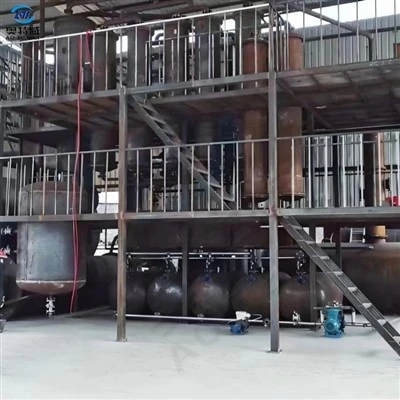
If you’re currently planning a new refining project, upgrading existing equipment, or looking to improve the efficiency of your primary or secondary plant, I’d be happy to walk through your specific needs and share tailored solutions. Whether you’re operating a small primary refinery or a large complex with multiple secondary units, the right equipment can cut costs, reduce downtime, and help you meet both market demand and regulatory requirements. Don’t hesitate to reach out to discuss your refining plant project.
Distillation Plant References:
- Gary, J. H., Handwerk, G. E., & Kaiser, M. J. (2007). Petroleum Refining: Technology and Economics (5th ed.). CRC Press.
- Speight, J. G. (2019). The Chemistry and Technology of Petroleum (5th ed.). CRC Press.
- World Bank. (2021). Global Refining Trends and Market Dynamics. World Bank Group.
- American Petroleum Institute. (2020). Refining Safety and Equipment Design Standards. API Publishing Services.
Shangqiu Aotewei Environmental Protection Equipment Co., Ltd.
Shangqiu Aotewei Environmental Protection Equipment Co., Ltd. is one of the most professional refining plant manufacturers and suppliers in China, also supports customized service. Please feel free to buy CE approved refining plant at competitive price from our factory. Welcome to contact us for pricelist.
Address: No.88 Longhai Road, Liangyuan District, Shangqiu City, Henan Province, China
E-mail: colin@henanpower.com.cn
WebSite: https://www.aoteweitech.com/
