When I first started in the titanium sheet supply business over a decade ago, I’d often get calls from manufacturers asking, “Can you adjust the alloy mix to make this sheet work for my application?” Back then, I’d hem and haw a little – I knew the basics of titanium alloys, but the fine-tuning part felt like black magic. After working side-by-side with our metallurgists for thousands of production runs, I’ve learned it’s equal parts science, experience, and listening to what our customers actually need. If you’re a fabricator, aerospace engineer, or chemical processing specialist looking to tweak titanium sheet alloying elements, this isn’t about textbook theories – it’s about the practical steps we use every day at our facility to get it right. Titanium Sheet
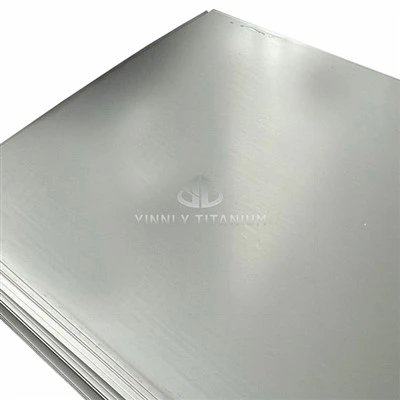
First, let’s ground this in why adjusting alloying elements even matters. Pure titanium is strong, light, and corrosion-resistant, but it has a flaw: it’s prone to cracking at really low temperatures, and its tensile strength tops out around 240 MPa. Add a few key elements, and you can dial those properties up or down. For example, aerospace companies want a sheet that’s strong enough to hold up to jet engine stress, while food processing plants need something that won’t leach into dairy or acids. The core elements we work with most are aluminum, vanadium, molybdenum, nickel, and palladium – each does a specific job. Adjusting their ratios isn’t just mixing numbers; it’s balancing phase structure, weight, ductility, and corrosion resistance all at once.
The first step we take when a customer asks for a custom alloy adjustment is mapping their end use. Last year, a medical device maker came to us needing titanium sheets for surgical implant trays. Their old supplier was using a standard Ti-6Al-4V alloy, but the trays were bending slightly when sterilized 100 times a day. We didn’t just jump to change vanadium levels – we asked them to test the temperatures, the sterilization chemicals, and the maximum load the trays carry. That data told us their problem wasn’t strength, it was fatigue resistance at elevated temperatures. For their application, we shifted the aluminum percentage from 6% to 5.5% and added 0.2% palladium. Aluminum strengthens the alpha phase of titanium, which helps with high-temperature stability, and palladium boosts corrosion resistance in the sterilizing ethylene oxide they use. The result? The trays stopped bending, and we didn’t have to compromise on weight, which was critical for the device’s portability. It sounds simple, but too many suppliers skip this step and just tweak numbers without understanding the end game.
Next, we look at the base material’s starting phase. Titanium has two main crystal structures: alpha (stable at high temperatures, good for corrosion and low-temperature strength) and beta (stable at room temperature, stronger and more ductile when alloyed). The ratio of alpha to beta depends on alloying elements. Alpha stabilizers like aluminum, oxygen, and nitrogen push the phase balance toward alpha, while beta stabilizers like vanadium, molybdenum, and nickel push it toward beta. If a customer needs a sheet that’s easy to form into complex parts, we might lean more into beta stabilizers to improve ductility. For a chemical processing tank that needs to hold up to hydrochloric acid, we’ll add more alpha stabilizers with small amounts of palladium. A big mistake new fabricators make is thinking more alloy equals better – we once had a customer who asked for 10% vanadium to make a super-strong sheet, only to learn it was so brittle it cracked during deep drawing for a marine propeller. We dialed vanadium back to 3.5%, kept aluminum at 6%, and added a touch of niobium, and suddenly the sheet formed perfectly without losing the strength they needed for saltwater corrosion.
Once we’ve nailed down the desired phase balance, it’s time for the precise calculations. Our metallurgists use a phase diagram specific to titanium alloys, but we’ve built our own internal spreadsheets over the years to account for real-world production variations. For example, when melting titanium, some elements evaporate at high temperatures – vanadium can lose up to 1% of its mass during vacuum arc remelting, so we add an extra 0.5% to the mix to hit the target ratio in the final sheet. It’s the kind of small adjustment that only comes from experience; we used to miss that mark all the time, leading to rejected batches. Now, we track every melt’s element retention rates, and those numbers are baked into our adjustment process.
We also have to consider the manufacturing method. If a customer is buying a cold-rolled sheet vs. an annealed sheet, the alloy ratios will behave differently. Cold rolling increases strength by work hardening, so if we adjust elements to boost strength, we have to lower the cold reduction percentage to avoid brittleness. Annealing, on the other hand, relieves stress, so we can push for higher alloy content if the sheet will be annealed after forming. Last quarter, an automotive parts maker wanted titanium sheets for exhaust headers – they needed a material that could handle 800°C exhaust temperatures and form into tight bends. We adjusted the carbon content (another alpha stabilizer) from 0.08% to 0.12% to improve high-temperature strength, and because they planned to hot form the sheet, we didn’t have to worry about cold working brittleness. The headers passed their 1000-cycle thermal shock test, which their old 6Al-4V parts failed 30% of the time.
Corrosion resistance is another big driver for alloy adjustments. Titanium’s passive oxide layer is its superpower, but it can break down in certain chemicals. Adding 0.1-0.2% palladium or platinum makes the passive layer more stable in reducing acids like sulfuric and hydrochloric. A few years ago, a chemical plant came to us with a problem: their existing titanium sheets were pitting in a 15% sulfuric acid solution at 60°C. We switched their alloy from pure titanium (Grade 2) to Grade 7, which has 0.12% palladium. The pitting stopped, and the sheet lasted twice as long as their old material. Now, if another customer has a similar application, we can quickly adjust the palladium level without reworking our entire melt process – that’s the value of having a flexible alloy adjustment workflow.
We also have to balance cost, which is a conversation most suppliers don’t have with their customers. Vanadium and molybdenum are more expensive than aluminum, so if a customer doesn’t need the extra beta phase strength, we’ll recommend a lower-alloy mix to save them money. Last year, a furniture manufacturer wanted titanium sheets for outdoor patio frames – they needed corrosion resistance, but not the high strength needed for aerospace. We suggested Grade 2 titanium, which is almost pure, instead of Grade 5 (6Al-4V), cutting their material cost by 30% while still meeting their requirements. Adjusting alloy elements isn’t just about performance; it’s about giving customers what they need, not what they might not.
Quality control is the final, non-negotiable step in adjusting alloying elements. We run X-ray fluorescence (XRF) tests on every sheet to confirm the element ratios, and mechanical testing (tensile strength, elongation, hardness) to make sure the properties match the customer’s specs. A few months back, we had a batch where the vanadium level was 0.2% off target during melting. We caught it in XRF before shipping, repurposed the sheet for a low-stress interior application, and avoided a costly return. That kind of attention to detail comes from years of making mistakes and fixing them – it’s why we don’t just adjust numbers, we adjust with verification every step of the way.

At the end of the day, adjusting alloying elements in titanium sheets is a collaborative process. It’s not a one-size-fits-all formula, and there’s no secret code – it’s listening to what your customer’s part has to go through, knowing how each element interacts, and testing to make sure it works. If you’re a manufacturer looking for titanium sheets that fit your specific needs – whether you need to tweak strength, corrosion resistance, ductility, or cost – reach out to our team to discuss your project. We’ll work with you to adjust the alloying elements to get exactly the performance you’re looking for.
Titanium Welded Pipe References
- Boyer, R. R. (1996). “An Overview of Titanium Alloys.” Materials Science and Engineering: A, vol. 213, no. 1-2, pp. 1-8.
- Lütjering, G., & Williams, J. C. (2007). Titanium, 2nd ed. Springer.
- Donachie, M. J. (2000). Titanium: A Technical Guide, 2nd ed. ASM International.
- Peters, M., Kumpfert, J., Ward, C. H., & Leyens, C. (2003). “Titanium Alloys for Aerospace Applications.” Advanced Engineering Materials, vol. 5, no. 6, pp. 419-427.
Baoji Yinnly Titanium Co., Ltd.
Baoji Yinnly Titanium Co., Ltd. is one of the most professional titanium sheet manufacturers and suppliers in China, featured by quality products and good service. Please rest assured to buy bulk titanium sheet in stock here and get quotation from our factory. Customized orders are welcome.
Address: Unit 902, Building 1, Creative Building, No. 195, Gaoxin Avenue, High-tech Zone, Baoji City, Shaanxi Province
E-mail: anna@yinnlyti.com
WebSite: https://www.yinnlyti.com/
