If you’ve ever walked into a manufacturing plant on a sweltering summer day, stepped into a hospital operating room, or even worked in an office building where the air stays cool and consistent, you’ve benefitted from a chiller system. These workhorses are the unsung heroes of modern infrastructure, responsible for regulating temperatures that keep processes running, products safe, and people comfortable. But here’s the truth I see every day, as a chiller supplier: a chiller is only as good as its water treatment. Too many customers invest thousands in high-efficiency chillers, installation, and maintenance, only to cut corners on water treatment—and end up with costly breakdowns, lost production, and premature equipment failure. Let me break down why that investment in water treatment isn’t just a nice-to-have—it’s the backbone of your chiller’s performance and long-term value. chiller

First, let’s get the basics right. Chillers work by circulating a fluid (almost always water-based, sometimes with glycol for colder applications) through a closed loop: the chilled water absorbs heat from the space or process it’s cooling, then flows back to the chiller’s evaporator to release that heat. If that water is untreated, it becomes a breeding ground for three silent threats that destroy efficiency: scale, corrosion, and biological growth. I’ve seen this play out hundreds of times, and it starts small. A customer last year told me their 500-ton chiller was running 15% higher energy bills than it should, but they couldn’t figure out why. When our service team opened the evaporator, they found a thin layer of hard mineral scale lining the tubes. Scale forms when dissolved minerals like calcium and magnesium in water precipitate out as the fluid heats up, building up on metal surfaces like limescale in a coffee pot. Even a 1mm layer of scale can increase a chiller’s energy use by 10% or more, because the system has to work harder to transfer heat. That’s a direct hit to your bottom line—wasting thousands in electricity every month, for what ends up being a $200 water treatment solution instead of a $10,000+ annual energy overspend.
Corrosion is another equally insidious problem. Untreated water is naturally corrosive, especially if it’s slightly acidic or has high levels of dissolved oxygen. When metal pipes, coils, and heat exchangers rust, those metal particles flake off and circulate through the system, clogging strainers and chiller components. Worse, corrosion creates pitting—tiny, deep holes in metal surfaces that can lead to leaks. I had a food processing client two years ago whose chiller spring leak shut down their entire line for 36 hours. They lost $120,000 in spoiled product and missed delivery deadlines, all because they skipped their quarterly water treatment checks. By the time we found the leak, the copper evaporator tube was perforated, and a full replacement cost was close to $15,000—far more than the cost of ongoing corrosion inhibitors we could have recommended. Corrosion doesn’t just destroy equipment; it disrupts operations, which is catastrophic for businesses that rely on constant cooling, from pharmaceuticals to data centers.
Then there’s biological growth—think bacteria, algae, and fungi thriving in warm, standing water. In open loop systems (where water is exposed to air, cooling towers), this is a rampant issue. Algae and slime build up on heat exchanger surfaces, adding another layer of insulation that kills heat transfer, just like scale. Worse, some bacteria like Legionella can grow in these environments, posing a serious health risk for buildings with human occupants. A few years back, a mid-sized office building in the Northeast had to shut down for two weeks after Legionella was detected in their cooling tower, costing millions in lost rent, remediation, and regulatory fines. Our team worked with them to adjust their water treatment program to not only kill existing bacteria but prevent future outbreaks—an investment that let them get back to work quickly and avoid long-term liability.
But let’s talk about longevity, because that’s where the biggest return on investment lives. A well-maintained chiller with proper water treatment can last 20 to 25 years, vs. 10 to 15 years for one neglected by its water loop. I’ve seen chillers run past 25 years, not because they’re built better, but because their owners treated the water right. Each time you clean out scale, fix corrosion, and kill bacteria, you’re extending the life of every component in the system—heat exchangers, pumps, pipes, even the compressor, which is the most expensive part of the chiller to replace. Replacing a compressor can cost 40% of the price of a new chiller; proper water treatment lets you put that money toward upgrades instead of emergency replacements.
Energy efficiency is another angle that’s hard to ignore, especially as utility costs continue to rise. The Department of Energy estimates that commercial building HVAC systems account for nearly 40% of total building energy use, and chillers make up a big chunk of that. The International Association of Plumbing and Mechanical Officials (IAPMO) found that untreated water can reduce chiller efficiency by up to 30% over three years. That’s not a small number. Let’s do the math: a mid-sized chiller running 2,000 hours a year uses around 100,000 kWh annually. If it’s operating at 15% lower efficiency, that’s 15,000 kWh wasted every year. At an average utility rate of $0.15 per kWh, that’s $2,250 down the drain annually. Over 10 years, that’s $22,500—more than most comprehensive water treatment programs cost upfront. When I present that to customers, it clicks: this isn’t an expense, it’s a savings plan.
Now, you might be thinking, “We can handle water treatment in-house, right?” Maybe for small systems, but here’s the thing: water chemistry isn’t one-size-fits-all. The hardness of your local water supply, the type of chiller you use, the ambient conditions where your cooling tower sits—all of these variables change what your system needs. A treatment program that works for a building in Florida (where humidity is high) will not work for a facility in Arizona (where water is hard and dry). Too many customers try to cut costs with generic chemicals, which can actually make problems worse. For example, over-treating with scale inhibitors can lead to other imbalances, or under-treating can let corrosion run rampant. That’s why as a chiller supplier, we don’t just sell you a chiller and walk away—we offer tailored water treatment solutions, customized to your specific system and location. We work with your team to monitor water quality regularly, adjust chemicals as needed, and spot issues before they become breakdowns. It’s not just about adding a few chemicals; it’s about proactive, data-driven care.
I also can’t overlook regulatory compliance. Many regions have strict rules around cooling tower water quality, especially when it comes to Legionella and water discharge. Failing to meet these standards can result in heavy fines, and in some cases, legal liability if someone gets sick. Our water treatment programs are designed to keep you in line with local, state, and federal regulations, so you don’t have to stress about audits or penalties. That peace of mind is invaluable for facility managers who already have enough on their plates.
Let me share a recent success story that drives this home. A brewery in the Midwest came to us last year with a 300-ton chiller that had been running erratically, causing spoilage in their beer batches. They’d tried two different generic water treatment programs, but nothing worked. When we tested their water, we found high calcium hardness and a bacteria colony count 10 times the safe limit. We put together a custom program: adjusted pH levels to prevent corrosion, added a scale inhibitor, and a biocide targeted at their specific bacteria. Within three months, their energy use dropped by 12%, and they haven’t had a spoilage incident since. They saved more on energy in six months than they paid for the entire year’s treatment, and their chiller is running like new. That’s the kind of result we deliver when water treatment is taken seriously.
So, how do you get started? It’s not overwhelming. First, if you’re not already testing your chiller water regularly, start there. Test for pH, hardness, alkalinity, and bacteria levels. Second, work with a provider who understands both chillers and water treatment, not just one or the other. As a chiller supplier, we bring 15 years of experience working with every type of system, across every industry, so we know what works. We’ll come to your site, assess your current setup, and build a program that fits your budget and your needs. You don’t have to overhaul your entire system tomorrow—small, consistent steps in water chemistry will give you big returns over time.
At the end of the day, a chiller is an investment. Whether you’re cooling a data center that powers millions of users, a hospital that saves lives, or a manufacturing line that produces essential goods, your chiller’s performance directly impacts your bottom line, your operations, and even your reputation. Cutting corners on water treatment is like buying a high-performance car and skipping the oil changes: it might run for a little while, but it will break down long before it should, and the cost of repairs will far outweigh the cost of regular maintenance.
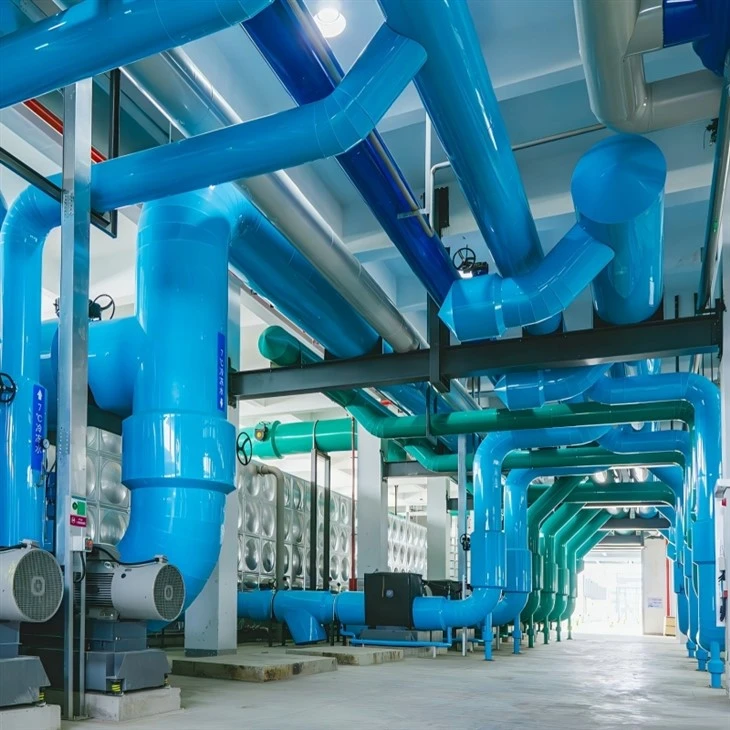
If you’re dealing with high energy bills, unexpected breakdowns, or just want to make sure your chiller is operating at its best, let’s talk. I can walk you through a free assessment of your system, identify potential issues, and show you how a tailored water treatment program can save you money and extend your equipment’s life. There’s no obligation, just honest advice from someone who’s been in the industry long enough to know what works—and what doesn’t.
Water-cooled Chiller References
American Society of Heating, Refrigerating and Air-Conditioning Engineers (ASHRAE). 2021. HVAC Systems and Equipment Handbook.
U.S. Department of Energy. 2022. Energy Efficiency and Renewable Energy: Commercial HVAC Systems.
International Association of Plumbing and Mechanical Officials (IAPMO). 2020. Water Treatment Guidelines for Commercial HVAC Systems.
Centers for Disease Control and Prevention (CDC). 2021. Legionella Control in Cooling Towers.
Hangzhou Dayu HVAC Engineering Co., Ltd.
As one of the most professional chiller manufacturers and suppliers in China, we have world-leading production equipment and strong manufacturing capabilities. If you’re going to buy customized chiller made in China, welcome to get quotation from our factory. For price consultation, contact us.
Address: Room 1004, Building 1, Xicheng Business Tower, Xihu District, Hangzhou City, Zhejiang Province, China
E-mail: info@hi-hvac.com
WebSite: https://www.hi-hvac.com/
