If you’ve ever held a small appliance in your hands, flipped on a light switch, or sat through a smooth transatlantic flight, there’s a good chance you’ve interacted with a material I supply every single day: enameled round wire. Too often, people reduce this thin, insulated copper or aluminum wire to a “behind-the-scenes” component—something that gets drilled into a motor or tucked inside a transformer, never thought about until it works (or fails). But as a supplier who’s worked with manufacturers across 12 industries over the past 18 years, I can tell you enameled round wire is the unsung workhorse of modern technology. Its unique design— a solid metal core wrapped in a thin, uniform layer of enamel insulation, often just a few microns thick—makes it versatile enough to fit applications that range from tiny medical devices to massive industrial power equipment. Let’s break down the main uses that keep my order books busy and help the world run. Enameled Round Wire
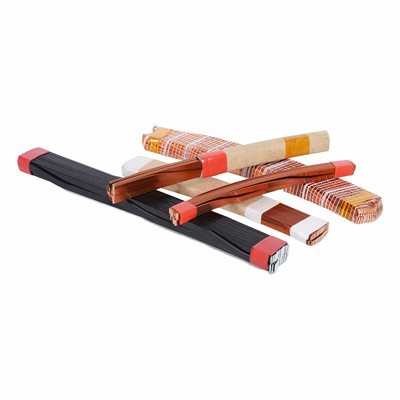
First, the most common application you probably encounter daily: electric motors and generators. Enameled round wire is the winding core of every electric motor, from the 1-horsepower unit in your washing machine to the 10-megawatt generator that powers a wind turbine. Here’s why the enamel insulation matters so much in this use case: without it, adjacent turns of wire in the motor’s winding would touch, creating a short circuit that stops the motor dead. The enamel’s thin, heat-resistant coating lets manufacturers pack hundreds or thousands of wire turns into a small space, boosting a motor’s power output without making it bulkier. For small consumer motors—think vacuum cleaners, power tools, or even the tiny motors that adjust car seats—we supply 22 to 30 gauge copper enameled wire, formulated to withstand the high heat of continuous use. For industrial generators, we use heavier-gauge wire (10 to 16 gauge) with a specialized polyimide enamel that can handle temperatures up to 220°C, way hotter than standard enamel. Last year, I worked with a wind turbine manufacturer that switched to our high-temperature enameled wire to cut down on maintenance costs; their turbine motors used to fail after 5 years due to overheating, but with our wire, they’re now hitting 7 years of operational life, translating to $1.2 million in annual savings per wind farm. It’s a small part that makes a huge difference in renewable energy infrastructure.
Next up: transformers and inductors, the quiet workhorses of power grids and electronics. Transformers step voltage up or down to safely move electricity from power plants to homes, and inductors store energy in circuits to stabilize power flow. Both rely almost exclusively on enameled round wire for their windings. Let’s talk about power transformers first, the big, oil-cooled units you see on utility poles. We supply large-gauge aluminum enameled wire for these transformers because aluminum is lighter and cheaper than copper, a critical factor for utility companies managing millions of miles of power lines. The enamel insulation here has to be extremely durable to resist the oil, moisture, and temperature swings that come with outdoor use—our customers specifically request a polyester-imide enamel that doesn’t break down even after 20+ years in extreme weather. For smaller transformers, like the ones inside phone chargers or laptop power bricks, we work with smaller-gauge copper wire coated in a thinner polyurethane enamel, which is easy to strip and solder to circuit boards. Inductors, used in everything from electric car inverters to radio equipment, have slightly different needs: they often use enameled wire wound tightly around a ferromagnetic core, and our wire’s uniformity ensures consistent energy storage. A client who makes electric vehicle (EV) inverters told me last quarter that 40% of their production cost goes to enameled wire; without the right insulation, their inverters would lose 15% of energy as heat, making EVs less efficient. That’s the kind of impact this wire has on the transition to electric transportation.
Third, and often overlooked, is its role in medical devices. Enameled round wire is tiny here—sometimes as thin as human hair (36 to 40 gauge)—but it’s central to life-saving and life-improving equipment. Take implantable pacemakers, for example. The device’s pulse generator uses small inductors and sensors wound with enameled wire to regulate heart rhythm. The wire here has to be biocompatible, so we supply a silver-coated copper enameled wire with a special parylene outer layer that doesn’t irritate body tissue. If the insulation were to break down inside a patient’s body, it could cause a dangerous infection or device failure—so precision is non-negotiable. Last year, a medical device maker reached out to me because their old wire kept failing 18 months into patient use; we adjusted our enamel coating’s thickness and purity, and now their devices hit 5-year average lifespans, well above the industry minimum of 3 years. Enameled wire is also used in surgical tools like electrosurgical units, which use high-frequency current to cut tissue. The wire inside these units has to withstand intense heat and sterilization with harsh chemicals, so we use a heat-resistant polyimide enamel that doesn’t crack after 100+ autoclave cycles. Even MRI machines rely on enameled wire: their large superconducting magnets use niobium-titanium wire coated in enamel to stay electrically stable at cryogenic temperatures. It’s a delicate, high-stakes use case that I take seriously every day.
Then there’s consumer electronics and telecommunications, the space that’s evolved the most in the last decade. For smartphones, tablets, and portable wearables, every component is shrinking, and enameled round wire has had to keep up. Inside a smartwatch, for example, you’ll find tiny vibrator motors, haptic feedback units, and even the antenna elements—all wound with enameled wire as thin as 42 gauge. That’s smaller than a strand of cotton thread. The insulation here has to be flexible, too, because wearables bend and twist throughout the day; our customers specify a polyurethane enamel that stays flexible after thousands of bends, so the wire doesn’t break inside the device. For telecommunications infrastructure, enameled wire is used in fiber optic cables’ supporting components, and in the transformers that power cell phone towers. As 5G networks roll out, demand for higher-performance enameled wire has spiked: cell tower transformers need wire that can handle higher frequencies without signal loss, so we’ve developed a new copper enameled wire with a silver plating that reduces electrical resistance by 8%, making 5G transmissions faster and more reliable. I remember 10 years ago, 60% of my orders were for 20 to 30 gauge wire for home appliances; now, almost 40% of my orders are for 35 to 42 gauge wire for consumer electronics, a shift that shows just how tiny and integrated this material has become.
Another key application is aerospace and defense, an industry where reliability is everything. Aircraft, satellites, and military equipment can’t afford component failures mid-flight or in orbit, so enameled round wire here is made to the strictest standards. In commercial jets, we supply wire for the avionics systems, lighting controls, and in-flight entertainment screens. These wires have to resist extreme temperatures, vibration, and fuel exposure—our aerospace-grade enameled wire passes 1,000 hours of salt spray testing, a requirement for planes flying over oceans. For satellites, it’s even more extreme: the wire has to withstand the vacuum of space, radiation, and temperature swings from -150°C to +150°C. We work with a special polyimide enamel that’s been tested by NASA, with our satellite clients reporting zero wire failures over 7 years of low Earth orbit missions. In military applications, enameled wire is used in radar systems, missile guidance units, and field communications equipment. Last year, a defense contractor asked for custom wire that could survive a blast’s extreme heat; we developed a ceramic-coated enameled wire that withstood temperatures of 1,800°C for 10 seconds, perfect for their new ruggedized communications gear. It’s a niche, high-stakes area that keeps me innovating on the manufacturing side.
I’d be remiss if I didn’t mention specialty industrial applications, where enameled wire solves problems that no other material can. For electric furnaces, used to melt metal in foundries, we supply heavy-gauge wire with a ceramic enamel that can handle the 1,200°C heat of furnace coils. For hydroelectric power plants, the generators’ stator windings use large enameled wire that’s built to last 40+ years underwater. Even in the manufacturing of household items like refrigerators and air conditioners, the compressors use hermetically sealed motors with enameled wire that’s designed to work in a closed, pressurized environment. A few years ago, a refrigerator manufacturer came to me because their compressors were failing in hot climates due to overheating; we switched them to our high-temperature polyester-imide enamel, and their warranty claims dropped by 65% in a year.
Now, I know what some readers might be thinking: “Why does this matter to me?” Enameled round wire is rarely the headline in a news story about a new EV or a medical breakthrough, but without it, none of those technologies exist. As a supplier, I don’t just sell wire—I sell a component that’s essential to the products people rely on every day. For 18 years, I’ve built my business on consistency: delivering wire that meets exact gauge, insulation thickness, and material purity requirements, no matter the order size. Whether it’s a 10-pound spool for a small startup building wearable tech or a 1,000-pound batch for a utility company’s transformer upgrade, I treat every order with the same care.
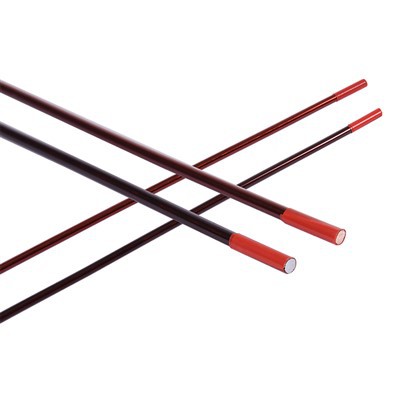
If you’re a manufacturer looking for high-quality enameled round wire, whether for motors, transformers, medical devices, or any of the applications I’ve covered, I’d be happy to walk through your specific needs, discuss material options, and provide custom solutions. Every industry has unique requirements, and I’ve worked with clients to adjust enamel formulations, wire gauges, and metal cores to fit their projects, from small prototype runs to full-scale production. Don’t hesitate to reach out to start a conversation about how our enameled wire can support your work.
Enamel Wire References
- "Enameled Wire: Fundamentals and Applications," National Electrical Manufacturers Association (NEMA), 2022.
- "Medical Grade Enameled Wire Standards," International Organization for Standardization (ISO) 10993, 2021.
- "Aerospace Wiring Materials and Test Specifications," NASA Technical Report SP-2019-204705, 2019.
- "Electric Motor Efficiency and Enameled Wire Performance," Department of Energy (DOE) Office of Energy Efficiency and Renewable Energy, 2023.
Tianjin Jingwei Power Technology Co., Ltd.
As one of the most professional enameled round wire manufacturers and suppliers in China, we’re featured by quality products and good service. Please rest assured to buy durable enameled round wire made in China here from our factory. Contact us for more details.
Address: No.1 Chuangxin Rd. Xiaozhan Industrial Park, Jinnan District, Tianjin, China
E-mail: info@jwdc.cn
WebSite: https://www.jw-dcs.com/
