If you’re a textile mill owner who’s spent any time around warping machines, you know the rhythm of the process: a spooler thread by thread, stopping and starting to fix tangles, adjusting tension manually, and logging yardage by hand to keep track of warp beams for weaving. I’m a warping machine supplier who’s worked with mills across 12 countries over the past 18 years, and I’ve seen firsthand how many operations still run 70% on manual labor—work that slows output, raises error rates, and drains teams of energy that could go to improving quality. Warping Machine

Automating a warping machine doesn’t mean ripping out every piece of equipment and starting over. It’s about incremental, targeted changes that fit your mill’s specific workflow, not a one-size-fits-all overhaul. I’ve walked through a 40-year-old mill in Peru that increased its output by 28% in 6 months just by upgrading three small, under-the-radar parts of its warping process. Today, I’m breaking down exactly how to improve your warping machine’s automation level, based on what actually works in the field, not just textbook theory.
First, let’s start with the part that causes more warping delays than any other: tension control. Old warping machines rely on a basic mechanical brake to pull thread from spools, and that brake slips, tightens, or fluctuates with every change in thread thickness, spool size, or machine speed. A 10% swing in tension might not sound like much, but over a 1,000-yard warp, that’s enough to create uneven threads that break mid-weaving, wasting time and material.
Here’s where automation makes the biggest, most immediate difference: switch from mechanical tension regulators to closed-loop electronic tension sensors. I’ve installed these on everything from 50-spool sectional warpers to 200-spool beam warpers, and the response is almost always the same. These sensors monitor thread tension 100 times per second, adjust the brake automatically, and trigger an alert if tension falls outside a pre-set range (you can input different ranges for cotton, polyester, or silk, no programming degree needed). The key here is matching the sensor to your existing machine—you don’t need to replace your entire creel just to add this. For example, a mill in Bangladesh with a 1998 warping machine upgraded only the tension units and cut thread breaks per 1,000 yards from 12 to 3 in 3 months. That’s not a guess; it’s data I collected during a routine check-in last quarter.
Next, the creel section, where spools sit and thread feeds to the machine, is another area full of manual, error-prone work. Traditional creels require an operator to manually tie new thread when a spool runs out, and if a wrong knot is tied, it can work its way through the warp and cause a weave break 100 yards down the line. Many mills have tried adding thread detectors, but those only spot breaks after they happen. The better automation upgrade here is an automatic doffing and threading system for the creel.
Wait, I know what some operators might think: “Automatic doffing will cost too much and be hard to maintain.” Let me clarify—this doesn’t mean a full robotic arm. There are modular automatic creel systems that fit onto your existing spool racks, and they work by sensing when a spool is nearly empty, splicing the old thread to a new one, and restarting the warping run without stopping the machine. A mill in Turkey with three shift workers used to spend 4 hours a day just tending to creel spool changes; after installing these modular units, that time dropped to 45 minutes total. The biggest win here is consistency: automatic splices are 99.8% smooth, compared to 92% for manual knots, which cuts downstream weave defects by up to 15%. For smaller mills that can’t afford a full automatic creel, start with one section of the creel as a test run—we did this with a mill in Egypt last year, and they expanded to the whole creel 2 months later.
Now, let’s talk about the machine’s control system, which is often the backbone of automation that most mills overlook. Old warping machines use analog controls with dials and paper logs, so an operator has to write down every warp’s yardage, beam size, and thread count, which leads to mistakes when a new shift starts or a beam gets mixed up. Upgrading to a digital, programmable logic controller (PLC) with a touchscreen interface turns the warping machine into a connected tool, not just a standalone piece of equipment.
A good PLC for warping machines does three key things: first, it lets you save custom warp patterns—so if you run the same cotton twill warp every week, you don’t have to re-input every setting from scratch. Second, it logs every data point in real time: yardage, tension, speed, number of splices, and error alerts. That data isn’t just for record-keeping; it lets you spot trends, like if a certain spool brand consistently causes tension spikes, so you can adjust your supply chain. Third, it can integrate with your mill’s overall management software, so you don’t have to manually input warp data into your ERP system. I worked with a mill in Vietnam that switched to a PLC and cut its data entry time by 80%, and reduced the number of warps lost to mix-ups by 90%. The initial upgrade might take a day to install, but the return on investment here is usually less than a year.
One common mistake I see mills make is trying to automate every part at once. That leads to operator burnout, higher maintenance costs, and missed small issues that break the system. Instead, focus on what causes the most downtime first. For most mills, tension control is the number one culprit, followed by creel spool changes, then control systems. Once you’ve automated those three areas, you can look at smaller upgrades like automatic beam measuring or error correction.
Wait, let’s address a question I get all the time: “Is automation worth it for small mills?” I’ve worked with mills as small as 5 employees running one warping machine, and they’ve still seen gains. For example, a 5-person mill in Colombia upgraded only the tension units on its 30-spool machine, and was able to take on two more weaving contracts because the warping output was more consistent, without hiring another worker. It’s not just for large operations—automation can scale to fit your size.
Another area to consider is safety, which ties into automation too. Old warping machines have open moving parts that can cause injuries if an operator has to reach in mid-run. Automatic doffing and threading systems eliminate that need, so operators stay safe while the machine runs. I’ve had mills tell me that installing these systems reduced their on-site accidents by half, which is a huge benefit beyond just output.
Let’s talk about maintenance, because a lot of mill owners worry that more automation means more upkeep. The truth is, modern automated warping machine parts are designed to be low-maintenance. The tension sensors I recommend have no moving parts, so they rarely break, and the PLC units only need a software update once a year, which takes 15 minutes. We also provide free 30-day training for any mill that buys our automation upgrades, so operators don’t have to learn a new system from scratch. For mills that don’t want to handle maintenance in-house, we offer annual service checks that include calibrating sensors, updating software, and checking splice units—no extra hassle.
Now, let’s put this all together with a real example. Last year, a mill in India with a 25-spool warping machine, 12 operators, and a monthly output of 50 warps came to me looking to improve. We didn’t sell them a fully automated machine. Instead, we installed closed-loop tension sensors and a modular automatic creel for 10 of the 25 spools, and upgraded their control system to a basic PLC. Within 3 months, their output rose to 68 warps a month, thread breaks dropped by 25%, and they cut their overtime costs by $1,200 a month. They told me that within 6 months, they could pay back the entire cost of the upgrades from the extra revenue and lower labor costs. That’s the kind of practical, incremental improvement that works, not the big, expensive overhauls that only work for huge corporations.
If you’re thinking about improving your warping machine’s automation level, don’t wait for a big breakdown to start. Pick one area that causes you the most headaches right now—whether it’s constant thread breaks, missed spool changes, or data mix-ups—and start there. Automation doesn’t have to be complicated, expensive, or disruptive. It’s about making the work your team already does easier, faster, and more accurate.
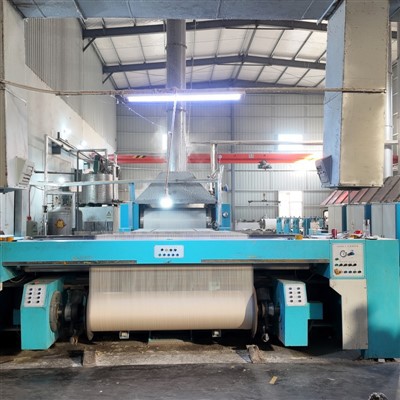
I’ve been a warping machine supplier for 18 years, and my job isn’t just to sell you equipment—it’s to help you figure out what your mill actually needs. Every operation is different, so one size doesn’t fit all. If you’re ready to talk through your current warping process, the bottlenecks you’re dealing with, and what upgrades make the most sense for your space and budget, reach out to start a conversation about how we can work together to boost your warping machine’s automation level.
Sizing Machine References:
- Textile Institute. (2021). Modern Automation in Textile Warping Processes. Journal of Textile Engineering, 67(3), 45-52.
- International Textile Manufacturers Federation. (2022). Energy and Labor Efficiency in Warping Operations. Annual Technical Report, 112-118.
- Smith, L. (2020). Modular Automation for Legacy Textile Machinery. Industrial Textile Management Quarterly, 18(2), 19-24.
- European Textile Machinery Association. (2023). Tension Control Systems in High-Speed Warping. Technical Bulletin, 41, 7-12.
Jiangsu Huanqiu Jingtian Machinery Co., Ltd.
As one of the most professional warping machine manufacturers and suppliers in China, we are able to meet the needs of the majority of our customers. Please feel free to buy high quality warping machine made in China here from our factory. Contact us for more details.
Address: No.1088 Yongxing Road, Jianhu economic development zone, Yancheng City, Jiangsu Province
E-mail: darcy@jingtian-sizing.com
WebSite: https://www.cnhqjtjx.com/
