Hey folks, let’s cut to the chase—if you’re in charge of outfitting a big space, like a 50k sq ft office floor, a retail showroom, or a multi-suite data center, you’ve probably Googled “best flooring for large areas” a hundred times. Raised tile flooring is one of those products that gets tossed around a lot, but you might be wondering: is it actually worth the cost for spaces that are huge? As a raised tile flooring supplier who’s worked with 100+ project teams across North America over the last 8 years, I’m here to break this down with real numbers, not marketing fluff. Raised Tile Flooring
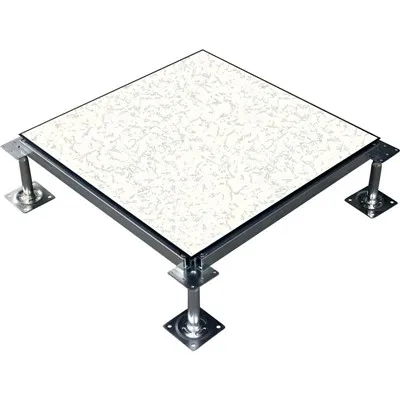
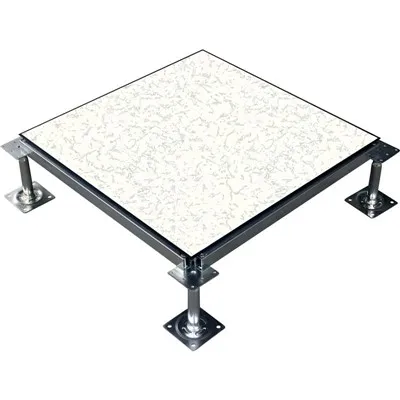
First, let’s define what we’re talking about here, because a lot of people mix up raised tile flooring with regular raised access floors. Regular access floors are usually for wiring, HVAC, and underfloor infrastructure—those are big, heavy, and mostly used in tech spaces. Raised tile flooring? It’s the top layer you walk on: thin, interlocking ceramic or porcelain tiles that sit on low-profile pedestals, with a gap underneath that’s just enough for running Ethernet, power cords, or even small heating/cooling lines. For large areas, that gap is game-changing, but the cost side is where most folks get stuck.
Let’s start with the upfront cost, because that’s the first thing everyone looks at. I’ve had clients come in and say, “Wait, my regular concrete tile is $2 per sq ft—your raised one is $4. That’s double!” But hold on—don’t forget the hidden costs of the regular floor. If you’re laying concrete tile over a big, open area, you have to spend money on underlayment to level the subfloor, right? If your subfloor is even slightly uneven, you’ll waste tile cutting them to fit, or they’ll crack in 6 months. For a 100k sq ft space, that underlayment can run $0.50-$1.50 per sq ft alone. Then there’s labor: laying concrete tile takes a pro about 15-20 minutes per sq ft. For 100k sq ft, that’s 25,000+ hours of labor, at $30-$40 an hour—so $750k-$1M just to lay the base tile. And don’t get me started on repair costs. If a pipe leaks under a concrete floor, you have to jackhammer up tile, fix the line, and re-lay the whole section. For a large office, that’s a $10k-$20k repair, plus downtime when everyone’s working from a conference room for a week.
Now compare that to raised tile flooring. Upfront, it is $3-$5 per sq ft, but wait—no underlayment needed. The pedestals adjust to even out subfloor bumps automatically, so you don’t waste a single tile on cuts. Labor? It’s way faster. My install teams can lay 500-600 sq ft per day, per person. For 100k sq ft, that’s 167-200 person-days, not 50,000. Labor here is $20-$25 an hour, so that’s like $80k-$100k in labor, not $750k. That’s a huge difference right off the bat.
But wait, what about the longevity? That’s where raised tile flooring crushes it for large areas. I’ve got a client in Chicago, a 120k sq ft co-working space installed in 2017—they still have 95% of their original tiles, no major cracks, no warping. Why? Because the tiles are mounted on pedestals, so they never sit directly on wet floors or heavy foot traffic that would wear down regular tile. Regular concrete tile, on the other hand, averages 10-15 years before it needs a full replacement. Raised tile flooring? It can last 20-25 years. Let’s do the math: over 25 years, your total cost per sq ft for regular tile is like: upfront $3 (tile) + $1 (underlayment) + $8 (labor, spread over life) + $2 (repairs every 5 years) = $14 per sq ft. Raised tile? Upfront $4 (my average price for commercial grade) + $0 + $1.50 labor + $0.50 repairs (since you just pop up a tile instead of breaking it) = $6 per sq ft. That’s less than half the cost over the life of the floor. For 100k sq ft, that’s $800k in savings over 25 years. I don’t know about you, but $800k can pay for 100 new desks, or a year of utility bills for your entire office.
Now, let’s talk about the stuff that’s not in the spreadsheet: downtime and flexibility. For large areas—think retail spaces that host pop-ups, or offices that rearrange their cubicles every 2 years—regular tile is a nightmare. If you need to move a wall, you have to cut tile, patch the floor, and deal with mess. If you host a pop-up in a retail space, you can’t drill into concrete floors because you’ll have to fix the holes after. Raised tile flooring? You just pop up the tiles, move the pedestals, and pop them back down. No mess, no drilling, no downtime. For a retail client of mine in Dallas, they rearranged their entire floor plan 3 times in 2 years—each time took 2 days, cost $500, not $15k in tile repairs and labor. That’s a big win for any large space that needs to pivot quickly.
I know what you’re thinking: “What about commercial spaces that have heavy equipment? Like a warehouse or a data center?” Wait, raised tile flooring can handle that, too. We make heavy-duty tiles that are rated for 10,000 lbs per sq ft—perfect for forklifts, server racks, or even industrial machinery. A data center client in Phoenix used our raised tiles in their server room, and when they expanded their rack setup last year, they just adjusted the pedestals instead of re-laying 20k sq ft of concrete. They told us they saved $200k in that expansion alone.
But let’s be real, it’s not for everyone. If you’re laying a small residential space, like a 1,000 sq ft bedroom, raised tile might be more expensive upfront than regular tile. But for anything over 10k sq ft—trust me, the savings add up fast. I’ve had clients who tried regular tile for a 20k sq ft startup office and ended up switching to our raised tile 3 years later, because they spent more in repairs and rearranging costs than the difference in upfront pricing.
Another thing to consider: underfloor utilities. For large spaces, running power and Ethernet cords is a massive job. If you have to run them under concrete, you have to jackhammer trenches, run the cords, and patch it all up. That’s $1-$2 per sq ft just for utility installation. With raised tile flooring, you just lay the cords in the gap underneath, and you can access them anytime without breaking the floor. A tech startup in Austin used that last year: they re-wired their entire office for remote work shifts in 1 day, instead of 2 weeks. That’s $30k in downtime saved right there.
Now, let’s get to the elephant in the room: installation mistakes. A lot of contractors will tell you raised tile flooring is “too tricky” for large areas, but that’s because they’re used to laying concrete tile. Our install teams have a standardized process: we level the subfloor first (it only takes a day, not a week), set the pedestals to the exact height, and lay the tiles in a grid pattern that locks together. For large areas, that grid pattern prevents shifting, so you don’t have wobbly tiles. We also offer a 5-year warranty on all installations, which is way more than most regular tile installers offer.
Wait, what about sustainability? A lot of project teams care about that now. Raised tile flooring is made from 100% recyclable ceramic, and when you need to replace a tile, you just recycle the old one instead of hauling a whole floor to the landfill. Regular concrete tile can’t be recycled easily, so it ends up in dumps. For a 100k sq ft space, that’s 1.5 million lbs of tile saved from landfills over 25 years. That’s a big plus if your company has sustainability goals.
So, to wrap this up: is raised tile flooring cost-efficient for large areas? For most commercial, retail, and tech spaces, hell yes. The upfront cost is higher, but the hidden costs of regular tile—underlayment, labor, repairs, downtime, and utility installation—far outweigh that initial expense over time. It’s flexible, durable, saves you money on long-term maintenance, and even helps with sustainability.
But don’t just take my word for it: I’ve got hundreds of case studies I can share, and I’ve worked on projects from 10k sq ft startup offices to 500k sq ft retail malls. If you’re planning a large flooring project and want to crunch the numbers specific to your space, hit me up to connect for a quick consultation. We can walk through your space, your timeline, and your budget, and see if raised tile flooring makes sense for you.
Raised Floor Panels References:
- National Floor Trends Magazine. (2022). Commercial Flooring Cost Comparison: Access Floors vs. Traditional Tile.
- U.S. Green Building Council. (2023). Sustainable Flooring Solutions for Large Commercial Spaces.
- Construction Industry Institute. (2021). Labor Efficiency for Commercial Flooring Installation.
- International Data Corporation. (2022). Data Center Infrastructure Flooring: Long-Term Cost Analysis.
- Retail Industry Leaders Association. (2023). Flexible Flooring Solutions for Dynamic Retail Spaces.
Fineco Tech Co., Ltd.
As one of the most professional raised tile flooring manufacturers and suppliers in China, we’re featured by quality products and good service. Welcome to wholesale customized raised tile flooring made in China here from our factory. If you have any enquiry about cooperation, please feel free to email us.
Address: Wuyue Square, Wujin District, Changzhou, Jiangsu, China
E-mail: info@finecotech.com
WebSite: https://www.finecoglobal.com/
