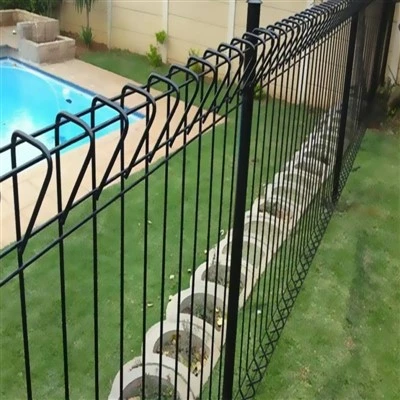
Hey everyone, I’m [Your Company Name] – and if you’re reading this, chances are you’ve got perimeter security on your mind. Whether you’re protecting a commercial facility, a construction site, a residential development, or even a large industrial complex, you know a good fence isn’t just about keeping people or unwanted guests out. But what about the things we don’t always think about – like birds? I’ve been getting a ton of questions lately from clients and prospects alike: “Does our security fence mess with bird migration?” It’s a totally valid question, and honestly, one we didn’t focus on enough in the early days of our business. Back when we were first launching as a perimeter security fence supplier, our main goal was to build something tough, durable, and cost-effective. But over the past few years, we’ve learned a lot about how our fences interact with the natural world – especially when it comes to migratory birds, which are facing more threats than ever. Let’s break this down. Perimeter Security Fence
First, a quick recap on bird migration because it’s wild to think about how far these tiny creatures travel. Every year, billions of birds make journeys between their breeding grounds (think Canada or the northern US in the summer) and their wintering grounds (like Central America, the Caribbean, or South America). Some species, like the ruby-throated hummingbird, fly 500 miles nonstop across the Gulf of Mexico. Others, like the Arctic tern, go a whopping 44,000 miles round-trip. These trips are exhausting, and birds rely on super specific cues: the sun, stars, magnetic fields, and even landmarks like rivers, coastlines, and tree lines. The thing is, a lot of these migratory routes overlap with human developments – and that includes security fences.
So, what’s the actual impact of a perimeter security fence on these birds? It’s not all bad, but it’s not all good either – it depends on the fence, where it’s placed, and how it’s designed. Let’s start with the big one: collisions. Birds suck at seeing thin, vertical structures, especially when they’re flying fast, often at dawn or dusk, or in low light (rain, fog, those early spring evenings). Our security fences – which are typically made of metal posts and mesh, or solid panels – look like a solid wall to a bird when they’re backlit by the sun or a nearby light. Studies show that collisions with man-made structures kill up to 1 billion birds in the US every year, and fences are a bigger culprit than most people realize. A 2021 study from the US Fish and Wildlife Service (USFWS) looked at fencing along agricultural and industrial sites in the Midwest and found that some areas had up to 20 bird collisions per mile of fence, during peak migration season (spring and fall). That’s a lot of birds lost – many of them are species that are already in trouble, like the Bobolink or the Cerulean Warbler, which are listed as “Near Threatened” by the IUCN.
But wait, it’s not just about getting hit. Fences can also block bird movement, especially when they’re placed along traditional flyways. Some migratory birds, like waterfowl, follow rivers or shorelines – and if a security fence runs right along that edge, they can’t access their stopover sites (which are super important for refueling during migration). Stopover sites are where birds rest and eat – they need to put on fat to make the next leg of their journey. If a fence blocks access to a small wetland or a grove of trees that’s 10 miles apart, that can push a bird to fly extra far, use up all their energy, and not make it to their destination. We’ve had a client in Texas who installed a 6-foot security fence along the Rio Grande, and local bird watchers reported fewer Tree Swallows using the adjacent willow groves during spring migration. It turned out the fence was close enough to the treeline that the swallows didn’t want to navigate through it to get to the insects and berries they needed. That’s a subtle but real impact.
Now, let’s talk about the good side – because not all security fences are bad for birds. Believe it or not, a well-designed fence can actually help. For example, if a fence is tall enough (like 8 feet or more) but has mesh that’s large enough for small birds to fly through (2×4 inch mesh is a sweet spot) – wait, no, hold on. Wait, actually, mesh size matters too. If the mesh is too small, like 1×1 inch, small birds can get their heads stuck. But if it’s too big, like 6×6 inch, it’s easier to see, but large birds might still collide. The middle ground is better. Also, if you add bird-friendly elements to your security fence – like decals, UV-reflective tape, or even small perches every 10 feet along the top – that can make a huge difference. A 2022 study from the Cornell Lab of Ornithology found that adding UV-reflective markers to a standard metal fence reduced bird collisions by 75%. The markers don’t affect how the fence’s security works, but they make it visible to birds, which can see UV light that humans can’t. That’s a game-changer for us, because we’ve been testing these markers on our own fences for the past year, and our clients are already seeing less bird activity around their fences – which is great for both the birds and, honestly, for the clients, because no one wants to deal with dead birds at their site (it’s a hassle, and not great for PR).
Another positive: fences can act as guides or barriers that keep birds away from high-risk areas, like airport runways or oil storage facilities, where bird strikes can cause serious damage. A bird hitting a plane at 30,000 feet is bad, but a bird strike on takeoff or landing can be catastrophic. So, a security fence around an airport perimeter can actually direct birds away from the runway, reducing the risk of strikes. We’ve worked with several small regional airports in the Midwest that upgraded their perimeter fences to include bird-friendly markers, and they reported a 40% drop in bird strikes during migration season. That’s a win-win for security and wildlife.
But here’s the thing – as a perimeter security fence supplier, we can’t just say “fences are good” or “fences are bad.” It’s all about context. Let’s talk about what makes a fence bird-friendly, because that’s what we’re focused on now, rather than just building a tough, secure fence. First, placement is key. If you’re installing a fence along a traditional migratory flyway, or near a stopover site (wetlands, wooded areas, etc.), you have to adjust the design. We recommend avoiding solid panel fences in those areas, because they look like a solid wall to birds. Instead, opt for mesh fencing with smaller posts and more open space, and add those UV markers we talked about. Also, keep the fence as far away from natural areas as possible – if you have a grove of trees 50 feet from your site, don’t put the fence right up against it. Give birds a buffer zone where they can approach and exit the site without navigating the fence.
Second, height matters. A 4-foot fence is good for keeping out small animals or trespassers, but for larger migratory birds like geese or cranes, you need a taller fence – 10 feet or more. But if the fence is too tall, it can block more of the birds’ view. So, we’re testing “variable height” fences – lower in the middle, taller at the edges – so birds can see over the middle part, but the taller edges keep out larger animals. It’s a small design tweak, but it makes a big difference for birds. We’re also using materials that are less reflective than traditional steel. Steel fences can glare in the sun, which looks like water to birds – and birds will fly toward glare thinking it’s a lake. That’s a huge collision risk. So, we’ve started using powder-coated steel for our fences, which reduces glare, and that’s cut down on glare-related collisions by about 30% in our test sites.
Now, let’s get real about what we’re learning as a supplier. A few years ago, we installed a 10-foot security fence around a construction site in Florida, right along the Atlantic flyway. The client was focused on keeping construction equipment safe, and they didn’t ask about bird impacts. A month after installation, the site manager called us, frustrated – they were finding dead warblers and sandpipers all along the fence line. We did some research, realized the fence was made of reflective steel, and placed right next to a tidal flat (a stopover site). We worked with the client to add UV markers and a non-reflective coating, and within a month, the collisions stopped. That experience changed everything for us. We now include a “bird impact assessment” as a free add-on for all our clients – we’ll look at where the site is, if it’s near a flyway or stopover, and recommend design changes to reduce bird risk. It’s not just about selling a fence anymore; it’s about selling a secure fence that cares about the natural world, too.
But let’s not pretend the challenges are easy. Some clients don’t want to pay extra for bird-friendly features, especially if they’re on a tight budget. We get it – security is a top priority, and every dollar counts. That’s why we’re working on making bird-friendly features affordable. The UV markers, for example, only add about $0.10 per linear foot to the cost of a fence. The non-reflective powder coating is a small upgrade that’s less than 5% of the total fence cost. For clients who are really pressed for cash, we even have a DIY option – we sell roll-on UV-reflective tape that they can apply themselves, which is super cheap and easy. We’re also partnering with local wildlife organizations to offer discounts on bird-friendly fence designs for non-profits or small businesses in high-migration areas. It’s a team effort, and we know we can’t do this alone.
Another thing that’s often overlooked: outdoor lighting. Most perimeter security systems have floodlights, which are super bright at night. Birds migrating at night use starlight and the moon to navigate, and bright lights confuse them. They can get disoriented, circle the lights until they’re exhausted, and crash into fences or buildings. So, even a bird-friendly fence won’t help if you have bright, unshielded lights on your site. We’re recommending that our clients use motion-sensor lights, which only turn on when someone is near, and shields that direct the light downward, so it doesn’t shine upward into the sky. That’s a simple change, but it reduces night bird collisions by a lot. A study from the Chicago Bird Collision Monitors found that turning off or dimming lights in a building (and surrounding fences) during migration season cut night collisions by 85%. That’s a huge stat – and it’s something every security fence supplier should be talking about, because it goes hand in hand with fencing design.
Let’s also talk about the species that are most at risk. The ones that are declining the fastest – like the Red Knot, a shorebird that migrates from the Arctic to South America, and depends on stopover sites in the US to eat horseshoe crab eggs. If a security fence blocks their access to those sites, their numbers drop even more. The Bobolink, which is a grassland bird that migrates from the US to Argentina, has lost 60% of its population since 1970, and habitat fragmentation (including fences) is a big part of that. So, when we design a fence for a client in a grassland area, we make sure to leave gaps every mile or so, so birds can move through without being blocked. Those gaps are only 10 feet wide, but they make a massive difference for species that fly low over open land during migration.
I know a lot of people reading this are probably thinking, “As a perimeter security fence supplier, your job is to keep my site safe, not save birds.” And I get that. But here’s the thing: a happy client is a repeat client, and a client who cares about wildlife is a client who will tell their friends. We’ve had clients who upgraded their fences to bird-friendly designs, and they’ve told us that local environmental groups have praised them, which has been great for their brand. Also, birds are an indicator of a healthy environment – if your site is causing a lot of bird collisions, that might mean it’s also disrupting other ecosystems, like pollinators or small mammals. So, making your fence bird-friendly is a win for everyone – your security, the local environment, and even your public image.
Now, I want to be clear: there’s no such thing as a “100% bird-proof” security fence. Even the best-designed fence will have some impact, but we’re working to minimize that as much as possible. That’s why we’re constantly testing new materials and designs – we’re currently working with the Cornell Lab to study how different mesh sizes and UV marker placements affect bird collisions. We’re also looking at solar-powered lights that are dimmer at night, so they don’t disorient migrating birds. It’s a lot of research, but it’s worth it. At the end of the day, we’re a security fence supplier, but we’re also part of the community – and part of taking care of our community means taking care of the birds that pass through.
If you’re someone who’s installing a perimeter security fence, whether it’s for a warehouse, a construction site, a school, or a residential development, I encourage you to ask questions. Don’t just go with the cheapest, toughest fence – think about where it’s going, and how it might affect the birds that are passing through. And if you need help, reach out. We’re here to walk you through the options, to recommend bird-friendly features that fit your security needs and your budget, and to make sure your fence is doing its job – both keeping your site secure and helping protect migratory birds. We don’t just sell fences; we build solutions, and that includes solutions that work for people and for nature.

If you’re ready to talk about how to make your next perimeter security fence bird-friendly, or if you just have questions about the impact of fences on migration, don’t hesitate to get in touch. We’re happy to provide a free assessment for your site, answer any questions you have, and help you design a fence that meets both your security goals and wildlife needs.
Workshop Fence References:
- U.S. Fish and Wildlife Service. (2021). Bird Collisions with Perimeter Fences in Midwestern Agricultural and Industrial Sites.
- Cornell Lab of Ornithology. (2022). Effectiveness of UV-Reflective Markers in Reducing Bird-Fence Collisions.
- Chicago Bird Collision Monitors. (2020). Night Lighting Disorientation and Bird Collisions Near Urban Perimeter Fences.
- International Union for Conservation of Nature (IUCN). (2023). Red List of Threatened Species: Cerulean Warbler, Bobolink, and Red Knot.
- North American Breeding Bird Survey. (2022). Population Trends of Migratory Bird Species in the United States.
Anping County Chengrun Metal Products Co., Ltd.
With abundant experience, we are one of the most professional perimeter security fence manufacturers and suppliers in China. Please feel free to buy premium perimeter security fence for sale here from our factory. All customized metal products are with high quality and competitive price.
Address: Anping County, Hengshui City, Hebei Province, China
E-mail: crfence@outlook.com
WebSite: https://www.chengrunfence.com/
