Hey everyone, if you’ve ever needed a reliable hydraulic pump for industrial, construction, or even agricultural equipment, chances are you’ve heard of NACHI. As a NACHI Pump supplier, I get tons of questions from guys on the shop floor, maintenance techs, and new operators asking the same thing: “Wait, what’s the actual right way to start a NACHI pump? Because if I mess this up, I could fry the whole thing before it even runs.” Let’s cut through the half-true shop rumors and get into the real, practical starting mode that’s been keeping NACHI pumps running strong for decades. NACHI Pump
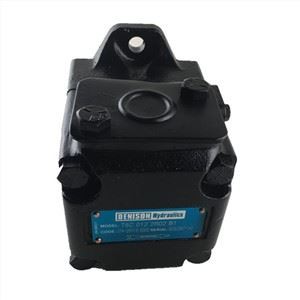
First off, let’s pump the brakes on that old trick people use for random pumps—y’know, cranking it up immediately, no prep, just go. NACHI’s not like those cheap, off-brand units you pick up at the discount tool store. They’re precision-built, right? The starting mode for a NACHI pump isn’t some random step you skip to save time; it’s a structured, two-stage process that protects the pump’s internal components, extends its lifespan, and keeps you from staring at a dead unit on your busiest workday. Let’s break this down like we’re talking over a coffee at the parts counter, no jargon that makes your eyes glaze over.
First, let’s talk about the pre-start check—this isn’t part of the “starting mode” per se, but it’s non-negotiable. I’ve had customers skip this and call me at 7 AM on a Monday saying their new NACHI pump seized up. Why? Because the reservoir was low on oil, or the inlet filter was clogged with crud, or the pressure relief valve was stuck closed. NACHI pumps rely on consistent, clean hydraulic fluid to lubricate moving parts (the pistons, swash plate, bearings, all that stuff that’s tiny and expensive to replace). Before you even think about turning the key, yank the dipstick—make sure it’s at the right level, not too low that it’s sucking air, not so high it’s sloshing when the unit runs. Then check that inlet line: if you see any gunk or debris in the filter, swap it out. Trust me, a $20 filter is way cheaper than a $2,000 NACHI pump rebuild.
Now, onto the actual starting mode. NACHI designs their pumps to be started in two distinct phases: priming first, then gradual pressure build, not full pressure right away. Wait, why priming? Because when a pump’s sitting idle, the fluid in the lines and the pump casing can drain back into the reservoir. If you turn the pump on cold, it’s trying to push air instead of fluid. That causes cavitation—little bubbles that pop and erode the internal walls, like tiny sandblasters inside your pump. I’ve seen pumps with cavitation pits so bad the pistons wouldn’t slide anymore, all because someone skipped priming.
How do you prime a NACHI pump specifically? Let’s get this right. First, make sure the suction valve (the big one that pulls fluid from the reservoir) is fully open. Then, if your NACHI pump has a manual vent screw—most of the mid-range and high-performance ones do, not the super tiny compact units—loosen that vent screw on the top of the pump housing. It’ll probably hiss a little, that’s air escaping. You wait until a steady stream of hydraulic fluid comes out, no bubbles, then tighten the vent screw. That’s priming done. No bubbles, no cavitation risk, and your pump gets the lubrication it needs from the first rotation.
Once primed, the second stage is the gradual start, not hitting full throttle or full pressure immediately. This is where a lot of guys mess up. NACHI pumps, especially the variable displacement models (which are the most popular for industrial and mobile equipment), have a swash plate that controls the flow. When you first start the pump, the swash plate should be set to its minimum displacement position—meaning it’s moving the least amount of fluid possible. Why? Because if you go full pressure right away, the pump has to work against maximum resistance when it’s still cold. Hydraulic fluid gets thicker when it’s cold, so running at full pressure on cold oil puts way too much stress on the pump’s motor and internal parts. That’s a fast track to overheating or seal failure, I promise.
For fixed displacement NACHI pumps (the ones that don’t adjust flow, common for simpler systems), the gradual start is a little different, but still just as important. For these, you start the pump at low idle—so the engine or electric motor driving the pump is at its lowest RPM, not maxed out. Let it run at low idle for 3 to 5 minutes, not just 30 seconds. That gives the fluid time to warm up a little, the seals time to seat, and all the internal parts time to get lubricated properly. If you’re in a hurry, you might as well order a replacement pump because you’re cutting its life by years.
Wait, let’s clarify if you’re working with electric NACHI pumps vs. engine-driven ones, since that’s another common mix-up. For electric NACHI hydraulic pumps, the starting mode is almost identical, but you also need to check that the motor’s rotation is correct before applying full power. NACHI pumps are built for a specific direction of spin—reverse rotation will damage the internal check valves and pistons fast. So when you first fire an electric pump, hold the start button for just a second, don’t hold it down for 10 seconds. Look at the rotation indicator on the pump housing (it’s a tiny arrow, usually) to make sure it’s matching the motor’s direction. If it’s wrong, swap two of the three power leads on the motor, done. That’s a 2-minute check that saves you from calling me at 2 AM on a jobsite.
I get it, guys, sometimes you’re under pressure—jobsite deadlines, a machine that’s down and costing you money by the hour—but rushing the start of a NACHI pump is never worth it. Let me give you a real example from last year. A construction customer of mine had a telehandler that went down on a Friday afternoon. Their mechanic, in a rush to get it fixed for a Monday job, hooked up a spare NACHI pump, skipped priming, cranked it to full pressure immediately. By Sunday morning, the pump was seizing solid—cavitation and overheating from cold thick oil. We had to replace the whole pump, and they missed their Monday job, costing way more than if they’d taken 10 extra minutes to do the right start.
Another thing I hear all the time: “My old pump worked fine skipping steps, why does NACHI have to be different?” Yeah, old pumps worked fine back when they didn’t have 10x the pressure ratings and precision tolerances. NACHI builds pumps for high efficiency, long run times, and tight performance—they don’t cut corners on internal parts, so you can’t cut corners on how you start them. That two-stage priming and gradual start? It’s engineered into the pump’s design, not just some random tip.
Wait, what about after the gradual start, when you’re ready to get to work? Let’s wrap that up too, because the starting mode doesn’t end when you put pressure on it. For variable displacement NACHI pumps, once the 3-5 minute warm-up is done, you can slowly increase the pressure and displacement over the next minute or two, until you hit your operating pressure. Don’t jump straight to full load. For fixed displacement, once warmed up, you can run at normal idle or low load for a minute before switching to full work mode.
Also, let’s touch on common mistakes that mess up the starting mode for NACHI pumps. Number one: not checking the fluid level first. I can’t tell you how many times a pump won’t prime because the reservoir was low, and the operator thinks the pump is broken. Number two: skipping the vent screw. Even if you think you primed it through the inlet, air gets trapped in the pump housing, and that’s where cavitation starts. Number three: starting at full pressure or full RPM. That’s the big one that causes 90% of premature NACHI pump failures I see as a supplier.
If you’re working with a NACHI pump in a harsh environment—like freezing cold weather, or dusty, dirty jobsites—you might need to extend the warm-up time to 8 or 10 minutes. Cold air makes hydraulic fluid even thicker, so it needs more time to flow properly through the pump. If you’re in really hot weather, you can cut that time a little, but don’t skip it entirely—seals still need time to seat.
Let’s recap this so it’s easy to remember, no fancy textbooks: 1. Pre-start check: verify fluid level, clean filter, no leaks. 2. Prime the pump: open suction valve, loosen vent screw, wait for bubble-free fluid, tighten screw. 3. Correct rotation (for electric pumps only: quick start, check arrow, adjust leads if needed). 4. First start: low idle/minimum displacement for 3-5 minutes (longer in extreme temps). 5. Gradually increase pressure/displacement over the next minute before full operation.
As someone who’s been a NACHI pump supplier for over 12 years, I’ve seen every mistake in the book, and the ones that come back to bite people are always the rushed start. NACHI pumps are worth the investment—they run quieter, last longer, and have better performance than most other brands—so you gotta treat them right. Skipping that 10-minute process to start it? You’re basically throwing money away.

If you’re shopping for a NACHI pump, need replacement parts, or have questions about your specific model’s starting procedure, hit me up. I’ve worked with every NACHI model from the tiny compact ones for small equipment to the big heavy-duty ones for construction and mining, so I can hook you up with the right advice for your setup. Don’t wait until your pump dies mid-job to ask—reach out anytime, we can walk through the steps over the phone or in person if you’re local.
VICKERS Pump References
- NACHI Hydraulic Pumps: Operation & Maintenance Manual, 2022
- Hydraulic Pump Cavitation Prevention Guidelines, National Fluid Power Association, 2021
- Best Practices for Starting Variable Displacement Hydraulic Pumps, Machine Design Magazine, 2020
Fujian Zhenyuan Hydraulic Equipment Co., Ltd.
Fujian Zhenyuan Hydraulic Equipment Co., Ltd. is well-known as one of the leading nachi pump manufacturers and suppliers in China. If you’re going to wholesale nachi pump in stock, welcome to get quotation from our factory. All customized products are with high quality and low price.
Address: No. 125, Wuli Industrial Zone, Jinjiang, Quanzhou City, Fujian Province
E-mail: yexun@fjzhenyuan.com
WebSite: https://www.zhenyuanhydraulic.com/
