Can an Air Leg be used underwater? Air Leg
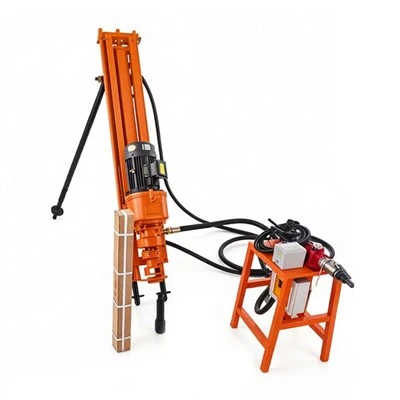
As a supplier of air legs, I often receive inquiries from customers about the various applications of our products. One question that has come up more frequently lately is whether an air leg can be used underwater. This is a valid and interesting question, and in this blog post, I will delve into the technical aspects, potential challenges, and possible solutions regarding the underwater use of air legs.
Understanding Air Legs
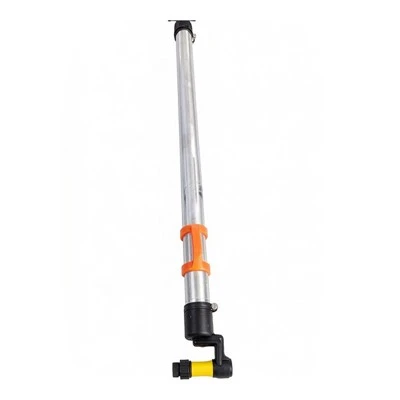
Before we discuss the underwater use of air legs, it’s important to understand what an air leg is. An air leg is a pneumatic tool that is commonly used in mining, tunneling, and construction industries. It is designed to support and position a rock drill, providing the necessary thrust and stability during the drilling process. The air leg operates on compressed air, which powers the piston inside the cylinder, allowing it to extend and retract.
The main components of an air leg include the cylinder, piston, valve system, and a mounting bracket for the rock drill. The valve system controls the flow of compressed air into and out of the cylinder, enabling the operator to adjust the length and force of the air leg.
Technical Considerations for Underwater Use
When considering using an air leg underwater, several technical factors need to be taken into account.
Pressure
One of the most significant challenges is the pressure difference between the air inside the air leg and the water pressure outside. As the depth increases, the water pressure also increases. For every 10 meters of depth, the water pressure increases by approximately 1 atmosphere. This means that at a depth of 30 meters, the water pressure is about 3 atmospheres higher than at the surface.
The air leg is designed to operate at a certain pressure range, typically around 6 – 8 bar (0.6 – 0.8 MPa) at the surface. If the water pressure exceeds the internal air pressure, it can cause the air leg to collapse or malfunction. To overcome this, the air leg would need to be pressurized to a level equal to or higher than the water pressure at the desired depth. This would require a specialized air supply system that can provide high – pressure air.
Sealing
Another critical factor is the sealing of the air leg. The air leg has moving parts, such as the piston and the valve system, which need to be properly sealed to prevent water from entering. Water ingress can damage the internal components, corrode the metal parts, and cause the air leg to fail.
The seals used in a standard air leg are designed for normal atmospheric conditions. For underwater use, these seals would need to be replaced with more robust and waterproof seals. Specialized materials, such as rubber compounds with high resistance to water and pressure, would be required.
Corrosion
Underwater environments are highly corrosive due to the presence of saltwater and other chemicals. The metal components of the air leg, such as the cylinder and piston, are susceptible to corrosion. This can lead to a reduction in the performance and lifespan of the air leg.
To prevent corrosion, the air leg would need to be made of corrosion – resistant materials, such as stainless steel or coated with anti – corrosion paints. Regular maintenance and inspection would also be necessary to ensure the integrity of the anti – corrosion measures.
Potential Applications Underwater
Despite the challenges, there are some potential applications for using an air leg underwater.
Underwater Construction
In underwater construction projects, such as building bridges, oil rigs, or offshore wind farms, there may be a need for drilling operations. An air leg could be used to support and position a rock drill for tasks such as drilling holes for foundation piles or installing anchors.
Underwater Mining
In some underwater mining operations, where there are valuable mineral deposits on the seabed, an air leg could potentially be used to drill into the rock. This would require the air leg to be adapted to the specific conditions of the underwater mining environment, such as the water depth, temperature, and the type of rock.
Solutions for Underwater Use
To make an air leg suitable for underwater use, several solutions can be implemented.
High – Pressure Air Supply
As mentioned earlier, a high – pressure air supply system is essential to counteract the water pressure. This could involve using a compressor that can generate air at pressures higher than the expected water pressure at the operating depth. The air supply system would also need to be designed to ensure a continuous and stable supply of air to the air leg.
Waterproof Sealing
The air leg should be equipped with high – quality waterproof seals. These seals can be made of materials such as nitrile rubber or fluorocarbon rubber, which have excellent resistance to water and pressure. The seals should be carefully installed and regularly inspected to ensure their effectiveness.
Corrosion Protection
Using corrosion – resistant materials is the first step in protecting the air leg from corrosion. In addition, a protective coating can be applied to the metal components to provide an extra layer of protection. Regular cleaning and maintenance can also help to remove any corrosive substances that may accumulate on the surface of the air leg.
Conclusion
In conclusion, while using an air leg underwater presents significant challenges, it is technically possible with the right modifications and adaptations. The key factors to consider are pressure, sealing, and corrosion. By implementing solutions such as a high – pressure air supply system, waterproof seals, and corrosion protection measures, an air leg can be used in underwater applications.
Air Leg If you are interested in exploring the possibility of using an air leg underwater for your project, I encourage you to contact us for further discussion. Our team of experts can provide you with detailed information and advice on how to adapt our air legs to meet your specific needs. We are committed to providing high – quality products and solutions to our customers, and we look forward to working with you on your next project.
References
- Mining Equipment Handbook: A comprehensive guide to mining tools and equipment, which provides detailed information on the design and operation of air legs.
- Underwater Engineering Textbook: Covers the principles and practices of underwater construction and engineering, including the challenges and solutions related to using tools underwater.
- Pneumatic Systems Design Manual: Offers in – depth knowledge of pneumatic systems, which is relevant to understanding the operation of air legs and the requirements for high – pressure air supply.
Quzhou Shenjian Machinery Factory
As one of the most professional air leg manufacturers and suppliers in China, we’re featured by quality products and good service. Please rest assured to wholesale customized air leg from our factory. Also, quotation is available.
Address: No. 42 Bingang Middle Road, Quzhou City, Zhejiang Province
E-mail: 107467114@qq.com
WebSite: https://www.shenjianmach.com/
