What are the heat transfer characteristics of cryogenic pressure vessels?
As a supplier of cryogenic pressure vessels, I’ve had the privilege of delving deep into the intricacies of these remarkable pieces of equipment. Cryogenic pressure vessels are designed to store and transport extremely cold substances, such as liquid nitrogen, liquid oxygen, and liquid natural gas, at very low temperatures. Understanding their heat transfer characteristics is crucial for ensuring their efficient and safe operation. Cryogenic Pressure Vessel
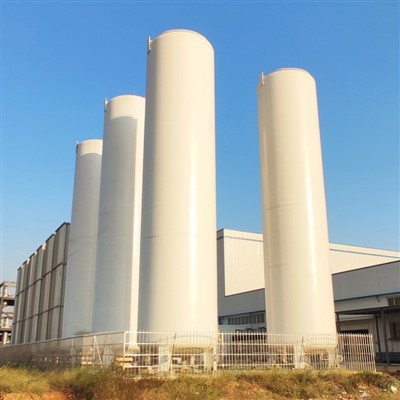
The Basics of Heat Transfer in Cryogenic Pressure Vessels
Heat transfer in cryogenic pressure vessels occurs through three main mechanisms: conduction, convection, and radiation.
Conduction is the transfer of heat through a solid material. In a cryogenic pressure vessel, heat can be conducted through the vessel walls, supports, and any other solid components. The rate of conduction depends on the thermal conductivity of the materials used, the cross – sectional area through which heat is flowing, and the temperature difference across the material. For example, using materials with low thermal conductivity, such as stainless steel or certain types of composites, can help reduce heat conduction into the vessel.
Convection is the transfer of heat by the movement of a fluid (either liquid or gas). Inside a cryogenic pressure vessel, there can be convective currents due to temperature differences within the cryogenic fluid. For instance, if there is a temperature gradient in the liquid nitrogen stored in the vessel, warmer liquid will rise and cooler liquid will sink, creating a convective flow. Outside the vessel, air or other surrounding fluids can also cause convective heat transfer. Insulation around the vessel helps to minimize convective heat transfer by reducing the movement of fluids near the vessel surface.
Radiation is the transfer of heat in the form of electromagnetic waves. All objects emit thermal radiation, and the amount of radiation depends on the temperature and emissivity of the object. Cryogenic pressure vessels are often coated with materials that have low emissivity to reduce heat transfer by radiation. For example, a polished metal surface has a relatively low emissivity compared to a rough or black – painted surface.
Factors Affecting Heat Transfer
Several factors can significantly influence the heat transfer characteristics of cryogenic pressure vessels.
Insulation Quality: The type and thickness of insulation play a vital role in reducing heat transfer. High – performance insulation materials, such as vacuum – insulated panels or multilayer insulation (MLI), are commonly used in cryogenic pressure vessels. Vacuum – insulated panels create a near – vacuum environment, which greatly reduces conduction and convection heat transfer. MLI consists of multiple layers of reflective material separated by low – conductivity spacers, which effectively block radiation heat transfer.
Vessel Design: The design of the cryogenic pressure vessel can also impact heat transfer. For example, the shape of the vessel can affect the flow of fluids inside and outside the vessel. A well – designed vessel will minimize areas where convective currents can form and reduce the surface area exposed to the surrounding environment. Additionally, the number and type of penetrations (such as pipes, valves, and sensors) in the vessel can increase heat transfer. Proper sealing and insulation of these penetrations are essential to prevent heat leakage.
Operating Conditions: The temperature difference between the cryogenic fluid inside the vessel and the surrounding environment is a key factor in heat transfer. A larger temperature difference will result in a higher rate of heat transfer. Other operating conditions, such as the pressure inside the vessel and the flow rate of the cryogenic fluid, can also affect heat transfer. For example, a higher flow rate of the cryogenic fluid can help maintain a more uniform temperature inside the vessel and reduce the formation of convective currents.
Measuring and Controlling Heat Transfer
To ensure the efficient operation of cryogenic pressure vessels, it is important to measure and control heat transfer.
Heat Transfer Measurement: There are several methods for measuring heat transfer in cryogenic pressure vessels. One common method is to measure the boil – off rate of the cryogenic fluid. The boil – off rate is the rate at which the cryogenic fluid evaporates due to heat ingress. By measuring the mass or volume of the evaporated fluid over a period of time, the heat transfer rate can be calculated. Another method is to use temperature sensors at different locations on the vessel to monitor temperature gradients and infer heat transfer rates.
Heat Transfer Control: To control heat transfer, various techniques can be employed. As mentioned earlier, using high – quality insulation is a primary method. In addition, active cooling systems can be used to remove heat from the vessel. For example, a refrigeration system can be connected to the vessel to maintain a low temperature. Another approach is to optimize the operating conditions of the vessel, such as adjusting the pressure and flow rate of the cryogenic fluid, to minimize heat transfer.
Importance of Understanding Heat Transfer Characteristics
Understanding the heat transfer characteristics of cryogenic pressure vessels is of utmost importance for several reasons.
Safety: Excessive heat transfer can cause the cryogenic fluid to boil off rapidly, leading to an increase in pressure inside the vessel. If the pressure exceeds the design limit of the vessel, it can result in a rupture or explosion. By understanding and controlling heat transfer, the risk of such safety hazards can be minimized.
Efficiency: Minimizing heat transfer is essential for the efficient operation of cryogenic pressure vessels. Reducing heat ingress means less energy is required to maintain the low temperature of the cryogenic fluid, resulting in lower operating costs.
Product Quality: For applications where the cryogenic fluid is used for specific processes, such as in the medical or semiconductor industries, maintaining the proper temperature of the fluid is crucial for product quality. Understanding heat transfer characteristics helps ensure that the cryogenic fluid remains at the desired temperature throughout storage and transportation.
Conclusion

In conclusion, the heat transfer characteristics of cryogenic pressure vessels are complex and influenced by multiple factors. As a supplier of cryogenic pressure vessels, we are committed to providing high – quality products that minimize heat transfer and ensure the safe and efficient storage and transportation of cryogenic fluids. By understanding the mechanisms of heat transfer, the factors that affect it, and the methods for measuring and controlling it, we can offer solutions that meet the specific needs of our customers.
Cryogenic Pressure Vessel If you are in need of cryogenic pressure vessels or have any questions about their heat transfer characteristics, please feel free to contact us for a detailed discussion and to explore potential procurement opportunities. We look forward to working with you to find the best solutions for your cryogenic storage and transportation requirements.
References
- Incropera, F. P., & DeWitt, D. P. (2002). Fundamentals of Heat and Mass Transfer. John Wiley & Sons.
- Kittel, C. (1996). Introduction to Solid State Physics. John Wiley & Sons.
- Van Wylen, G. J., & Sonntag, R. E. (1985). Fundamentals of Classical Thermodynamics. John Wiley & Sons.
Tianjin Baiyan Technology Co., Ltd.
With abundant experience, we are one of the most professional cryogenic pressure vessel manufacturers and suppliers in China. We warmly welcome you to buy customized cryogenic pressure vessel made in China here from our factory. If you have any enquiry about pricelist and quotation, please feel free to email us.
Address: No. 36, Jixian Road, Shuangqiaohe Development Zone, Jinnan District, Tianjin, China
E-mail: sales@tjbaiyan.com
WebSite: https://www.baiyan-tech.com/
